Table of Contents
- Why Warehouses and Logistics Facilities Need High Speed Doors
- What Makes a High Speed Door Best for Logistics Use?
- Best Types of High Speed Doors for Warehouses and Logistics
- Best Door by Application
- How to Choose the Right Door for Your Facility
- Final Thoughts
Why Warehouses and Logistics Facilities Need High Speed Doors
Warehouses and logistics centers depend on speed, reliability, and control. Forklifts, pallet jacks, carts, trucks, and automated handling systems move through key openings all day, so a slow or unreliable door can quickly create congestion, downtime, and energy loss.
That is why high speed doors are widely used in distribution and warehouse environments. Rytec’s warehousing guidance explains that high speed warehouse doors help increase efficiency and productivity in logistics, distribution, and warehousing operations. Rite-Hite’s recent automation article also highlights warehouses, staging areas, loading docks, and yards as key places where automation and productivity improvements matter most.
What Makes a High Speed Door Best for Logistics Use?
The best high speed door for a warehouse is not simply the fastest model available. It is the one that fits the opening, traffic pattern, environmental conditions, and uptime requirements of the facility.
Recent manufacturer guidance points to a few consistent priorities. Rytec states that high-speed doors are built for frequent use, smooth workflow, and millions of operating cycles. ASSA ABLOY’s recent RT1000 article emphasizes efficient traffic flow, stable operation, and suitability for forklifts, goods vehicles, and automated handling systems. Rite-Hite’s recent buyer guide says that for doors opening hundreds of times a day, safety and uptime are essential.
In practical terms, the best warehouse and logistics doors usually combine:
- fast opening and closing speed;
- high-cycle durability;
- reliable safety systems;
- good environmental control;
- low downtime and easy recovery after minor impacts;
- compatibility with automation and traffic flow needs.
Best Types of High Speed Doors for Warehouses and Logistics
1. High Speed Fabric Doors for Interior Warehouse Openings
For interior warehouse routes, high speed fabric doors are often one of the best choices. They are designed for frequent daily cycles, fast movement, and efficient separation between work zones. Rytec’s warehouse application page presents high speed roll up doors as well suited to warehousing and distribution environments, where speed, reliability, and energy savings are important.
Interior fabric doors are especially useful between storage areas, picking zones, packaging areas, and internal traffic corridors because they help reduce bottlenecks while maintaining area separation.
2. Rigid High Speed Doors for Exterior Logistics Openings
For exterior doors exposed to weather, security concerns, and heavy traffic, rigid high speed doors are often the better option. Rite-Hite’s Raptor Rigid guidance specifically positions rigid high speed doors for exterior high-traffic openings where speed, automatic closing, and interior climate control are important. ASSA ABLOY also presents spiral high speed doors as suitable for warehouses, logistics centres, and distribution hubs that need fast, secure, and stable operation.
These doors are a strong choice for shipping entrances, vehicle-access points, and logistics buildings that need both traffic performance and stronger building-envelope protection.
3. Cold Storage High Speed Doors for Temperature-Controlled Logistics
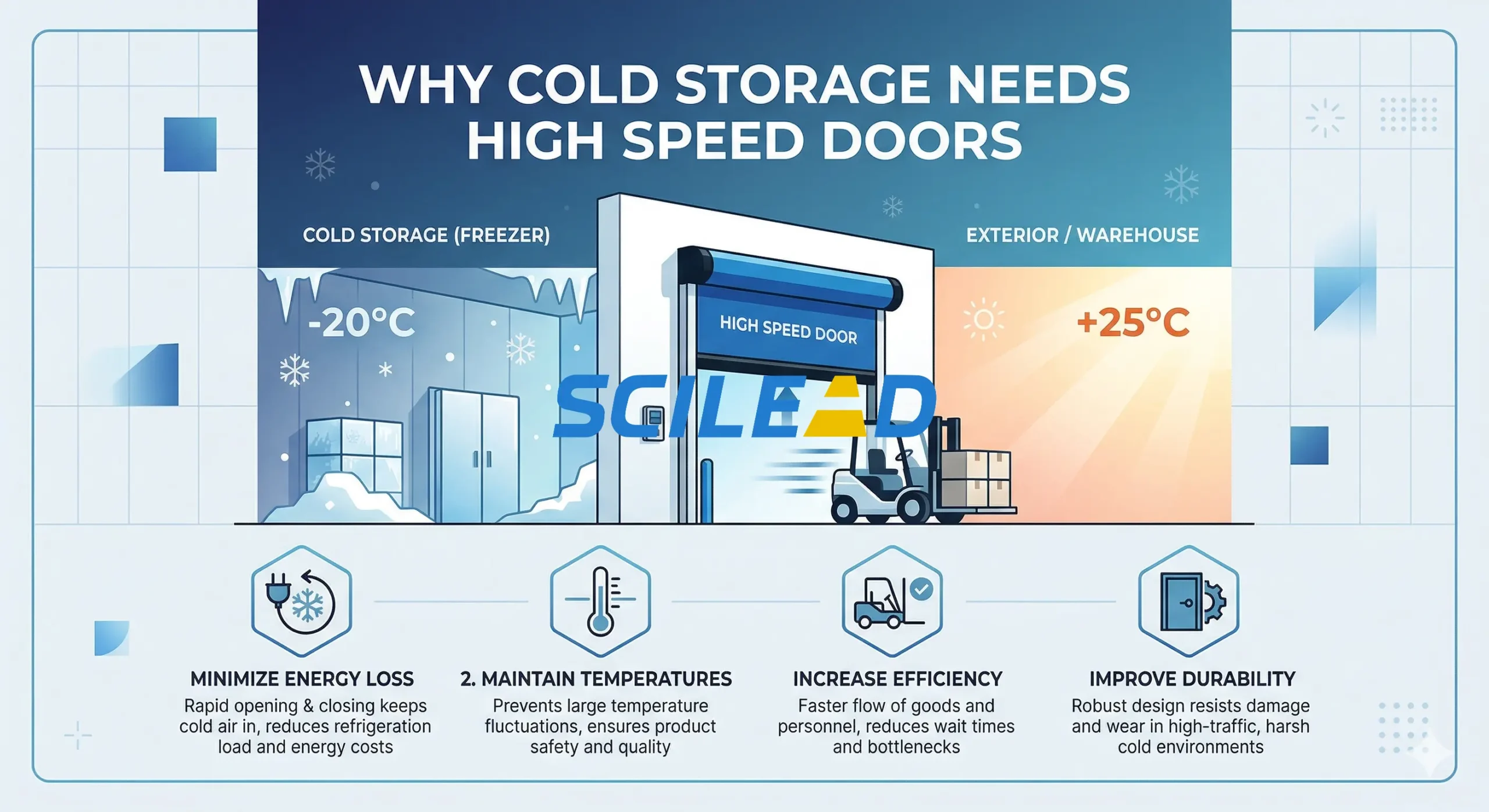
Cold chain logistics requires specialized doors. In refrigerated and frozen areas, every second of open time increases air exchange and energy loss. Rytec’s cold storage page explains that distributors in refrigerated and frozen environments need to control the environment, traffic, and costs. For that reason, high speed cold storage doors are often the best option for freezer rooms, chilled staging zones, and cold distribution hubs.
If a warehouse handles food, pharmaceuticals, or temperature-sensitive products, a door designed specifically for controlled-temperature operation is usually a better fit than a general-purpose warehouse door.
4. High Speed Doors Built for Automated Material Handling
As logistics operations become more automated, doors must support faster and more predictable workflows. Rite-Hite’s recent automation guidance points to in-plant, staging, loading dock, drive approach, and yard operations as important areas for automation planning. ASSA ABLOY also notes that high speed doors can be used effectively with automated handling systems.
For facilities using conveyors, automated guided vehicles, or synchronized traffic systems, the best high speed door is one that responds quickly, cycles consistently, and integrates well with automated controls.
5. Heavy-Duty High Speed Doors for High Traffic Dock and Yard Areas
Some warehouse openings face especially demanding conditions, including frequent forklift traffic, exterior exposure, and higher risk of accidental contact. In these areas, the best door is often a high speed model designed for high-cycle durability and low downtime. Rite-Hite stresses the importance of uptime in openings that cycle hundreds of times per day, while Rytec describes high-speed doors as built for the long haul with frequent operation and minimal maintenance.
For these demanding openings, durability and serviceability matter just as much as speed.
Best Door by Application
Best for Interior Warehouse Traffic
A high speed fabric roll-up door is often the best choice for interior warehouse openings because it supports fast traffic flow, frequent cycles, and efficient separation between operational zones. This type is especially practical in picking, packing, and storage corridors.
Best for Exterior Shipping and Logistics Entrances
A rigid or spiral high speed door is often the best fit for exterior logistics openings because it combines high-speed operation with better weather resistance, stronger security, and climate control support. Rite-Hite and ASSA ABLOY both position these solutions for demanding external access points.
Best for Cold Chain Warehousing
A high speed cold storage door is usually the best choice for refrigerated logistics because it is designed to reduce air exchange and support more stable internal temperatures. Rytec directly connects these doors with control of environment, traffic, and operating costs in cold storage operations.
Best for Automation-Ready Facilities
A high speed door with dependable cycling and compatibility with automated handling systems is often the best option for modern logistics centers focused on productivity and synchronized material flow. Rite-Hite and ASSA ABLOY both point to the growing role of automation in these environments.
How to Choose the Right Door for Your Facility
To choose the best high speed door for warehouses and logistics, start with the application instead of the product name. Ask a few practical questions:
- Is the opening interior or exterior?
- How many cycles does the door handle each day?
- Will forklifts, trucks, pedestrians, or automated systems use the opening?
- Does the opening need temperature control, security, or contamination control?
- How important are uptime and easy recovery after accidental impacts?
If the opening is internal and focused on speed, a fabric high speed door is often the right choice. If it is external and exposed, a rigid or spiral high speed door may be better. If it serves a freezer or cold room, a dedicated cold storage door is usually the most effective solution. The best result comes from matching the door type to real warehouse traffic and environmental demands.
Final Thoughts
The best high speed doors for warehouses and logistics are the ones that improve traffic flow, reduce downtime, support safety, and match the exact operating environment of the opening. In most facilities, that means different openings may need different door types.
For interior warehouse routes, high speed fabric doors are often the best fit. For exterior logistics entrances, rigid or spiral high speed doors are often stronger choices. For refrigerated distribution, specialized cold storage doors usually provide the best performance. In every case, the goal is the same: faster movement, better control, and more reliable daily operation.