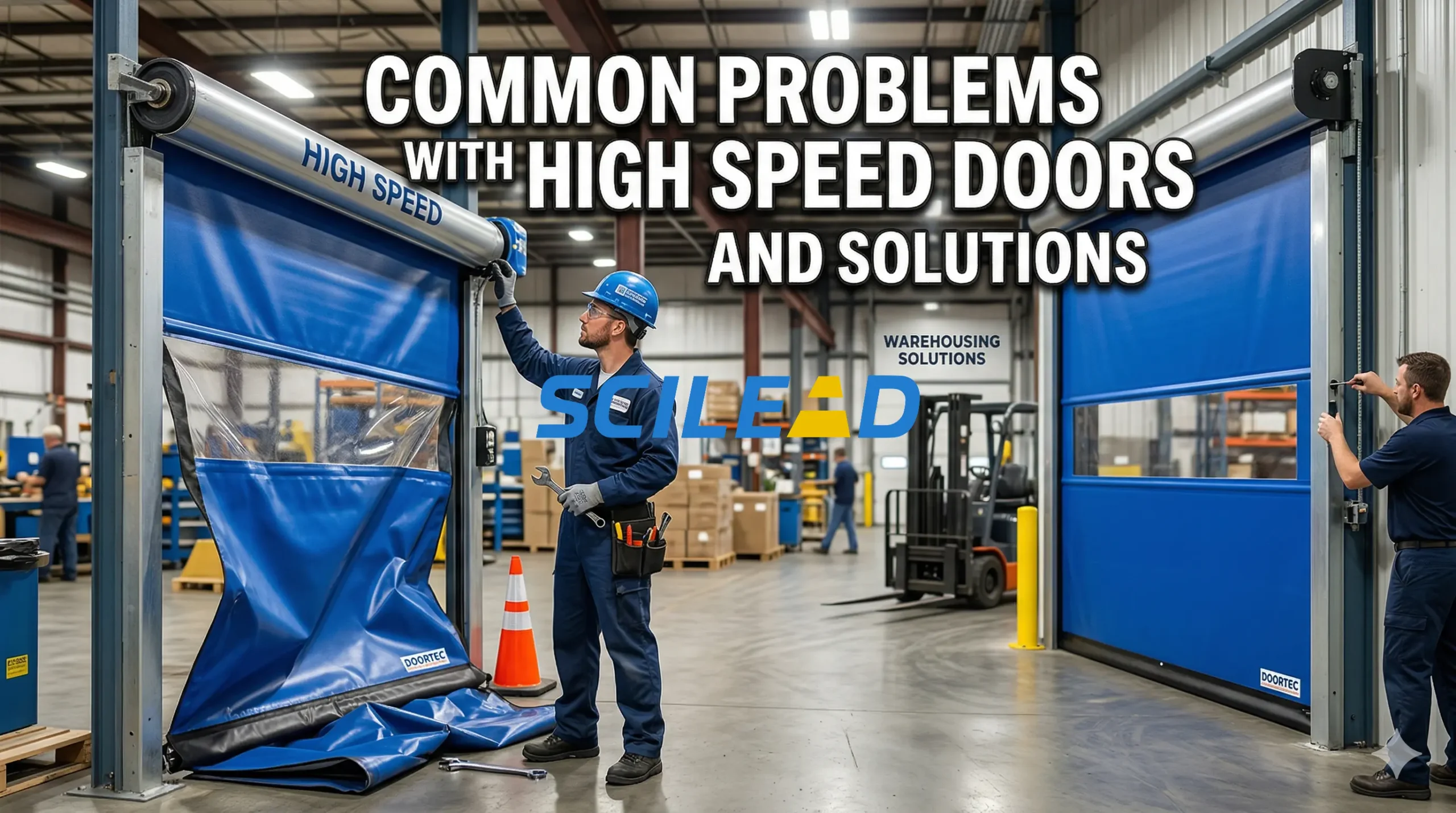
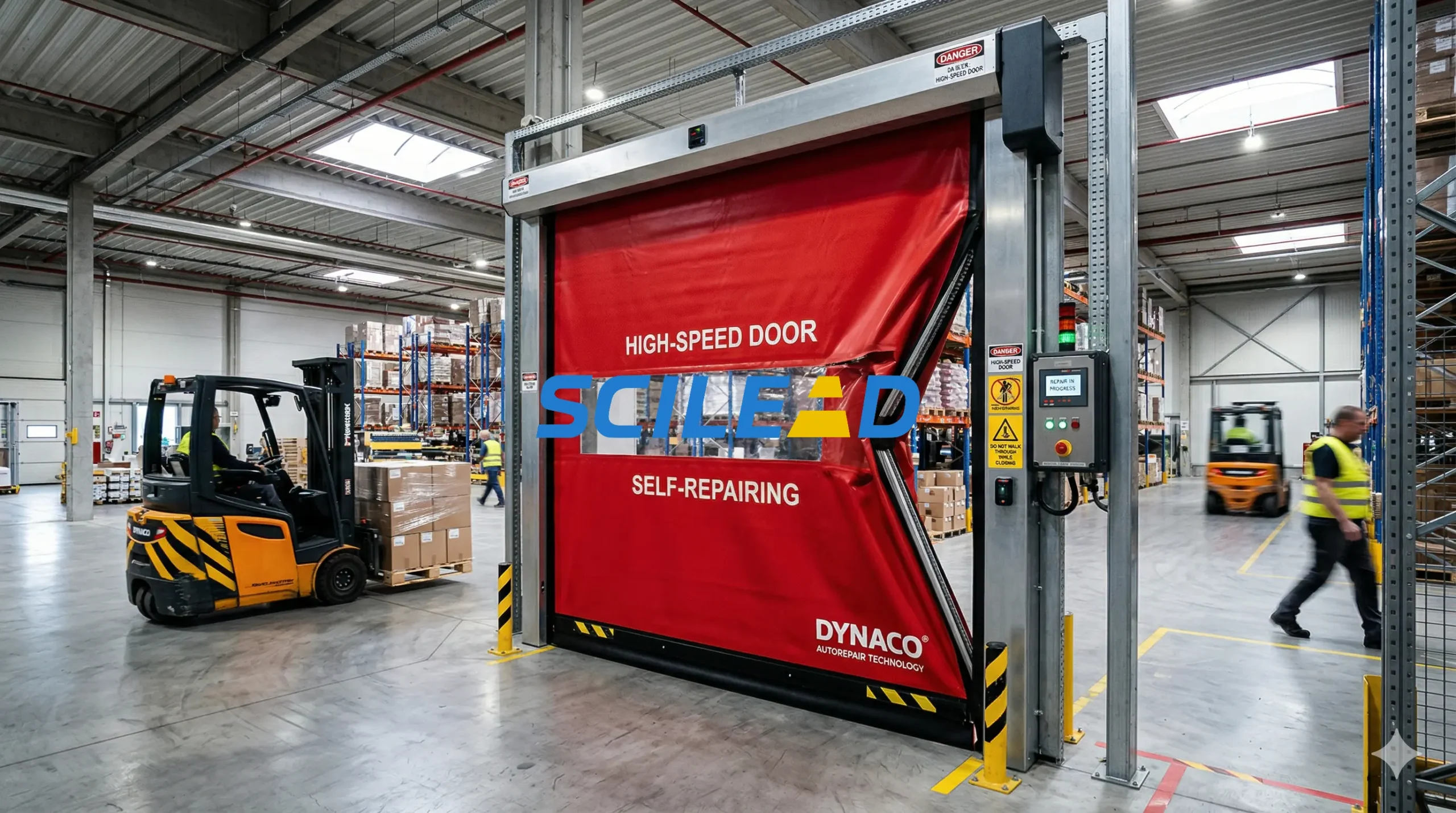
High speed doors improve traffic flow, reduce energy loss, and support cleaner, safer industrial operations. However, even well-designed high speed doors can develop problems over time due to wear, impact, poor setup, or missed maintenance. This guide explains the most common high speed door problems, their likely causes, and practical solutions for warehouses, cleanrooms, cold storage, and other industrial sites.
Contents
- 1. Door Does Not Open or Close Properly
- 2. Frequent Curtain or Panel Damage
- 3. Door Runs Too Slowly
- 4. Excessive Noise or Vibration
- 5. Sensor or Safety Device Failures
- 6. Air Leaks and Energy Loss
- 7. Poor Performance in Windy Areas
- 8. Condensation or Frost in Cold Storage
- 9. Control System and Limit Setting Errors
- 10. Preventive Maintenance Best Practices
- 11. Choosing the Right High Speed Door for the Application
- 12. Conclusion
1. Door Does Not Open or Close Properly
One of the most common high speed door problems is unstable opening or closing. The door may stop halfway, reverse unexpectedly, or fail to respond at all. In many cases, the cause is a power issue, misaligned guide track, motor overload, or incorrect limit setting.
The first step is to check the control panel, power supply, and emergency stop status. Then inspect the side guides, bottom edge, and drive system for obstruction or wear. If the problem is caused by incorrect settings or repeated faults, the controller should be inspected and recalibrated. For facilities that need reliable, high-cycle operation, a professional high speed door supplier can help reduce downtime with the correct configuration from the start.
2. Frequent Curtain or Panel Damage
Door curtain damage usually happens in busy logistics areas where forklifts, pallets, or carts hit the door during traffic peaks. Soft curtain doors may tear, while rigid doors may suffer dents or track stress if impact resistance is not matched to the site conditions.
The solution is to choose the right door structure for the environment. In clean or light-duty areas, a cleanroom high-speed door may be sufficient. In cold environments, an insulated model is often better, such as a cold storage insulated high-speed door. Where traffic is heavy or impact risk is high, stronger door materials, better traffic guidance, and clearer sensor triggering distances can reduce repeat damage.
3. Door Runs Too Slowly
High speed doors are installed to keep traffic moving, so slow opening speed becomes a direct efficiency problem. Slow operation may be linked to motor wear, incorrect frequency converter settings, mechanical drag, or oversized door specifications.
Regular inspection of the motor, transmission parts, and controller parameters is essential. If the door was selected without considering opening frequency, traffic volume, or door size, performance may always fall short. In high-traffic applications, product selection matters as much as maintenance.
4. Excessive Noise or Vibration
Noise and vibration are often early signs of mechanical trouble in high speed doors. Common causes include loose hardware, worn bearings, poor curtain tension, track contamination, or an unbalanced drive system.
Ignoring these symptoms can lead to more serious failures. The practical solution is to tighten mounting points, clean the guide system, inspect rotating parts, and replace worn components promptly. A well-installed door should operate smoothly and consistently, without harsh shaking or metal friction sounds.
5. Sensor or Safety Device Failures
Safety sensors are critical for automatic high speed doors. If a radar sensor, photoelectric sensor, or safety edge fails, the door may not open on time, may close too early, or may stop working altogether. Dust, moisture, vibration, and poor wiring are common reasons.
To solve this issue, inspect sensor alignment, clean the lens, check cable connections, and confirm that the trigger range matches the traffic route. In production, warehouse, and AGV environments, safety devices should be tested as part of routine maintenance. For integrated traffic scenarios, reviewing the site setup under industry solutions can help match the door system to the actual workflow.
6. Air Leaks and Energy Loss
Another common problem with high speed doors is poor sealing. Air leakage increases energy use, affects room pressure, and reduces environmental control. This is especially important in cleanrooms, cold rooms, and temperature-sensitive production areas.
Typical causes include worn seals, curtain deformation, installation gaps, or using the wrong door type for the environment. The solution is to replace damaged sealing parts, correct alignment issues, and verify that the door design matches the required insulation or air-tightness level. In controlled environments, proper door selection directly affects energy efficiency and process stability.
7. Poor Performance in Windy Areas
In loading bays, exterior passages, and large industrial openings, wind pressure can cause curtain movement, poor sealing, unstable travel, or repeated fault alarms. Standard high speed doors may not perform well in these conditions if wind resistance is underestimated.
A stronger structure is usually required. For exterior openings exposed to pressure differences or drafts, a wind-resistant high-speed door is often the better solution. Stronger guides, reinforced curtain design, and correct installation reduce movement and improve long-term stability.
8. Condensation or Frost in Cold Storage
Cold storage sites often face condensation, frost buildup, and temperature loss around door openings. This problem usually appears when opening frequency is high, insulation is weak, or the door closing speed is not fast enough.
The solution is to use a door designed specifically for temperature-controlled environments, with better insulation and sealing performance. Opening and closing logic should also be optimized to reduce unnecessary cycles. In cold chain applications, the door is part of the temperature control system, not just an access point.
9. Control System and Limit Setting Errors
Control faults may appear as random alarms, incomplete travel, unstable stopping positions, or repeated resets. These problems often result from incorrect limit settings, electrical interference, aging components, or poor commissioning.
The best solution is structured troubleshooting: check fault codes, inspect wiring, test the controller, and confirm the upper and lower travel limits. If the door is integrated with sensors, traffic lights, access control, or automation equipment, the signal logic should also be reviewed. Correct commissioning reduces repeat service calls and keeps high speed doors operating safely.
10. Preventive Maintenance Best Practices
Many high speed door problems can be prevented with regular maintenance. A simple preventive plan should include inspection of the curtain, seals, guide tracks, motor, control panel, fasteners, sensors, and emergency devices.
For high-cycle doors, monthly checks are often more effective than waiting for visible failure. Maintenance records should track abnormal noise, travel changes, impact incidents, and spare part replacement. Preventive maintenance lowers repair cost, improves uptime, and extends the service life of high speed doors.
11. Choosing the Right High Speed Door for the Application
Some recurring door problems are not maintenance issues at all. They are specification issues. A door used in the wrong environment will always struggle, no matter how often it is repaired.
Cleanrooms need smooth operation and better environmental control. Cold rooms need insulation. Exterior logistics openings may need more wind resistance. Automated production lines may need precise sensor integration. Matching the door to the application is one of the most effective long-term solutions. Businesses planning a new project or replacement can review products, applications, and technical options through the SCILEAD homepage or contact the team directly via Contact Us.
12. Conclusion
Common problems with high speed doors usually come from four areas: wrong product selection, installation issues, missed maintenance, or demanding operating conditions. The good news is that most issues can be solved with timely inspection, proper parts replacement, and a door system designed for the real application.
If your facility is dealing with frequent faults, curtain damage, poor sealing, or unstable opening speed, it is worth reviewing both maintenance practice and door type. The right high speed door solution can improve safety, reduce energy loss, and support more efficient industrial traffic.