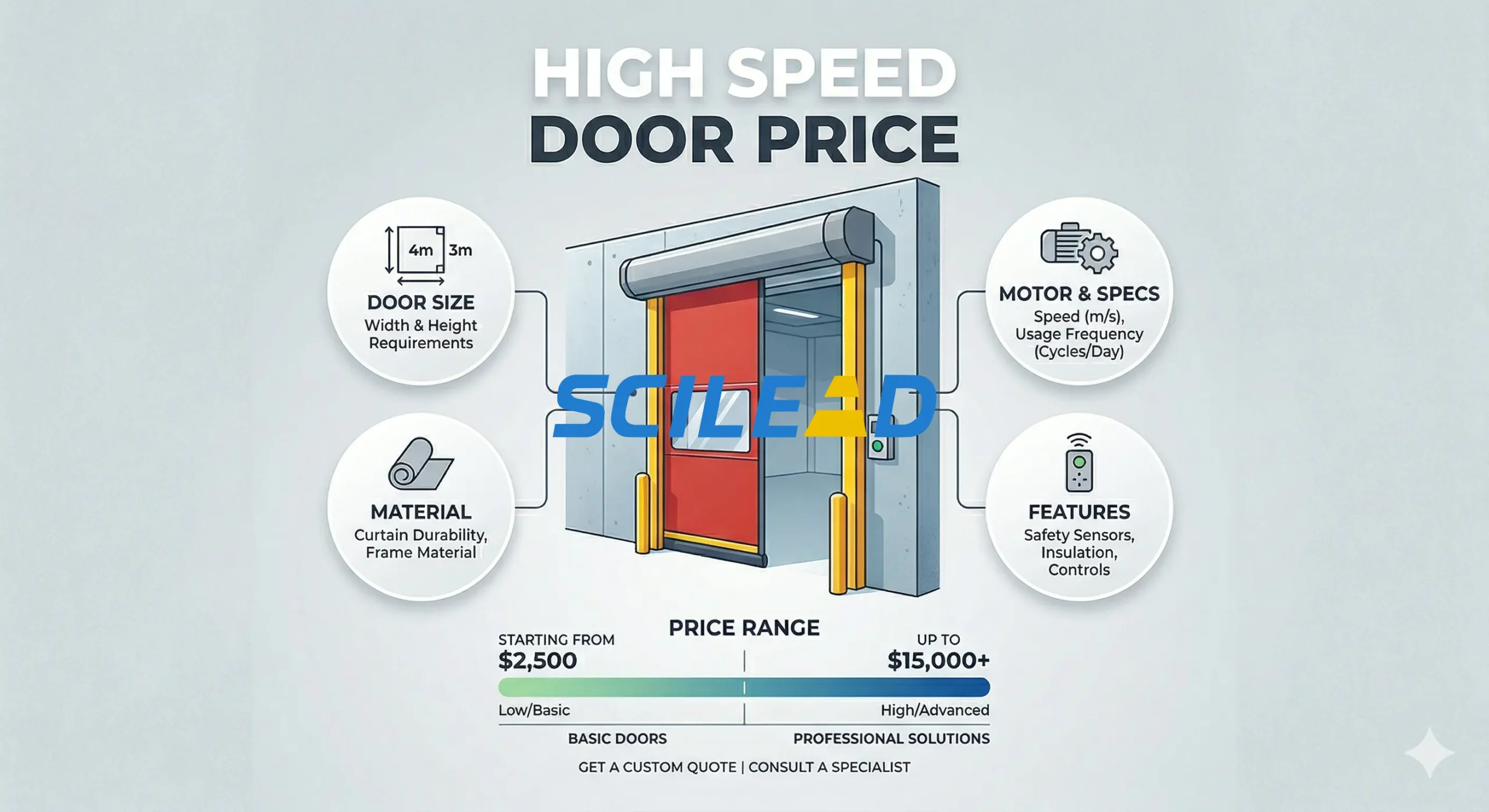
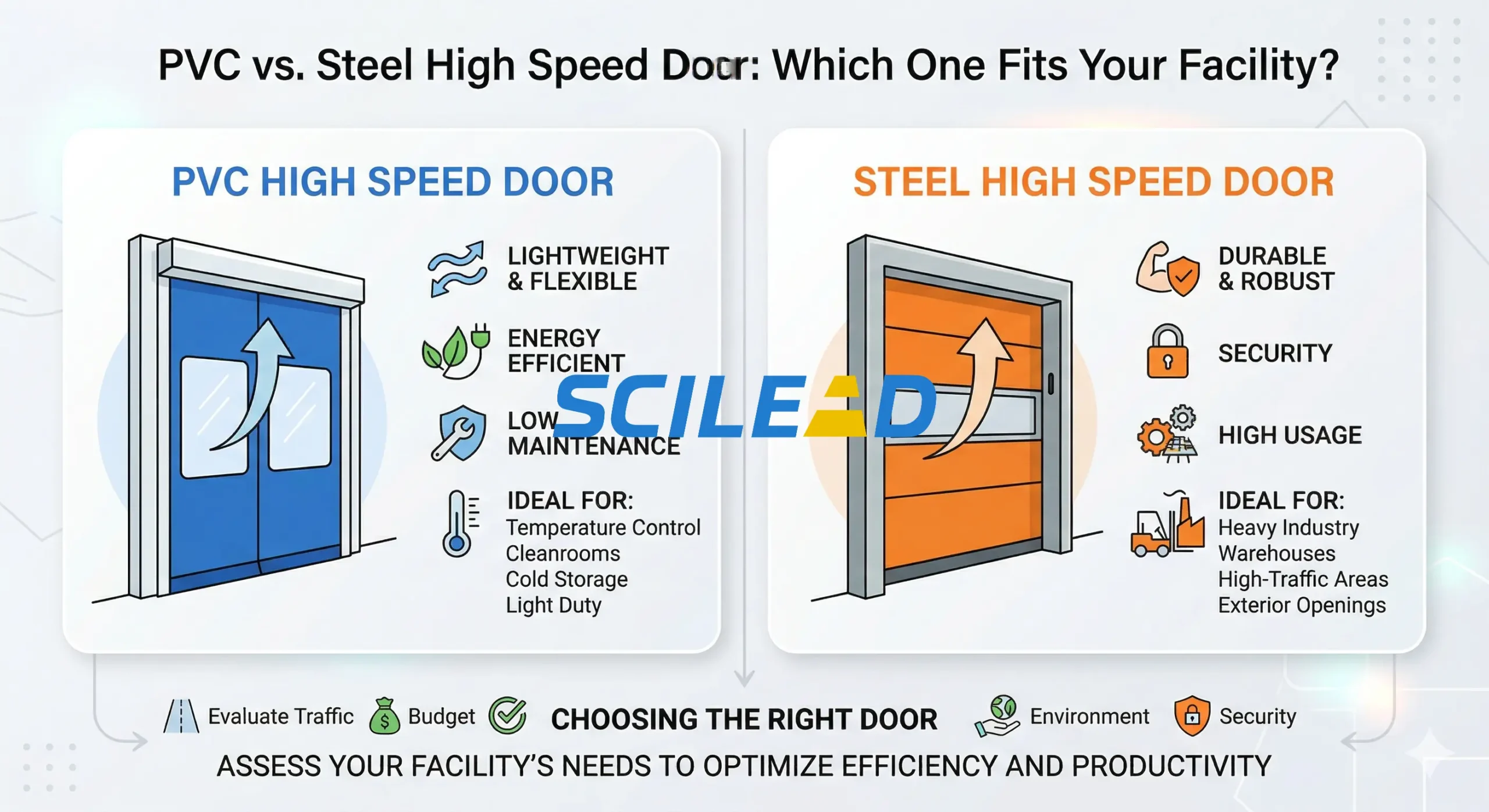
High speed door price depends on more than just door size. Material, insulation, wind resistance, control system, installation conditions, and application all affect the final cost. For most buyers, the best approach is to compare price based on total project needs instead of looking for a single standard number.
Table of Contents
- Why There Is No Fixed High Speed Door Price
- Main Factors That Affect High Speed Door Price
- Price Differences by Door Type
- Installation and Operating Costs
- How to Compare High Speed Door Quotes
- How to Lower Cost Without Choosing the Wrong Door
- Why Requesting a Project Quote Is More Accurate
- Conclusion
Why There Is No Fixed High Speed Door Price
There is no single fixed price for a high speed door because industrial projects vary widely. A cleanroom entrance, a cold storage opening, and a logistics passageway do not need the same structure or performance. Even if two doors have the same opening size, the price can still differ because of speed requirements, sealing level, safety devices, and operating environment.
For this reason, buyers should treat “high speed door price” as a project-based cost rather than a shelf price. A supplier usually needs the opening size, application, usage frequency, and site conditions before giving an accurate quote.
Main Factors That Affect High Speed Door Price
1. Door size. Larger openings require more material, stronger structure, and often a more powerful drive system. Bigger doors usually cost more.
2. Door material. PVC fabric doors are often more economical than rigid panel or metal spiral doors. If the project needs steel, insulated panels, or special surface treatment, the price will increase.
3. Insulation requirements. Cold storage high speed doors need better thermal performance, sealing, and sometimes heated components. These features raise the overall cost.
4. Wind resistance. A wind resistant high speed door needs stronger design and reinforcement. This is important for exterior openings and large industrial entrances, but it also adds cost.
5. Opening speed and traffic frequency. Higher cycle demands often require better motors, controls, and durable components. A door used many times each day must be built for heavier duty operation.
6. Safety and control options. Radar sensors, remote controls, pull cords, induction loops, interlocks, light curtains, and access control systems all affect price. The more automation required, the higher the project cost.
7. Special application requirements. Cleanroom, pharmaceutical, food, explosion-proof, and machine protection environments may require additional features, certifications, or material upgrades.
Price Differences by Door Type
Different door types are priced differently because they serve different applications.
PVC high speed doors are commonly used for interior logistics, workshops, and frequent traffic areas. They are often a cost-effective option when fast opening and closing is the main need.
Cold storage insulated high speed doors are usually more expensive because they are designed to reduce temperature loss and support cold chain efficiency.
Metal spiral high speed doors are generally positioned at a higher price level because they combine fast operation with stronger security, durability, and premium appearance.
Wind resistant high speed doors may cost more than standard fabric doors because they need stronger structural support for demanding exterior conditions.
Cleanroom high speed doors can also carry a higher price when the project requires better sealing, smooth surfaces, and compatibility with controlled environments.
In short, buyers should compare price within the correct product category. A lower-cost interior door is not necessarily a better deal if the project actually needs insulation, wind resistance, or hygienic design.
Installation and Operating Costs
Door price is only part of the total cost. Installation conditions can change the project budget. For example, site preparation, power supply, frame support, lifting access, and control integration may all affect installation cost.
Buyers should also consider operating cost over time. A faster, better-sealed door can help reduce energy loss, improve traffic efficiency, and lower downtime in busy facilities. In some cases, a door with a higher purchase price may create better long-term value because it supports lower operating cost and better workflow.
How to Compare High Speed Door Quotes
When comparing quotes, do not look only at the bottom-line price. Check the following points:
Application match. Make sure the quoted door is designed for your real environment, such as cleanroom, cold storage, logistics, or exterior use.
Included components. Confirm whether the quote includes motor, control box, safety devices, sensors, mounting parts, and installation.
Performance details. Compare opening speed, sealing, material quality, durability, and wind resistance instead of comparing price alone.
Service scope. Check whether technical support, after-sales service, and spare parts support are included.
Lead time. A lower quote may not be the best choice if lead time is too long for the project schedule.
A clear quote comparison helps buyers avoid choosing a door that looks cheaper at first but does not meet real operating needs.
How to Lower Cost Without Choosing the Wrong Door
The best way to control cost is to match the door to the application precisely. Avoid over-specifying features that are not needed, but do not remove critical performance requirements just to get a lower initial price.
For example, an interior workshop opening may not need the same configuration as a cold storage entrance or a wind exposed external opening. Choosing the correct model, correct size, and suitable control system can reduce unnecessary cost while still maintaining performance.
It is also helpful to provide complete project information early. Accurate details reduce quoting errors and help the supplier recommend the most suitable door more quickly.
Why Requesting a Project Quote Is More Accurate
A project quote is more reliable than a generic online price because it reflects real conditions. A supplier can recommend the right solution after reviewing:
- opening width and height
- indoor or outdoor use
- traffic frequency
- temperature requirements
- wind load conditions
- required safety devices
- special industry needs such as cleanroom or machine protection
SCILEAD provides multiple high speed door solutions, including cleanroom high-speed doors, cold storage insulated high-speed doors, metal spiral high-speed doors, machine protection doors, and wind resistant high-speed doors. This makes application-based quoting more useful than giving one universal price.
Conclusion
High speed door price is determined by application, size, material, insulation, wind resistance, automation, and installation requirements. There is no single price that fits every project. The most practical way to evaluate cost is to compare quotes based on the actual operating environment and long-term value.
If you want an accurate quotation, prepare your opening size, usage scenario, and performance requirements first. That will help you get a faster and more useful high speed door price estimate.