Table of Contents
- Why Efficiency Matters in Industrial Facilities
- How High Speed Doors Improve Efficiency
- 1. Improve Traffic Flow at Busy Openings
- 2. Reduce Downtime and Operational Delays
- 3. Maintain Better Environmental Control
- 4. Lower Energy Loss During Daily Operation
- 5. Support Automation and High-Cycle Operations
- Best Applications for Efficiency Gains
- How to Choose the Right Door for Efficiency
- Final Thoughts
Why Efficiency Matters in Industrial Facilities
In warehouses, factories, cold storage sites, and logistics centers, efficiency affects nearly everything: labor productivity, order speed, equipment flow, energy use, and customer service. When materials, forklifts, or people are delayed at key passage points, the result is often congestion, wasted time, and higher operating costs.
That is why many facilities now treat doors as part of the overall workflow system rather than just building components. Recent guidance from Rite-Hite highlights how automation and high-traffic operations are pushing facilities to maximize efficiency, while Rytec notes that fast high-performance doors improve traffic flow and efficiency throughout a facility.
How High Speed Doors Improve Efficiency
High speed doors improve efficiency by opening and closing faster than conventional industrial doors, reducing waiting time at openings and helping facilities keep people, products, and vehicles moving. According to Rytec, high-performance fabric doors can open at up to 50 inches per second, which directly supports smoother traffic flow while maintaining area separation.
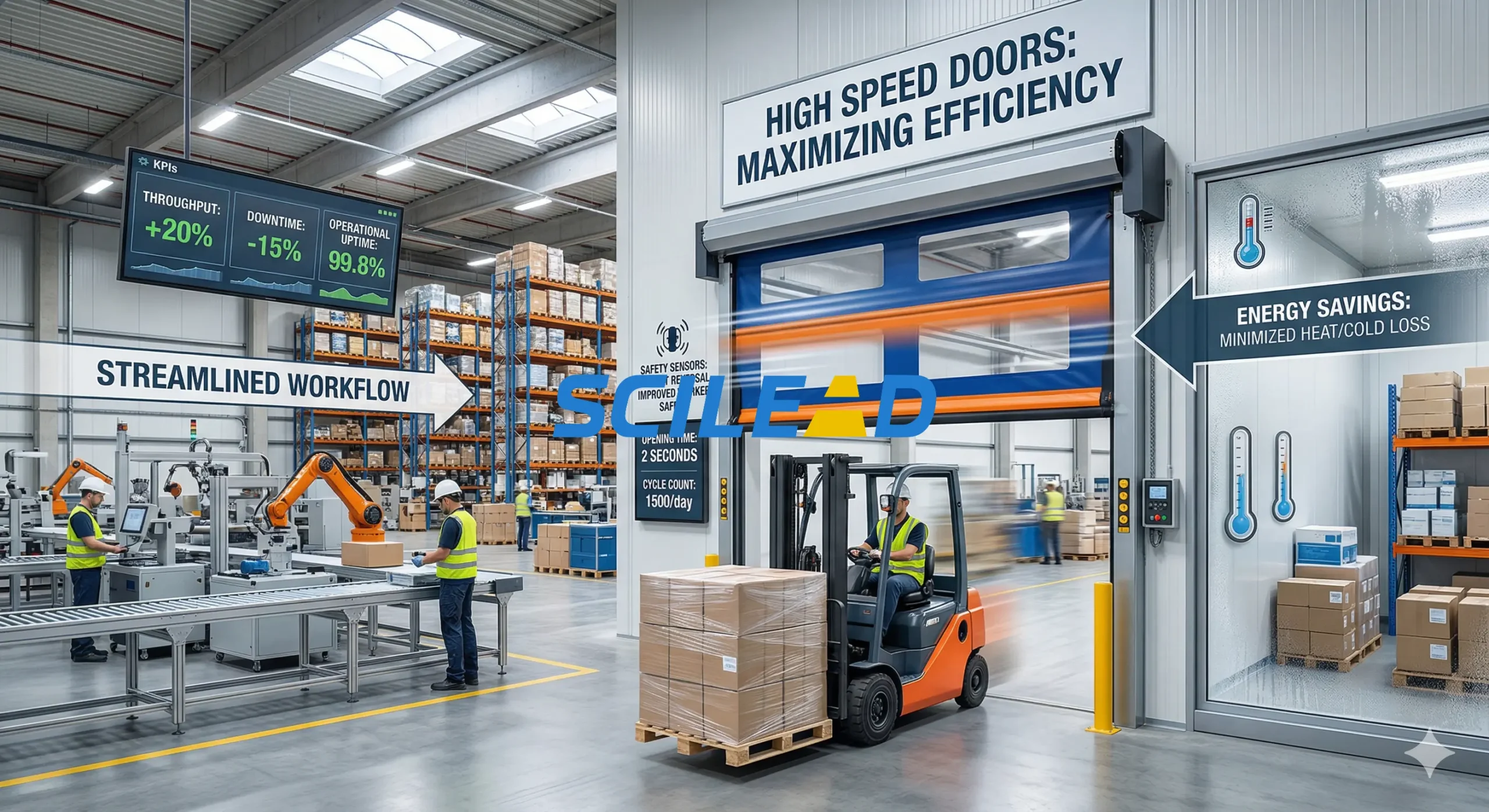
Efficiency gains do not come from speed alone. Modern high speed doors also help reduce downtime, support automation, maintain cleaner or temperature-controlled areas, and improve reliability in high-cycle applications. Rite-Hite specifically emphasizes that when doors open hundreds of times daily, speed, uptime, and energy efficiency become critical to overall operational performance.
1. Improve Traffic Flow at Busy Openings
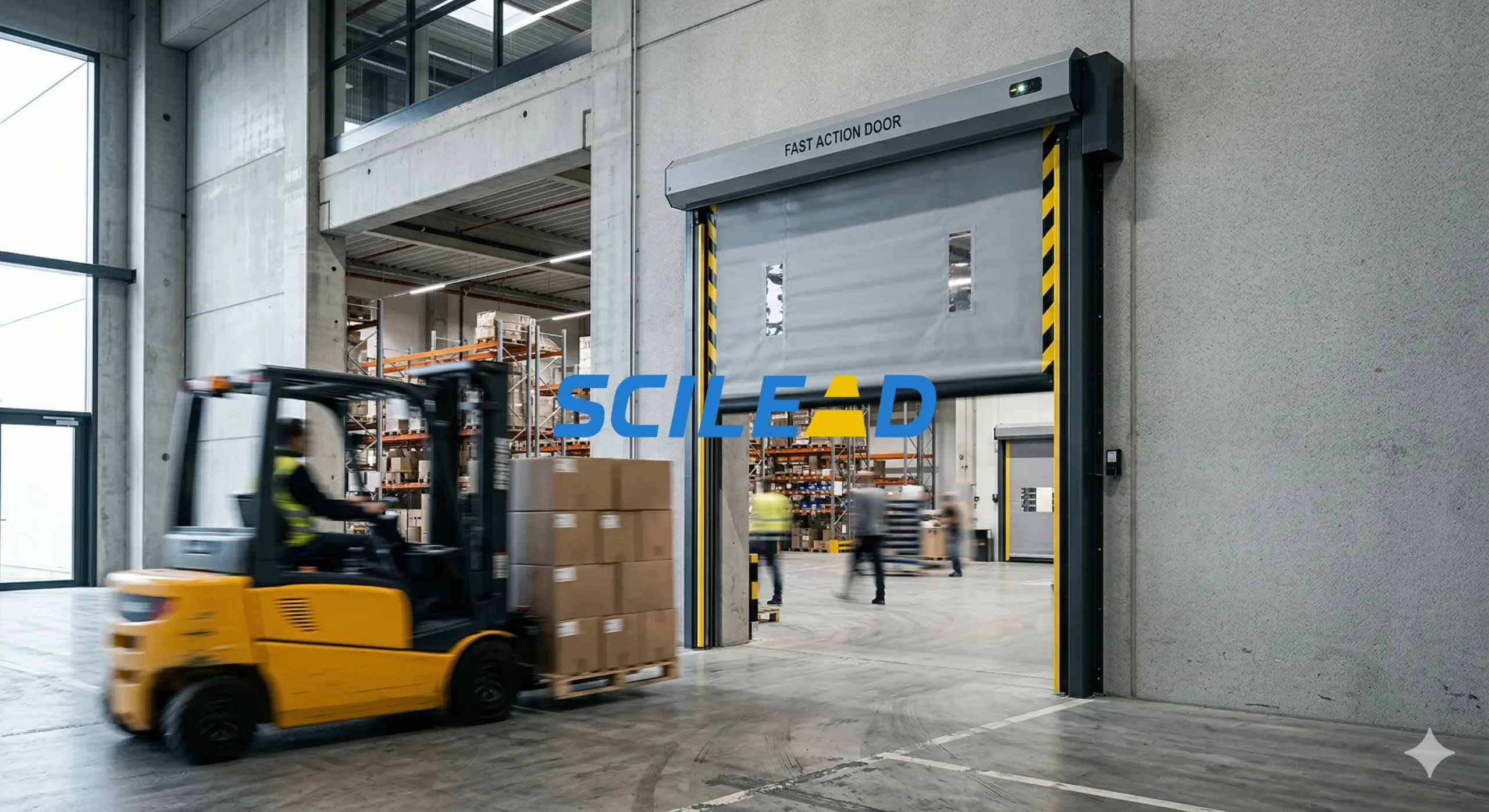
One of the most direct ways to improve efficiency with high speed doors is to install them at the openings with the heaviest daily traffic. In warehouses and production plants, forklifts, carts, and workers often pass through the same doorways repeatedly. A slow door creates bottlenecks. A faster one keeps movement continuous.
This is especially important in loading docks, cross-aisle passages, staging zones, and internal warehouse separations. Rytec’s material-handling guidance explains that high-performance doors improve speed and reliability, helping facilities reduce delays and support smoother workflows when moving materials from one area to another.
2. Reduce Downtime and Operational Delays
Efficiency drops quickly when a door is damaged, slow to recover, or not built for high-cycle use. In fast-moving facilities, a single unreliable opening can delay forklifts, disrupt pick paths, and create backup across multiple work areas.
Recent manufacturer guidance shows that choosing the right door system can reduce this risk. Rite-Hite stresses that doors in high-cycle environments need strong uptime performance, while Rytec frames door retrofits and upgrades around achieving maximum performance with minimal downtime. In practical terms, that means facilities should prioritize durable components, appropriate door types, and preventive maintenance rather than only focusing on initial price.
3. Maintain Better Environmental Control
Efficiency is not only about movement. It is also about maintaining the right operating environment. High speed doors help separate areas with different temperatures, cleanliness levels, or air-pressure requirements by reducing the amount of time an opening remains exposed.
This matters in food plants, clean manufacturing areas, pharmaceuticals, and temperature-separated warehouse zones. Rytec’s recent exterior fabric door guidance explains that many facilities use high-performance doors to control temperatures, traffic flow, and operating costs at critical openings. Better environmental control helps reduce contamination risks and maintain more stable production conditions, which improves operational efficiency overall.
4. Lower Energy Loss During Daily Operation
A high speed door can also improve efficiency by lowering the energy wasted during repeated opening cycles. Every time a door stays open, conditioned air can escape and outside air can enter. In high-traffic openings, this repeated air exchange increases heating, cooling, or refrigeration load.
Rytec reports that high-performance doors become more energy efficient in high-cycle applications, citing a DASMA finding that at 75 cycles per day, 10% energy savings is realized. This makes high speed doors especially valuable in warehouses, cold storage sites, and other facilities where efficiency depends on both fast traffic and climate control.
5. Support Automation and High-Cycle Operations
Modern industrial efficiency increasingly depends on automation. Facilities are using more sensors, conveyors, automated guided vehicles, and coordinated traffic systems. A door that cannot match that pace becomes a weak point in the process.
Rite-Hite’s automation guidance explains that facilities have opportunities to improve efficiency across in-plant, staging, dock, and yard operations through automation planning. High speed doors fit naturally into that strategy because they can respond quickly to activation systems and repeated use, helping access points operate more like synchronized process controls than manual barriers.
Best Applications for Efficiency Gains
Warehouses and Distribution Centers
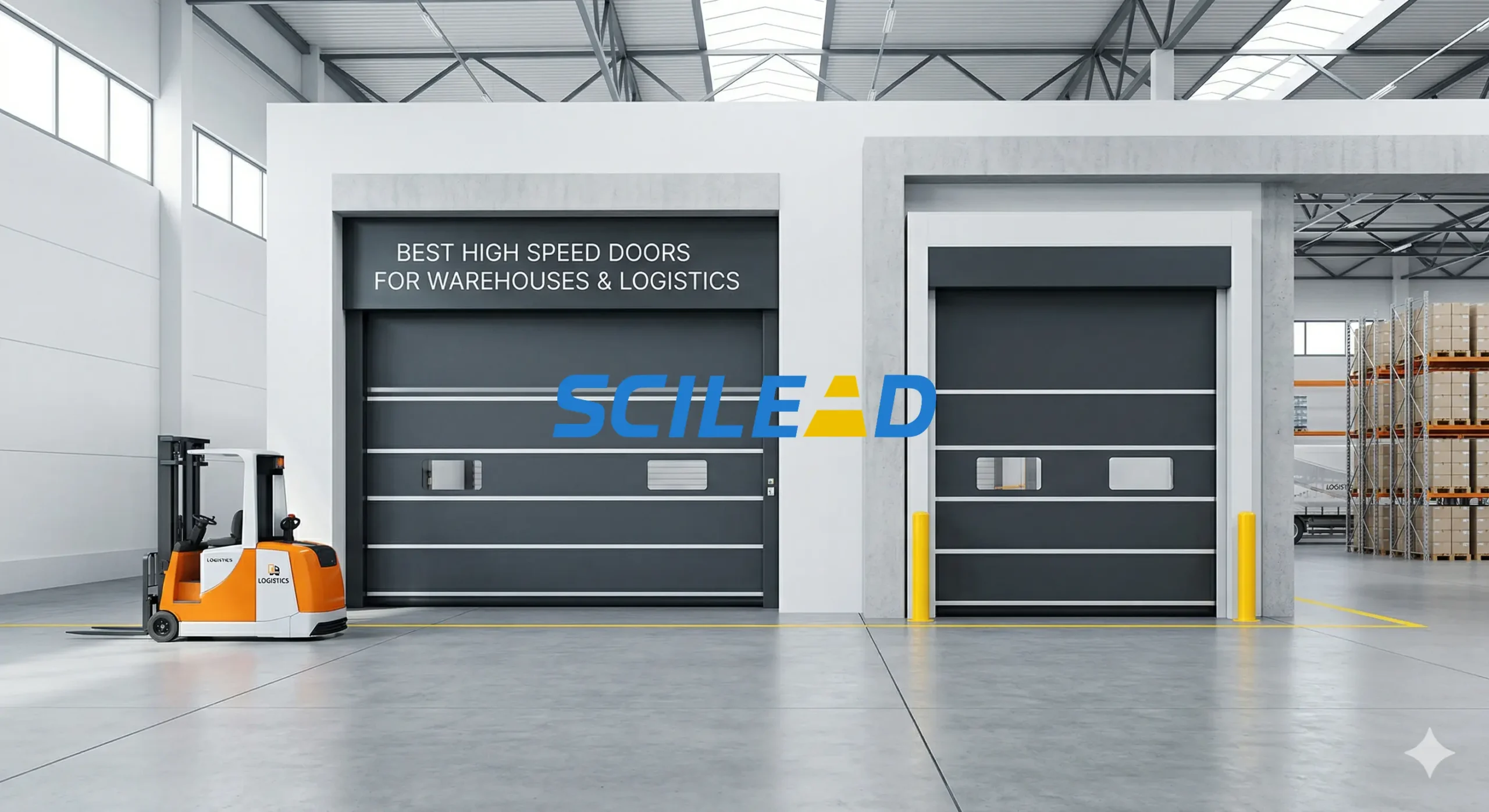
These facilities benefit from faster forklift movement, reduced aisle congestion, and better separation between storage, picking, and shipping zones. Rytec directly links high-performance doors to smoother workflows in material-handling environments.
Loading Docks
At loading docks, efficiency depends on quick truck turnaround, smooth forklift entry, and less exposure to outside conditions. Rite-Hite notes that loading dock operations are being reshaped by automation and the need to maximize efficiency in high-traffic environments.
Manufacturing Plants
Production areas often need fast access between lines, staging zones, and support spaces. High speed doors help reduce stop-and-go movement and maintain better process separation, particularly where flow consistency matters.
Cold Storage and Temperature-Controlled Areas
In chilled or frozen applications, fast-closing doors reduce air exchange and help preserve target temperatures. This improves both energy performance and day-to-day workflow by limiting temperature disruption at busy openings.
How to Choose the Right Door for Efficiency
To improve efficiency, the first step is to match the door to the actual application. Interior openings with frequent traffic may need flexible PVC high speed doors, while exterior openings may require rigid or reinforced high speed doors for weather resistance, durability, and security. Rytec notes that exterior applications demand a balance of speed, durability, and efficiency.
Facilities should also review:
- daily traffic frequency and peak congestion points;
- the need for temperature or cleanliness separation;
- compatibility with sensors or automation systems;
- uptime requirements and maintenance expectations;
- total cost of ownership rather than purchase price alone.
The most efficient result usually comes from placing the right high speed door at the right opening, not from using one door type everywhere.
Final Thoughts
High speed doors improve efficiency by reducing waiting time, supporting smoother traffic flow, limiting operational downtime, helping control indoor environments, and working better with automated processes. In a modern facility, a door is no longer just an entry point. It is part of the production and logistics system.
When chosen correctly, a high speed door can help a facility move faster, waste less energy, and operate more reliably every day. That is why more warehouses, factories, and logistics centers now see high speed doors as an efficiency tool, not just an access solution.