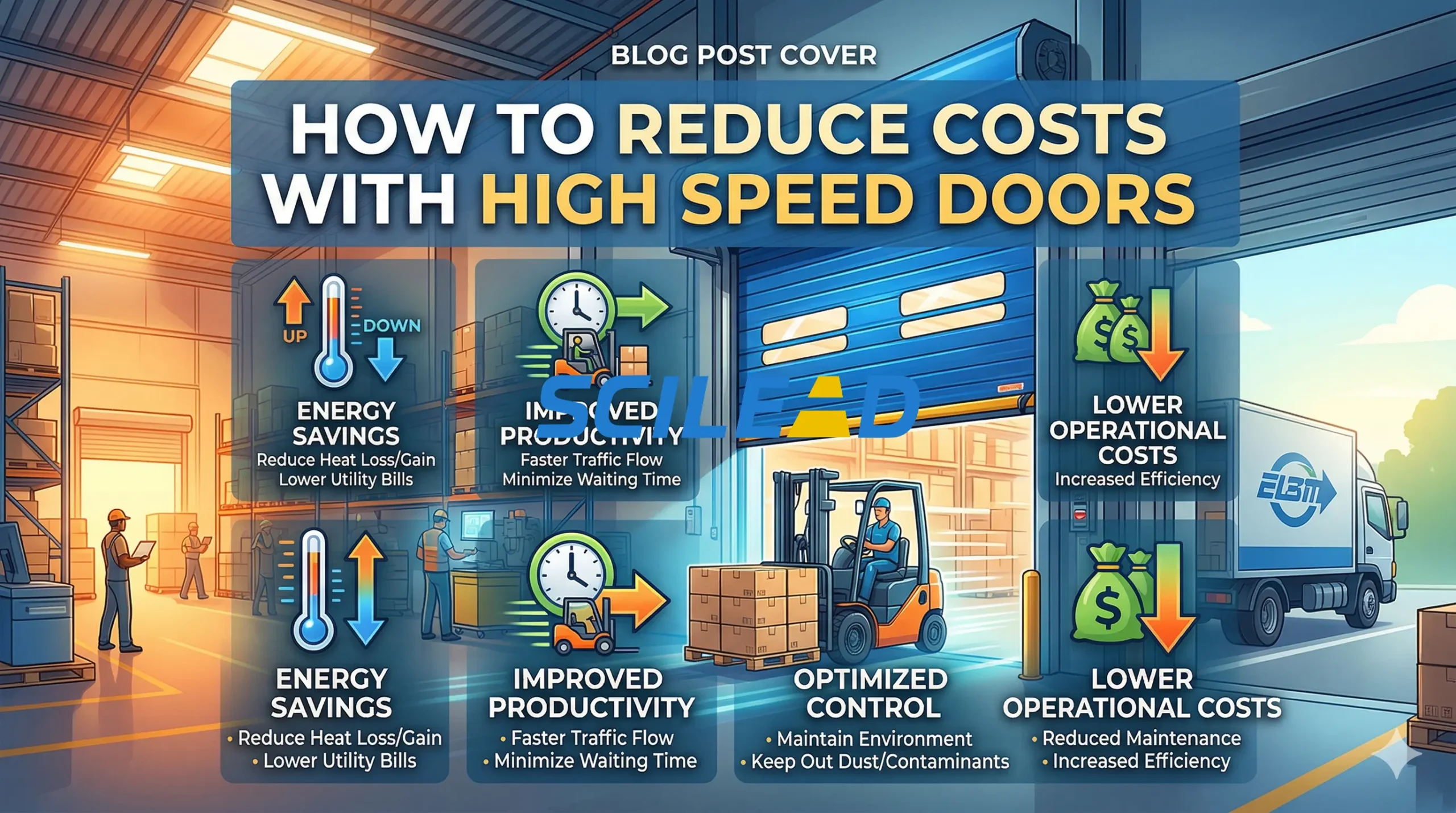
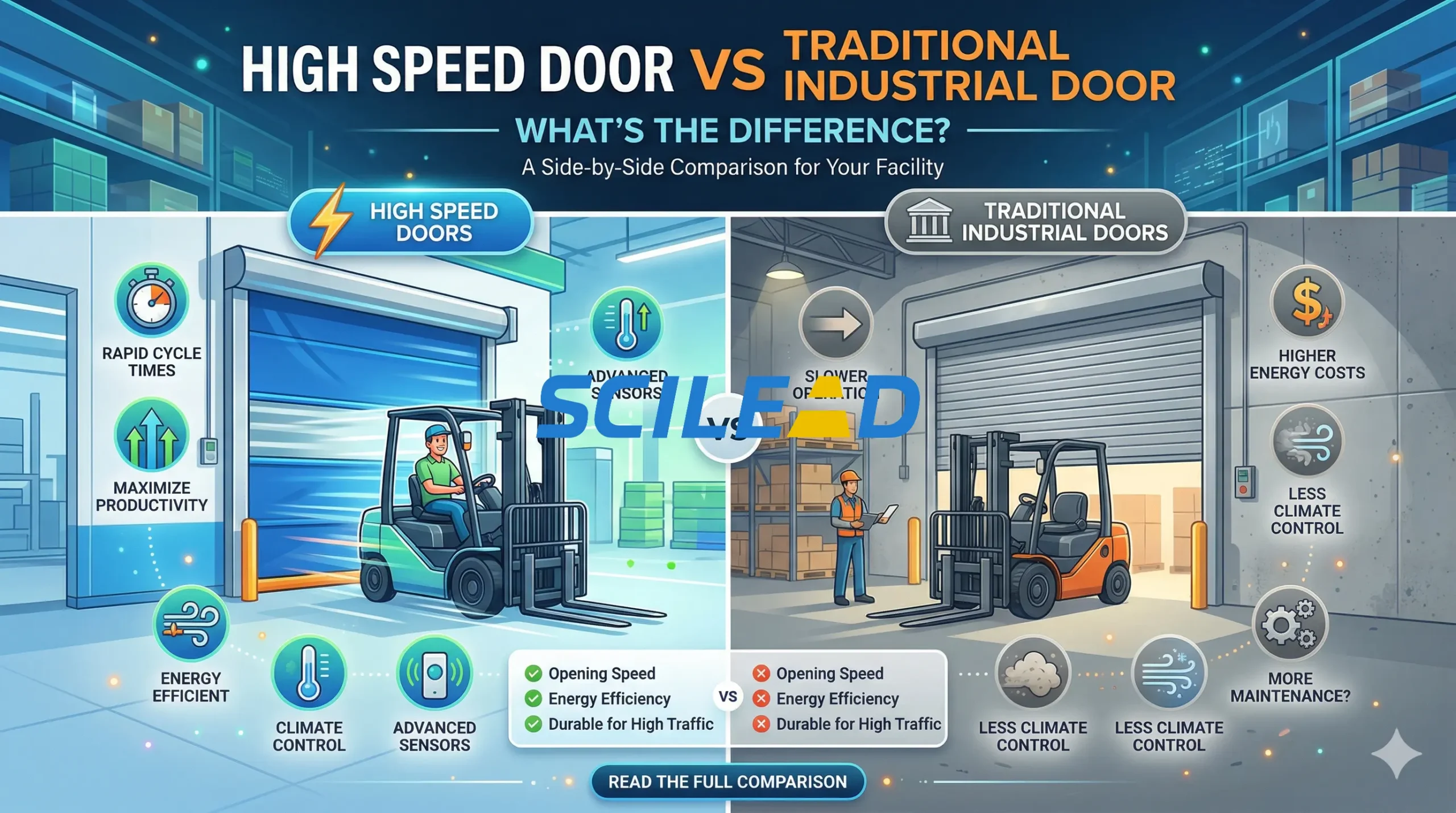
High speed doors help industrial facilities reduce costs by limiting energy loss, improving traffic flow, and lowering maintenance-related downtime. When the right door is selected for the right environment, the savings are practical and measurable over time.
Contents
- Why Cost Control Matters in Industrial Facilities
- Reduce Energy Loss with Faster Open and Close Cycles
- Improve Workflow and Labor Efficiency
- Lower Maintenance and Downtime Costs
- Choose the Right High Speed Door for the Application
- Focus on Total Cost, Not Only Purchase Price
- Conclusion
Why Cost Control Matters in Industrial Facilities
In warehouses, factories, cleanrooms, and cold chain sites, door performance affects daily operating cost. Doors that open slowly, seal poorly, or fail often can increase energy consumption, delay internal transport, and create avoidable repair expense. High speed doors are designed to reduce these losses by supporting faster and more reliable passage.
Reduce Energy Loss with Faster Open and Close Cycles
One of the main ways to reduce costs with high speed doors is to cut unnecessary air exchange. Fast opening and closing shortens the time that conditioned air escapes and outside air enters. This is especially important in temperature-sensitive and controlled environments.
In cold storage, better sealing and insulation help reduce temperature fluctuation and refrigeration load. For these applications, see Cold Storage Insulated High-Speed Door and Cold Chain Industry.
In controlled production areas, doors with stable sealing performance can also help maintain cleaner indoor conditions. Related solutions are available at Cleanroom High-Speed Door and Cleanroom Applications.
Improve Workflow and Labor Efficiency
High traffic openings affect transport speed, forklift movement, and internal logistics. High speed doors reduce waiting time at passages, which helps improve throughput in facilities with frequent movement of goods and people.
When traffic moves more smoothly, facilities can reduce delays in loading, unloading, and internal transfer. This supports better labor efficiency without changing the core workflow. For this type of usage, see Logistics Passageway.
Lower Maintenance and Downtime Costs
Unplanned downtime increases operating cost. A door that stops frequently can delay traffic, affect production rhythm, and add repair expense. High speed doors built for frequent cycles can reduce these interruptions when matched correctly to the environment.
Cost reduction does not come only from speed. It also comes from choosing a door structure that fits actual usage frequency, wind load, and safety requirements. In demanding exterior or higher-security environments, stronger models such as Metal Spiral High-Speed Door may offer better long-term value.
Choose the Right High Speed Door for the Application
The best way to reduce costs with high speed doors is to avoid under-specifying or over-specifying the solution. A lower-priced door is not always the lower-cost option if it cannot meet the real operating conditions.
For example, an interior logistics opening may focus on traffic efficiency and basic sealing, while a cold room needs insulation and a cleanroom may require better environmental control. Matching door type to site conditions helps avoid unnecessary upgrades while still protecting performance.
You can also compare application-based needs with this related article: High Speed Door Price: What Affects Cost and How to Choose the Right Option.
Focus on Total Cost, Not Only Purchase Price
When buyers evaluate industrial high speed doors, they should look at total cost over time rather than only the initial quotation. A suitable door can help reduce energy waste, support faster movement, and lower service interruptions. These factors often have more impact on total cost than the purchase price alone.
Useful project details include opening size, indoor or outdoor use, traffic frequency, temperature requirements, and safety expectations. Clear information helps suppliers recommend a more accurate solution and avoid unnecessary cost.
For project discussion or quotation, visit Contact Us.
Conclusion
High speed doors reduce costs by controlling energy loss, improving traffic efficiency, and lowering downtime risk. The key is to choose a door that matches the actual application. For facilities that want practical cost savings, the right high speed door is not only an access solution, but also an operational efficiency upgrade.