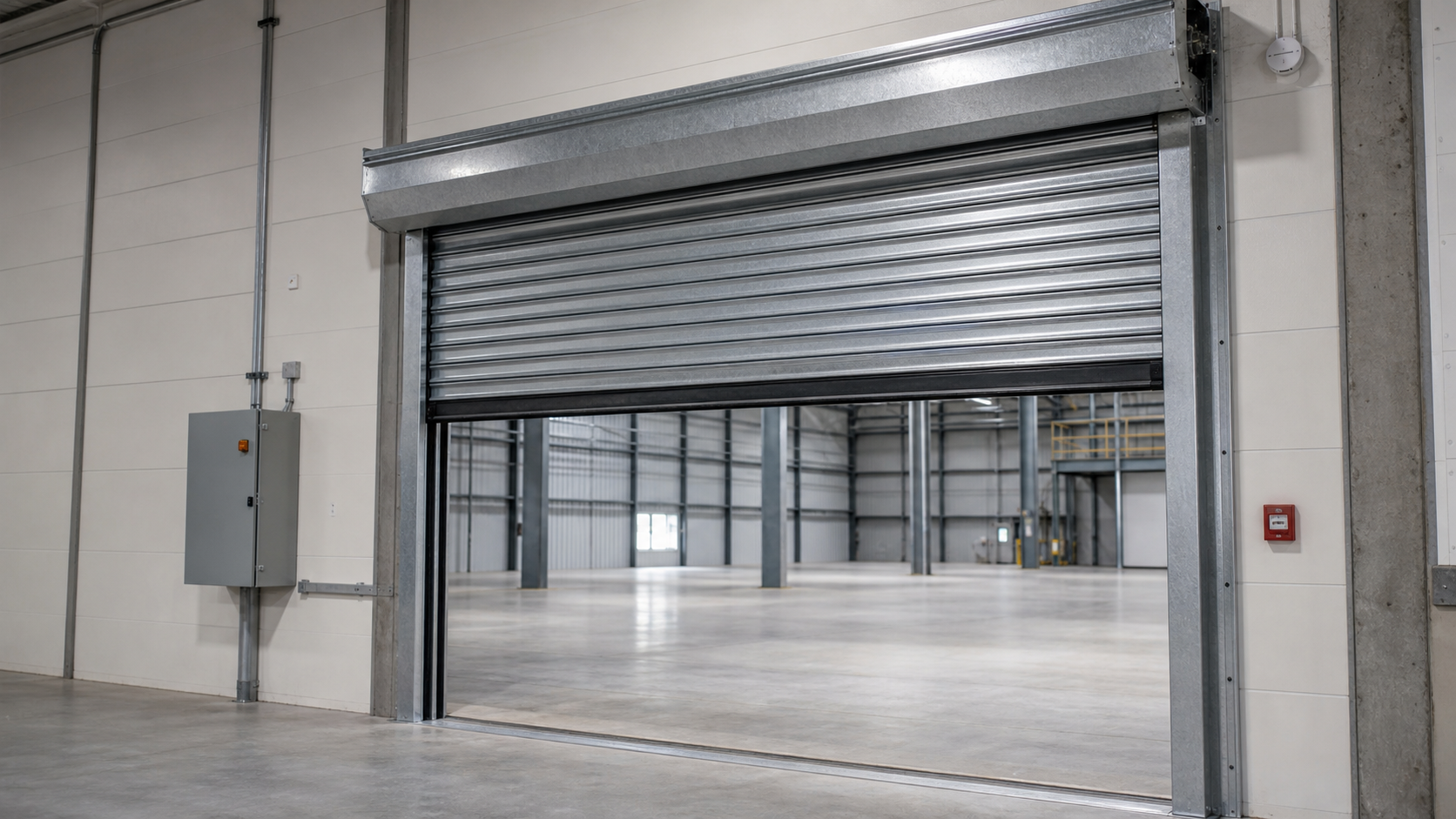
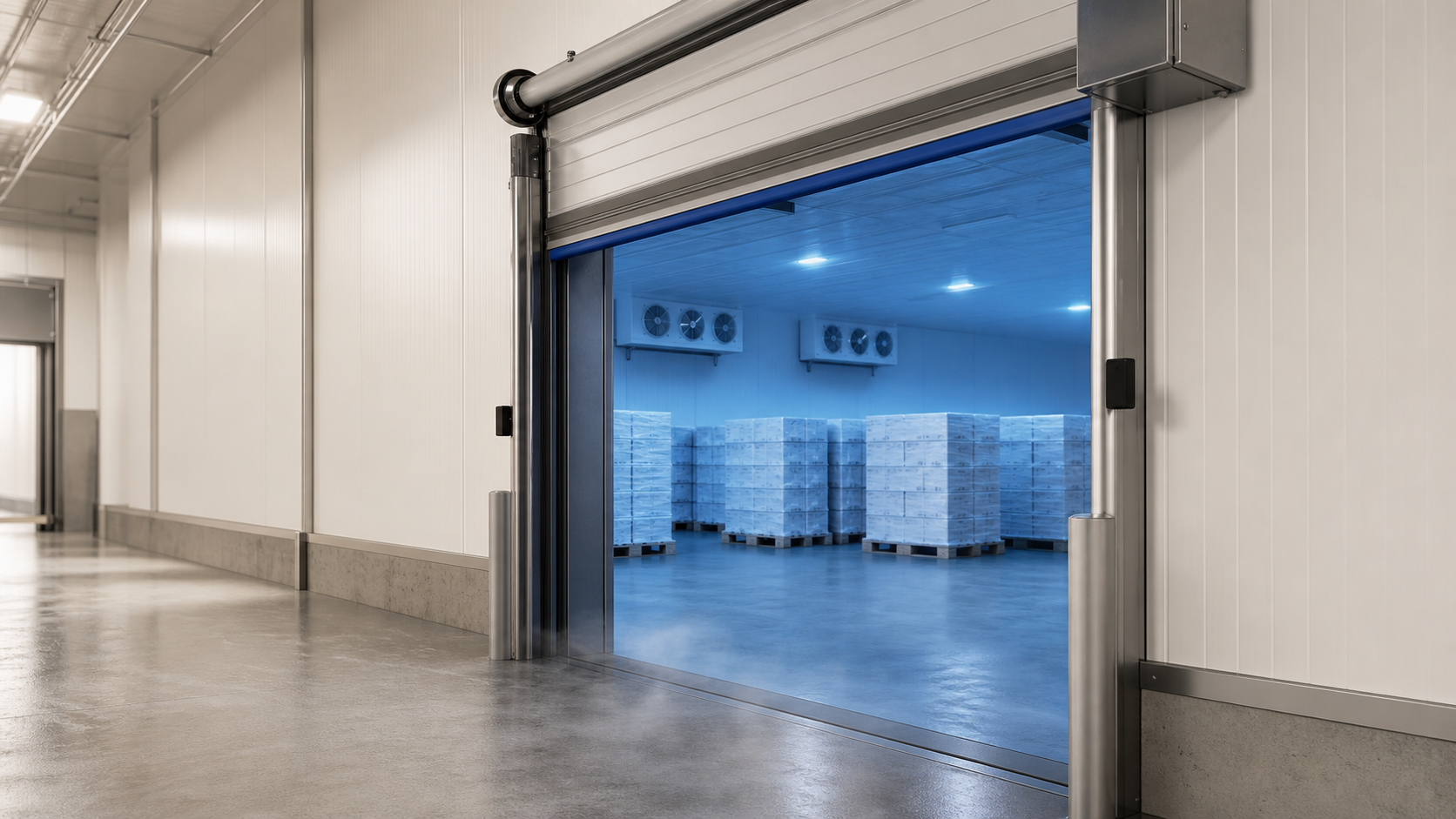
When choosing an industrial door, many facility managers compare a high speed door vs sliding door to determine which option offers better efficiency, safety, and long-term value. While both door types are widely used in warehouses, factories, logistics centers, and cold storage facilities, they serve different operational needs. This guide compares high speed doors and sliding doors in terms of speed, energy efficiency, maintenance, safety, and cost.
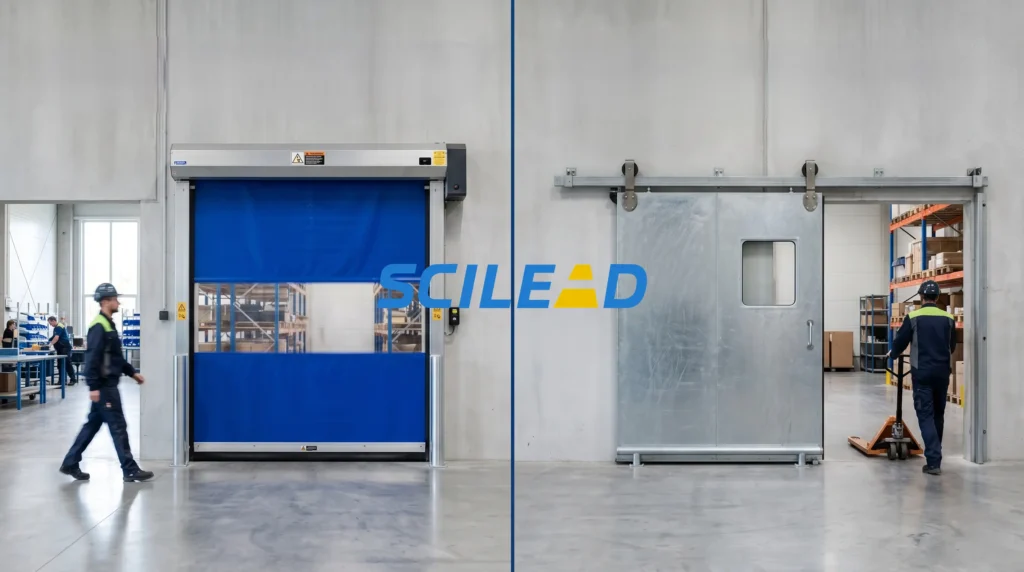
Table of Contents
- What Is a High Speed Door?
- What Is a Sliding Door?
- Opening and Closing Speed Comparison
- Energy Efficiency and Climate Control
- Safety Features
- Maintenance Requirements
- Cost and Long-Term Value
- Best Applications for Each Door Type
- Conclusion
What Is a High Speed Door?
A high speed door is an industrial door designed to open and close rapidly, typically at speeds between 0.8 and 2.5 meters per second. These doors are commonly used in manufacturing plants, warehouses, food processing facilities, and cold storage environments where frequent traffic and environmental control are critical.
High speed doors help reduce energy loss, improve workflow efficiency, and enhance workplace safety. Learn more about industrial high speed door solutions at Scilead Door.
What Is a Sliding Door?
A sliding door operates by moving horizontally along a track. Industrial sliding doors are often installed in warehouses, aircraft hangars, agricultural buildings, and facilities where opening speed is not a primary concern.
Sliding doors are valued for their simple structure, durability, and ability to accommodate large openings. However, they generally require more wall space and operate more slowly than high speed doors.
Opening and Closing Speed Comparison
The biggest difference in a high speed door vs sliding door comparison is operating speed.
- High Speed Door: Typically opens within a few seconds.
- Sliding Door: May require 10–30 seconds or longer depending on size.
Faster door cycles reduce waiting time for forklifts and personnel, improving operational efficiency in busy facilities.
For environments with high traffic volumes, a high speed door offers a significant productivity advantage.
Energy Efficiency and Climate Control
Energy efficiency is another important factor when comparing high speed doors and sliding doors.
Because high speed doors open and close quickly, they minimize air exchange between indoor and outdoor environments. This helps maintain stable temperatures and reduces HVAC costs.
Sliding doors remain open longer during operation, increasing heat loss, cold air infiltration, dust entry, and energy consumption.
Businesses operating cold storage facilities may benefit from specialized high speed freezer doors and insulated industrial door systems.
Safety Features
Modern high speed doors often include advanced safety systems such as:
- Photoelectric sensors
- Safety light curtains
- Automatic obstacle detection
- Soft bottom edges
These features reduce collision risks and help protect workers and equipment.
Traditional sliding doors generally rely on manual operation or basic automation and may offer fewer integrated safety technologies.
Maintenance Requirements
Sliding doors have a relatively simple mechanical design, which can make maintenance straightforward. However, track systems may accumulate dirt, debris, or ice that affects operation.
High speed doors contain more advanced components, including motors, control systems, and sensors. While routine inspections are recommended, modern high speed doors are designed for high cycle performance and long service life.
Choosing a reputable manufacturer and obtaining professional support can significantly reduce maintenance costs.
Cost and Long-Term Value
Initial purchase costs for sliding doors are usually lower than for high speed doors.
However, long-term operating costs should also be considered.
- High Speed Door Benefits:
- Reduced energy consumption
- Improved productivity
- Better environmental control
- Enhanced safety
- Sliding Door Benefits:
- Lower upfront investment
- Simple construction
- Suitable for large openings
For facilities with frequent daily traffic, the return on investment of a high speed door is often higher over time.
Best Applications for Each Door Type
High Speed Doors Are Best For:
- Warehouses
- Logistics centers
- Food processing plants
- Pharmaceutical facilities
- Cold storage rooms
- Cleanrooms
Sliding Doors Are Best For:
- Agricultural buildings
- Aircraft hangars
- Large storage facilities
- Low-traffic industrial spaces
Businesses seeking fast operation and energy savings often choose industrial high speed doors over conventional sliding doors.
Conclusion
In the debate of high speed door vs sliding door, the best choice depends on operational requirements. Sliding doors offer simplicity and lower upfront costs, while high speed doors deliver faster operation, improved safety, and greater energy efficiency.
For warehouses, manufacturing plants, logistics centers, and temperature-controlled environments, high speed doors are generally the more effective long-term solution. Explore a full range of industrial high speed door products and customized solutions at Scilead Door.