Choosing a high speed door is about more than speed, insulation, or durability. Certifications are one of the most reliable indicators of a door’s quality, safety, and compliance with international standards. Whether you are purchasing a high speed door for manufacturing, logistics, food processing, pharmaceuticals, or cold storage, understanding the relevant certifications helps ensure long-term performance and regulatory compliance.
In this guide, we’ll explain the most important certifications for high speed doors, why they matter, and how to evaluate certified products before making a purchasing decision.
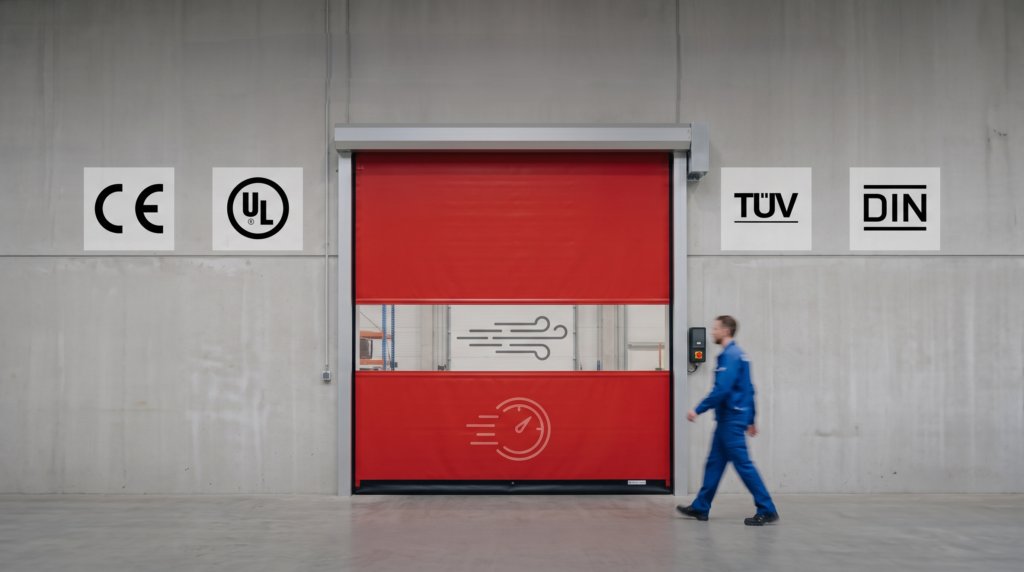
Table of Contents
- Why Certifications Matter
- 1. CE Certification
- 2. ISO 9001 Quality Management
- 3. UL Certification (North America)
- 4. Wind Resistance Certification
- 5. Fire Safety Certifications
- 6. Food and Pharmaceutical Compliance
- 7. IP Protection Rating
- 8. Energy Efficiency and Thermal Performance
- How to Verify Certifications
- Choose a Certified High Speed Door Supplier
- FAQ
Why Certifications Matter
Certifications verify that a high speed door has been tested according to recognized international standards. They demonstrate compliance with safety, structural performance, electrical requirements, and quality management systems.
Certified high speed doors typically offer:
- Higher operational safety
- Reliable long-term performance
- Compliance with local regulations
- Lower maintenance costs
- Greater customer confidence
For businesses operating internationally, certification is often a mandatory purchasing requirement.
1. CE Certification
CE certification is one of the most important certifications for high speed doors sold within the European Economic Area (EEA).
A CE-marked high speed door complies with applicable EU directives, including:
- Machinery Directive
- Low Voltage Directive
- Electromagnetic Compatibility (EMC) Directive
CE certification indicates that the manufacturer has assessed the product for health, safety, and environmental protection requirements.
If your project is located in Europe, CE certification is generally essential.
2. ISO 9001 Quality Management
ISO 9001 is not a product certification but a certification of the manufacturer’s quality management system.
A manufacturer with ISO 9001 certification demonstrates:
- Consistent production processes
- Documented quality control procedures
- Continuous process improvement
- Customer-focused manufacturing
Choosing an ISO 9001-certified manufacturer reduces the risk of inconsistent product quality.
3. UL Certification (North America)
For projects in the United States and Canada, UL certification is often an important consideration.
UL testing evaluates electrical safety and helps ensure that motors, control systems, and electrical components meet recognized safety standards.
While not every high speed door requires full UL certification, electrical components should comply with applicable North American regulations.
4. Wind Resistance Certification
High speed exterior doors should be tested for wind resistance.
Wind load testing verifies that the door can operate safely under specific wind pressures without structural failure.
Wind resistance classifications are especially important for:
- Warehouses
- Distribution centers
- Airports
- Industrial buildings
- Loading dock applications
Always confirm the certified wind load rating matches your project’s environmental conditions.
5. Fire Safety Certifications
Some industrial facilities require certified fire-rated doors rather than standard high speed doors.
Depending on the application, fire-related certifications may include:
- Fire resistance testing
- Smoke control testing
- Emergency closing performance
If the installation location is part of a fire compartment, consult local building regulations before selecting a door.
6. Food and Pharmaceutical Compliance
Facilities in food processing and pharmaceutical manufacturing often require additional hygiene standards.
Suitable high speed doors should feature:
- Smooth, easy-to-clean surfaces
- Corrosion-resistant materials
- Stainless steel components where required
- Materials suitable for hygienic environments
These features help facilities comply with industry-specific sanitation requirements.
7. IP Protection Rating
The control box and electrical components should have an appropriate IP (Ingress Protection) rating.
Common ratings include:
- IP54 for general industrial environments
- IP65 for dusty or wet environments
A higher IP rating provides better protection against dust and water, increasing equipment reliability.
8. Energy Efficiency and Thermal Performance
Although not always mandatory, thermal performance testing is increasingly important for modern industrial buildings.
Manufacturers may provide certified data for:
- Air permeability
- Thermal insulation (U-value)
- Operating speed
- Cycle life testing
These performance indicators help reduce energy consumption while maintaining indoor climate control.
How to Verify Certifications
Before purchasing a high speed door, ask the supplier to provide supporting documentation.
You should request:
- CE Declaration of Conformity
- Product test reports
- ISO 9001 certificate
- Wind resistance test reports
- Electrical certification documents
- Technical specifications
A reputable manufacturer should be able to supply these documents upon request.
Choose a Certified High Speed Door Supplier
Working with an experienced manufacturer helps ensure your high speed door meets the certifications required for your market and application.
At Scilead Door, we manufacture industrial high speed doors designed for demanding commercial and industrial environments. Our products are built under strict quality control processes and can be supplied with the certifications required for international projects.
To learn more about our products, visit the following resources:
FAQ
Is CE certification mandatory for high speed doors?
Yes. High speed doors sold in the European Economic Area generally require CE marking to demonstrate compliance with applicable EU regulations.
Does ISO 9001 certify the door itself?
No. ISO 9001 certifies the manufacturer’s quality management system rather than an individual product.
Why is wind resistance certification important?
Wind resistance testing confirms that an exterior high speed door can safely withstand specified wind pressures while maintaining reliable operation.
Should food factories use certified high speed doors?
Yes. Food production facilities typically require doors made from hygienic materials that are easy to clean and suitable for sanitary environments.
How can I verify a manufacturer’s certifications?
Request copies of certification documents, declarations of conformity, product test reports, and relevant quality management certificates before placing an order.