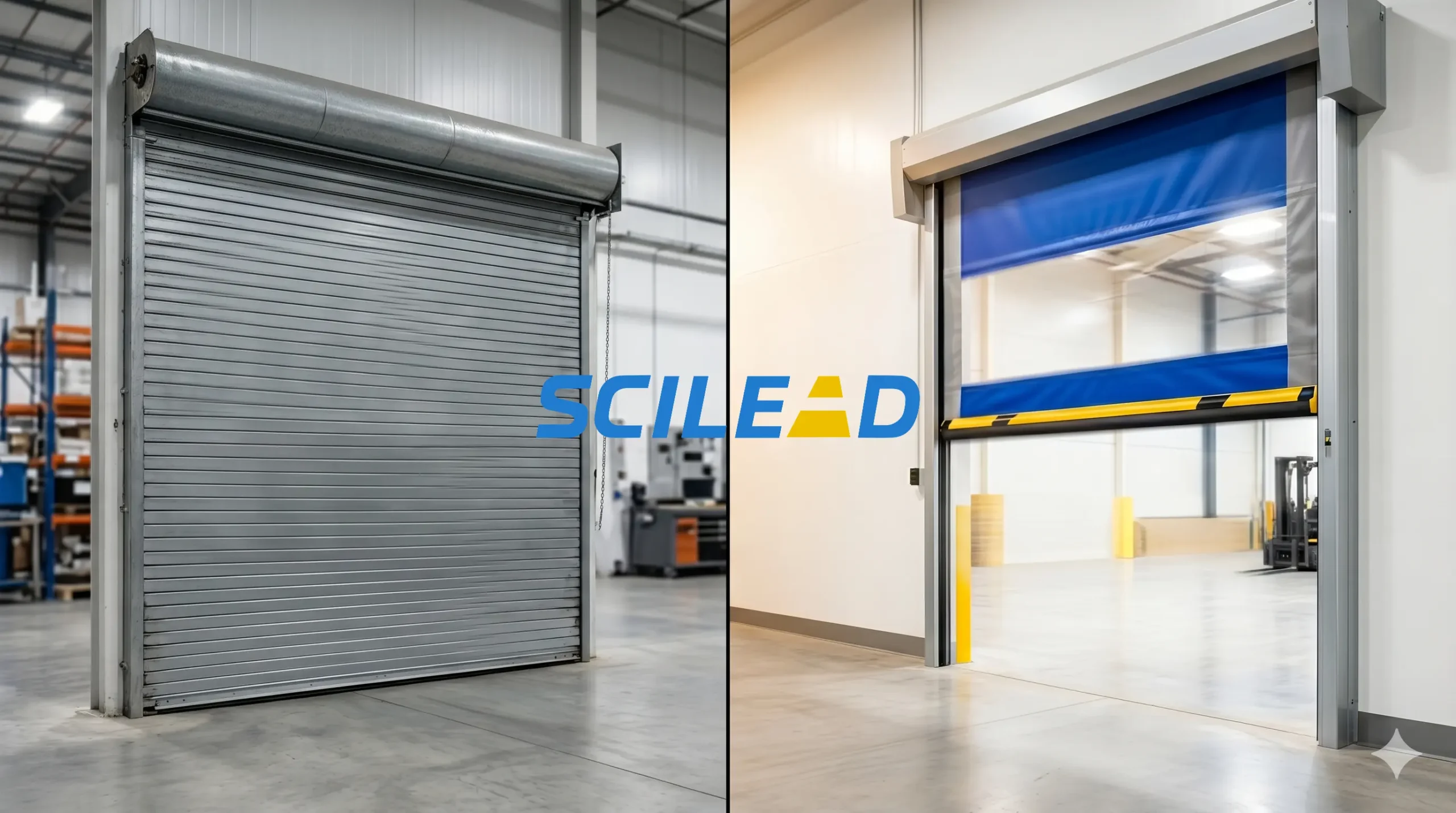
Choosing between an industrial roll up door and a high speed door is important for warehouses, factories, logistics centers, and cleanroom facilities. Both door types improve security and workflow, but they are designed for different operational needs. This guide compares industrial roll up doors and high speed doors based on speed, insulation, durability, maintenance, and cost.
Table of Contents
- What Is an Industrial Roll Up Door?
- What Is a High Speed Door?
- Key Differences Between Industrial Roll Up Doors and High Speed Doors
- Advantages of Industrial Roll Up Doors
- Advantages of High Speed Doors
- Best Applications for Each Door Type
- Energy Efficiency and Insulation
- Maintenance and Durability
- Cost Comparison
- How to Choose the Right Industrial Door
- Conclusion
What Is an Industrial Roll Up Door?
An industrial roll up door is a durable door system made from steel, aluminum, or insulated slats that roll upward into a compact coil. These doors are commonly used in warehouses, loading docks, storage facilities, and manufacturing plants. Industrial roll up doors are valued for security, weather resistance, and long-term durability.
Main features of industrial roll up doors include:
- Strong steel or aluminum construction
- Compact vertical operation
- Good security performance
- Optional insulation for temperature control
- Suitable for medium-frequency operation
What Is a High Speed Door?
A high speed door is designed for rapid opening and closing cycles. These doors are widely used in logistics centers, food processing plants, pharmaceutical facilities, and cleanrooms where efficiency and environmental control are critical.
High speed doors usually use flexible PVC curtains or insulated fabric panels combined with advanced motor systems. Compared with industrial roll up doors, high speed doors significantly reduce air exchange and improve workflow efficiency.
Main features of high speed doors include:
- Fast opening and closing speeds
- High operating frequency
- Improved energy efficiency
- Better temperature and dust control
- Reduced waiting time for forklifts and workers
Explore more products on High Speed Door.
Key Differences Between Industrial Roll Up Doors and High Speed Doors
| Feature | Industrial Roll Up Door | High Speed Door |
|---|---|---|
| Opening Speed | Moderate | Very Fast |
| Material | Steel or Aluminum | PVC or Insulated Fabric |
| Operation Frequency | Medium | High |
| Energy Efficiency | Standard | Excellent |
| Security | High | Moderate to High |
| Maintenance | Low to Medium | Medium |
| Best Application | Warehouses and Storage | Cleanrooms and Logistics |
Advantages of Industrial Roll Up Doors
Industrial roll up doors remain popular because of their strength and affordability. They are ideal for facilities prioritizing security and durability over operational speed.
- Excellent protection against unauthorized access
- Long service life with heavy-duty materials
- Space-saving vertical design
- Lower initial investment cost
- Reliable performance in industrial environments
For exterior warehouse entrances, industrial roll up doors provide strong weather resistance and dependable operation.
Advantages of High Speed Doors
High speed doors are designed to improve productivity and environmental control. Their rapid operation minimizes downtime and supports smooth internal traffic flow.
- Fast door cycles improve efficiency
- Reduced energy loss and air infiltration
- Better hygiene and dust control
- Lower indoor temperature fluctuation
- Suitable for high-traffic industrial facilities
Many modern facilities choose high speed doors to optimize logistics performance and reduce energy costs.
Best Applications for Each Door Type
Industrial Roll Up Door Applications
- Warehouses
- Storage facilities
- Parking garages
- Industrial workshops
- Loading docks
High Speed Door Applications
- Cold storage rooms
- Food processing plants
- Pharmaceutical factories
- Cleanrooms
- Distribution centers
Energy Efficiency and Insulation
Energy efficiency is one of the biggest differences between an industrial roll up door and a high speed door. High speed doors open and close rapidly, minimizing conditioned air loss. This helps maintain indoor temperatures and reduces HVAC operating costs.
Industrial roll up doors can also offer insulation, especially with insulated slat construction. However, their slower opening speed may allow more air exchange in temperature-sensitive environments.
For cold storage and climate-controlled facilities, high speed doors are usually the preferred option.
Maintenance and Durability
Industrial roll up doors are generally easier to maintain because of their simple mechanical structure. Steel roll up doors are highly durable and resistant to harsh industrial conditions.
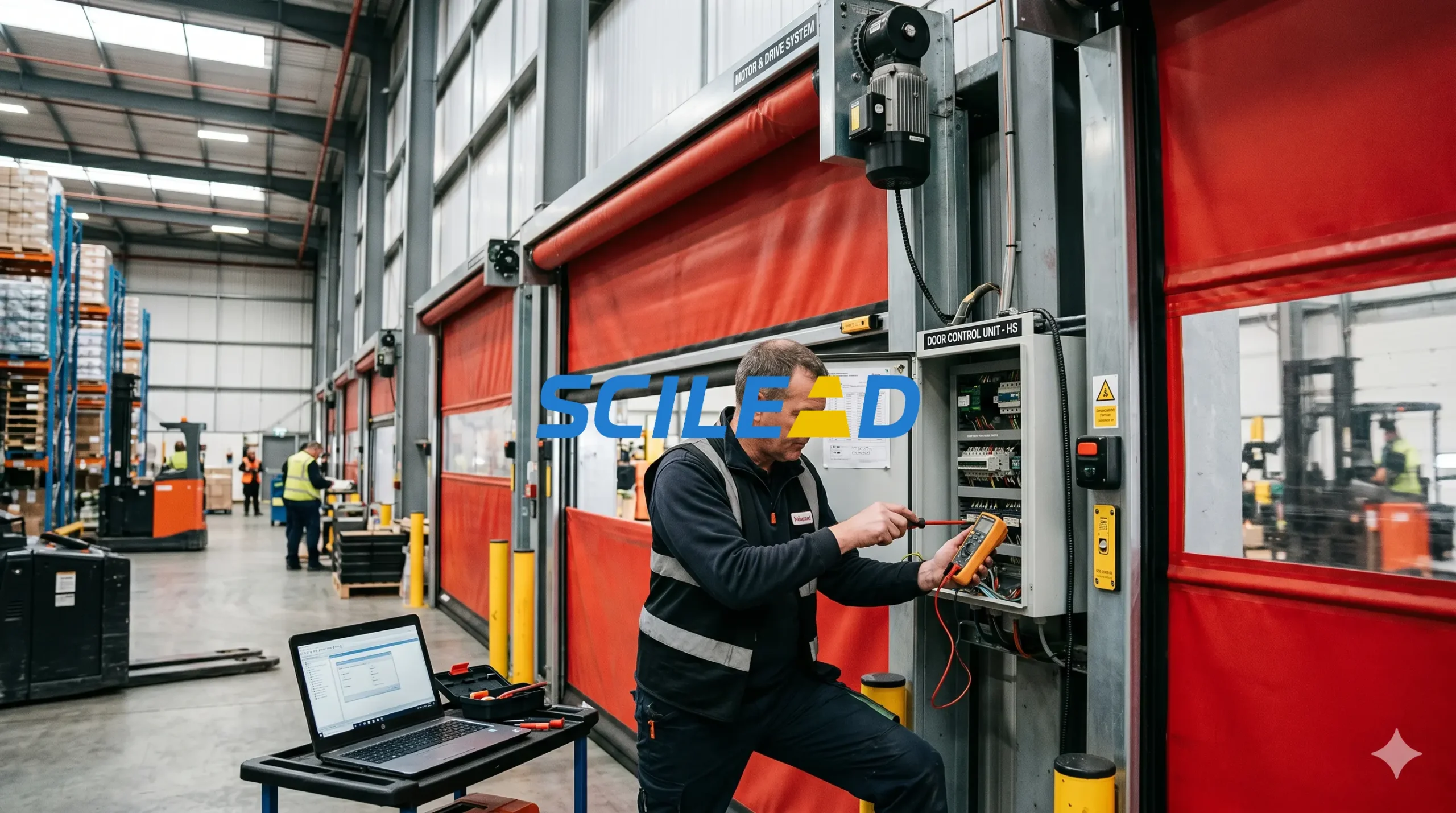
High speed doors require regular inspection of sensors, motors, and curtain systems to maintain fast and safe operation. However, many modern high speed doors include self-repairing systems that reduce downtime after accidental impacts.
Regular preventive maintenance improves the lifespan of both industrial roll up doors and high speed doors.
Cost Comparison
Industrial roll up doors typically have a lower upfront cost compared with high speed doors. They are cost-effective for facilities where speed and environmental control are not primary concerns.
High speed doors usually require a higher initial investment because of advanced motors, sensors, and control systems. However, they can generate long-term savings through improved energy efficiency and faster operational flow.
When comparing total ownership cost, businesses should consider maintenance, energy savings, workflow efficiency, and operational frequency.
How to Choose the Right Industrial Door
When selecting between an industrial roll up door and a high speed door, consider the following factors:
- Traffic frequency
- Required opening speed
- Indoor temperature control needs
- Security requirements
- Budget and long-term operating costs
- Environmental conditions
If your facility prioritizes security and durability, an industrial roll up door may be the better option. If operational efficiency and climate control are more important, a high speed door is usually the preferred solution.
Contact our team through Contact Us for customized industrial door recommendations.
Conclusion
Both industrial roll up doors and high speed doors offer unique advantages for industrial facilities. Industrial roll up doors provide durability, security, and cost-effective performance, while high speed doors improve efficiency, energy savings, and environmental control.
Understanding the differences between industrial roll up doors and high speed doors helps businesses choose the most effective solution for their operational needs. Selecting the right industrial door can improve workflow, reduce maintenance costs, and enhance long-term facility performance.