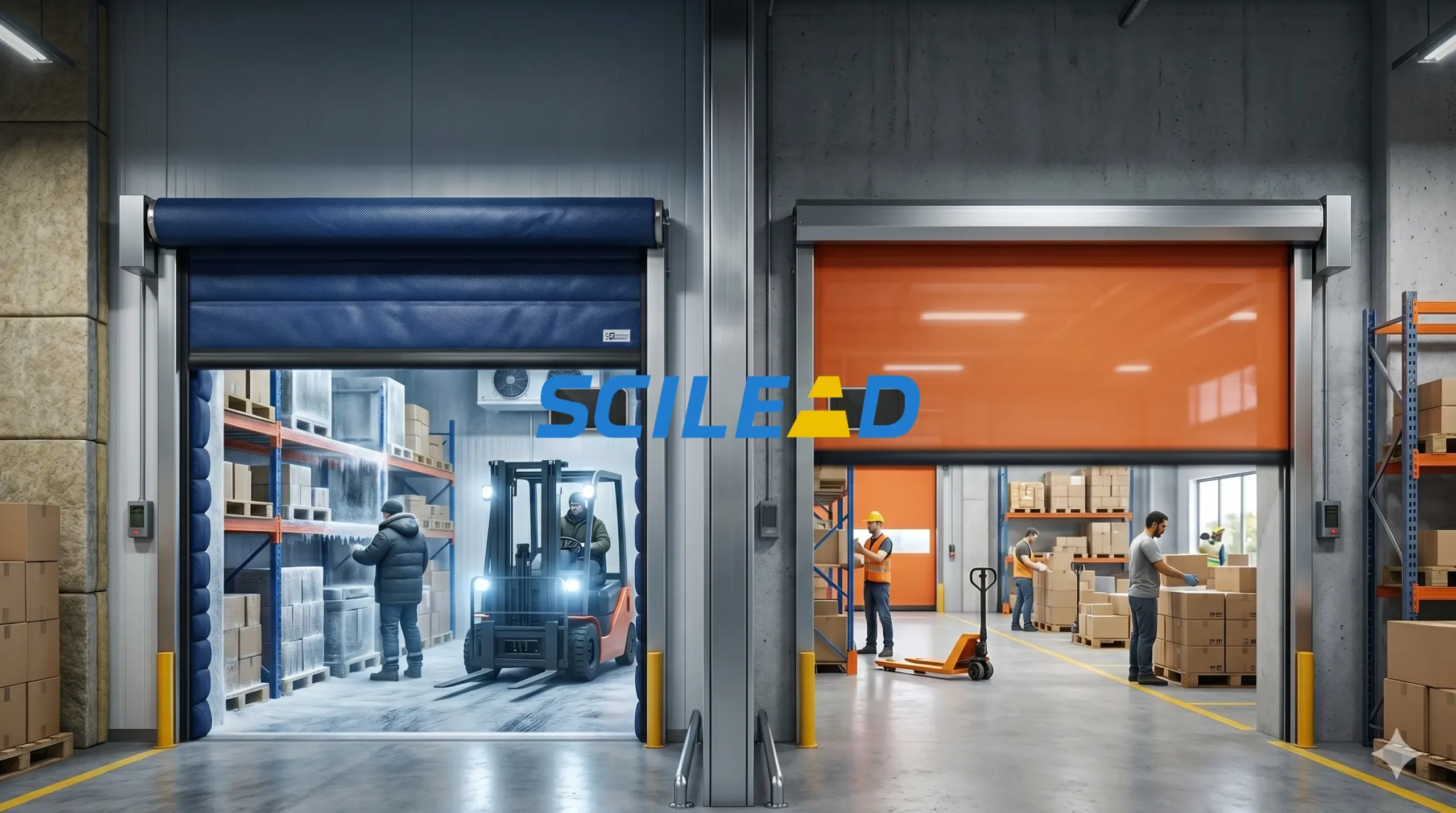
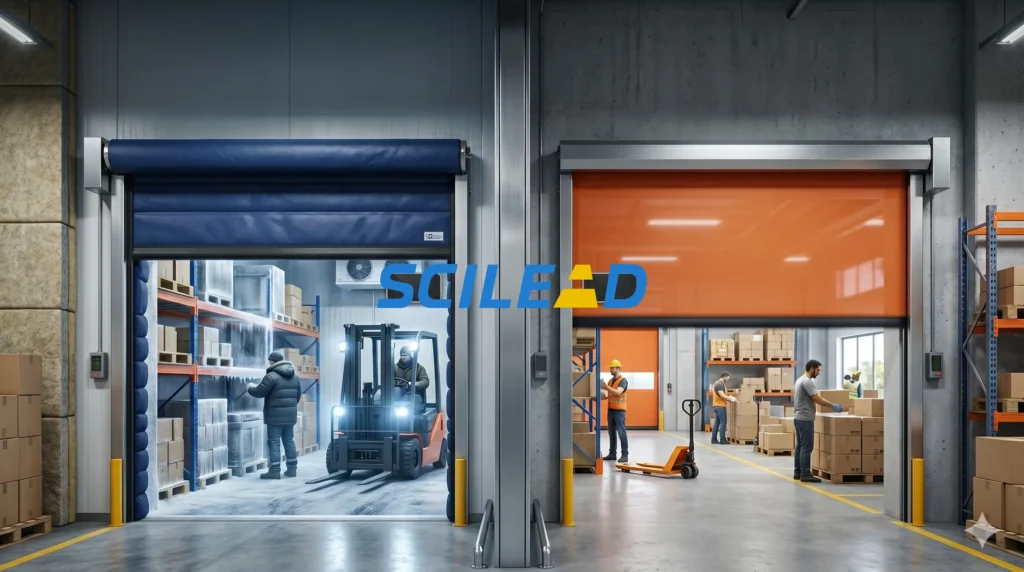
Choosing between an insulated door and a non-insulated door depends on temperature control, operating frequency, energy use, and site conditions. In industrial and commercial settings, the right door can improve efficiency, reduce heat loss, and support a more stable indoor environment. This guide explains the practical differences between an insulated door vs non-insulated door so buyers can make a clear decision.
Contents
- What Is an Insulated Door?
- What Is a Non-Insulated Door?
- Key Differences Between Insulated and Non-Insulated Doors
- Energy Efficiency and Temperature Control
- Cost Comparison
- Best Applications for Each Door Type
- How to Choose the Right Door
- Recommended SCILEAD Solutions
- Conclusion
What Is an Insulated Door?
An insulated door is built with thermal-resistant materials that help reduce heat transfer between indoor and outdoor spaces. These doors are commonly used in cold storage, temperature-sensitive production areas, and facilities that need better climate control. In many cases, an insulated door also helps reduce condensation and supports lower energy consumption.
For low-temperature environments, a cold storage insulated high-speed door is often a practical option because it is designed for openings where temperature stability matters.
What Is a Non-Insulated Door?
A non-insulated door is designed mainly for access, separation, and basic protection rather than thermal performance. It usually has a simpler structure and lower initial cost. A non-insulated door may be suitable for warehouses, internal passages, and areas where indoor and outdoor temperatures are similar or where energy loss is not a major concern.
In busy traffic zones such as a logistics passageway, non-insulated high-speed doors are often selected for frequent operation and efficient flow.
Key Differences Between Insulated and Non-Insulated Doors
The main difference in an insulated door vs non-insulated door comparison is thermal performance. An insulated door is better at limiting heat exchange, while a non-insulated door focuses more on access speed and lower upfront cost.
- Thermal insulation: Insulated doors perform better in heated, cooled, or refrigerated spaces.
- Energy impact: Insulated doors can help reduce heating and cooling loss.
- Door construction: Insulated doors usually use layered or filled panels; non-insulated doors use simpler curtain or panel systems.
- Initial investment: Non-insulated doors are generally less expensive at purchase.
- Application range: Insulated doors fit cold chain and controlled environments; non-insulated doors fit general industrial use.
Energy Efficiency and Temperature Control
When evaluating insulated door vs non-insulated door, energy efficiency is often the deciding factor. An insulated door helps maintain a more stable internal temperature by reducing thermal transfer during closed cycles. This matters in facilities with refrigeration, air conditioning, or strict process temperatures.
A non-insulated door can still work well in many sites, especially where door speed is more important than thermal resistance. However, in spaces with large temperature differences, a non-insulated door may contribute to greater energy loss over time.
Cost Comparison
A non-insulated door usually has a lower purchase price, making it attractive for projects with a tight initial budget. An insulated door typically costs more because of its materials and structure. However, the full cost decision should include operating conditions.
If the opening is used in a cold room, conditioned area, or energy-sensitive facility, the higher initial cost of an insulated door may be offset by better temperature retention and lower energy waste. In contrast, for standard warehouse access, a non-insulated door may offer better value.
Best Applications for Each Door Type
Insulated doors are commonly used for:
- Cold storage and cold chain facilities
- Food processing areas
- Pharmaceutical or temperature-controlled spaces
- Openings with significant indoor-outdoor temperature differences
Non-insulated doors are commonly used for:
- General warehouses
- Internal factory passages
- Shipping and receiving areas
- High-traffic industrial access points
Where wind load is a bigger concern than insulation, a wind-resistant high-speed door may be more suitable than a standard non-insulated option.
How to Choose the Right Door
To choose between an insulated door vs non-insulated door, consider these questions:
- Is the opening exposed to major temperature differences?
- Do you need to reduce heating or cooling loss?
- Is the site part of a cold chain or clean process workflow?
- How often will the door open and close each day?
- Is low initial cost more important than long-term operating efficiency?
If temperature control is critical, insulated doors are usually the better choice. If the opening is mainly for fast access in a standard industrial environment, non-insulated doors are often sufficient.
Recommended SCILEAD Solutions
SCILEAD offers different industrial door solutions for different operating needs. Buyers comparing insulated door vs non-insulated door can start from these pages:
- Product Center for full product categories
- Cold Storage Insulated High-Speed Door for temperature-controlled applications
- Wind-Resistant High-Speed Door for demanding industrial conditions
- Logistics Passageway for high-frequency access scenarios
- Contact Us for project consultation
Conclusion
There is no single winner in the insulated door vs non-insulated door debate. The best choice depends on the actual operating environment. An insulated door is the better fit for cold storage, energy-sensitive facilities, and spaces that require stable temperatures. A non-insulated door is often the more economical solution for general industrial access and high-traffic areas without strict thermal demands.
For industrial buyers, the most effective approach is to match the door type to the opening condition, traffic frequency, and energy target.