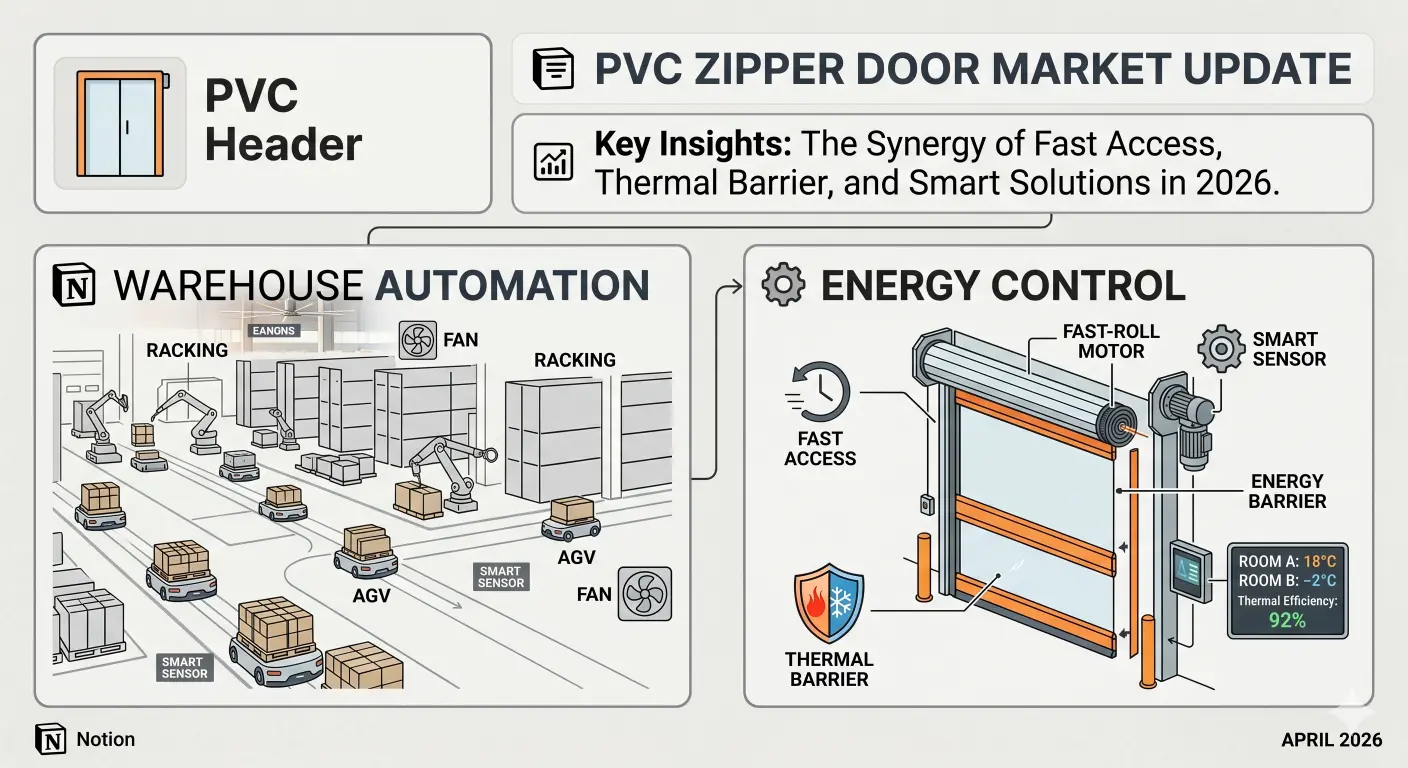
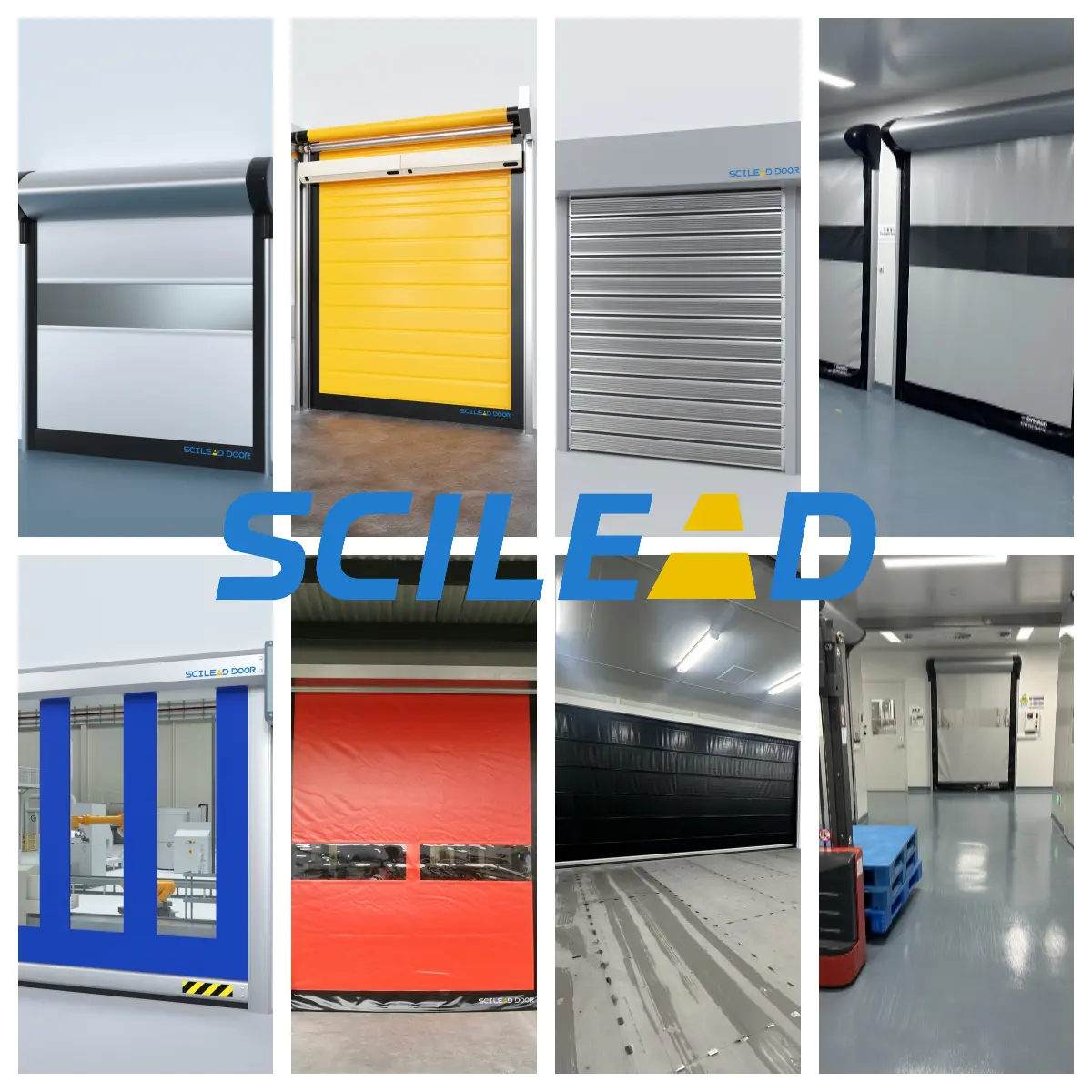
Lead: The PVC zipper door market is gaining stronger attention from industrial door dealers and service providers as warehouse operators move toward robot-centric facilities, tighter energy control and safer high-traffic workflows. Recent English-language industry sources show that automation, cold chain efficiency and loading dock safety are becoming key purchase drivers for high speed zipper doors used in warehouses, factories, logistics hubs and temperature-controlled facilities.
Market Signal: PVC Zipper Doors Are Becoming Part of Automated Warehouse Infrastructure
On April 13, 2026, Gartner reported that 50% of new warehouses in developed markets could be designed as robot-centric, human-optional facilities by 2030. This forecast is important for the PVC zipper door industry because automated facilities require fast, repeatable and sensor-friendly access points.
Traditional industrial doors are often designed mainly for security or basic separation. In automated logistics environments, however, the door must support traffic flow, reduce waiting time for forklifts or AMRs, and integrate with radar sensors, loop detectors, access controls and warehouse management workflows.
For this reason, PVC zipper doors are increasingly positioned as process equipment rather than simple building components. Their value is linked to opening speed, sealing performance, impact recovery and uptime in high-cycle applications.
PVC Zipper Doors Support Energy Control in Cold Storage and High-Traffic Warehouses
Energy management is another major factor behind the demand for high speed PVC zipper doors. Logistics Business reported in April 2026 that energy costs are rising for logistics operations as warehouses consume more electricity for automation and vehicle charging. This reinforces the need to reduce avoidable energy loss at frequently used openings.
In cold chain and temperature-controlled facilities, door opening time directly affects air infiltration. A recent cold storage efficiency article noted that high-speed automatic doors can help reduce air infiltration compared with slower manual or sliding door systems. For dealers, this creates a stronger business case for PVC zipper doors in food storage, pharmaceutical logistics, chilled warehouses and freezer transition zones.
The core value proposition is not only faster access. It is also lower temperature fluctuation, improved workflow stability and reduced pressure on HVAC or refrigeration systems.
Safety and Maintenance: Self-Repairing PVC Zipper Doors Reduce Downtime Risk
Warehouse safety remains a central purchasing factor for industrial doors. OSHA identifies loading docks and forklift operating areas as high-risk zones, with hazards including pedestrian interaction, dock edges, congestion and vehicle movement. In these environments, door systems must support visibility, controlled access and reliable operation.
A PVC zipper door with a self-repairing track system can automatically guide the curtain back into the side tracks after certain impacts. This is especially relevant in warehouses where forklifts, pallet trucks and automated vehicles pass through the same opening many times per day.
For service providers, reduced downtime is a practical selling point. A door that can recover from minor impact events may reduce emergency callouts, spare parts consumption and operational interruptions for the end user.
What This Means for Industrial Door Dealers and Service Providers
The latest market direction suggests that dealers should move away from selling PVC zipper doors only as “fast doors.” Instead, the product should be presented as a solution for traffic efficiency, energy control, safety and maintenance cost reduction.
1. Warehousing and 3PL Projects
For general warehouses and third-party logistics facilities, the strongest selling points are fast opening speed, high cycle capability, impact recovery and compatibility with access sensors.
2. Cold Chain and Food Logistics
For cold storage and food distribution centers, the message should focus on sealing, reduced air exchange, temperature stability and lower energy waste at busy openings.
3. Manufacturing and Clean Production Areas
For factories, clean workshops and controlled production spaces, PVC zipper doors can help separate zones, reduce dust movement and maintain smoother internal logistics.
Key Selection Points for PVC Zipper Door Projects
When specifying a PVC zipper door for industrial or warehouse use, buyers and dealers should evaluate the application environment before quoting a standard model.
- Opening speed: Confirm whether the project requires standard high speed operation or higher-cycle performance for automated traffic.
- Door size: Match the clear opening width and height to forklifts, pallet loads, AGVs or AMRs.
- Sealing performance: Check side guide design, bottom edge sealing and curtain overlap for air control.
- Impact recovery: Choose a zipper-guided or self-repairing structure where forklift impact risk is high.
- Control options: Consider radar, induction loop, pull cord, remote control, access card or interlock systems.
- Safety devices: Specify photo sensors, safety bottom edges and visible warning devices where pedestrian or vehicle traffic is frequent.
- After-sales service: For dealers, stock key spare parts such as motors, control boards, sensors, zipper tracks and PVC curtain materials.
Industry outlook: The PVC zipper door segment is likely to benefit from the wider shift toward automated warehouses, energy-conscious logistics buildings and safer high-traffic industrial openings. For B2B dealers and service providers, the best opportunity is to combine product supply with technical consulting, installation support and preventive maintenance services.