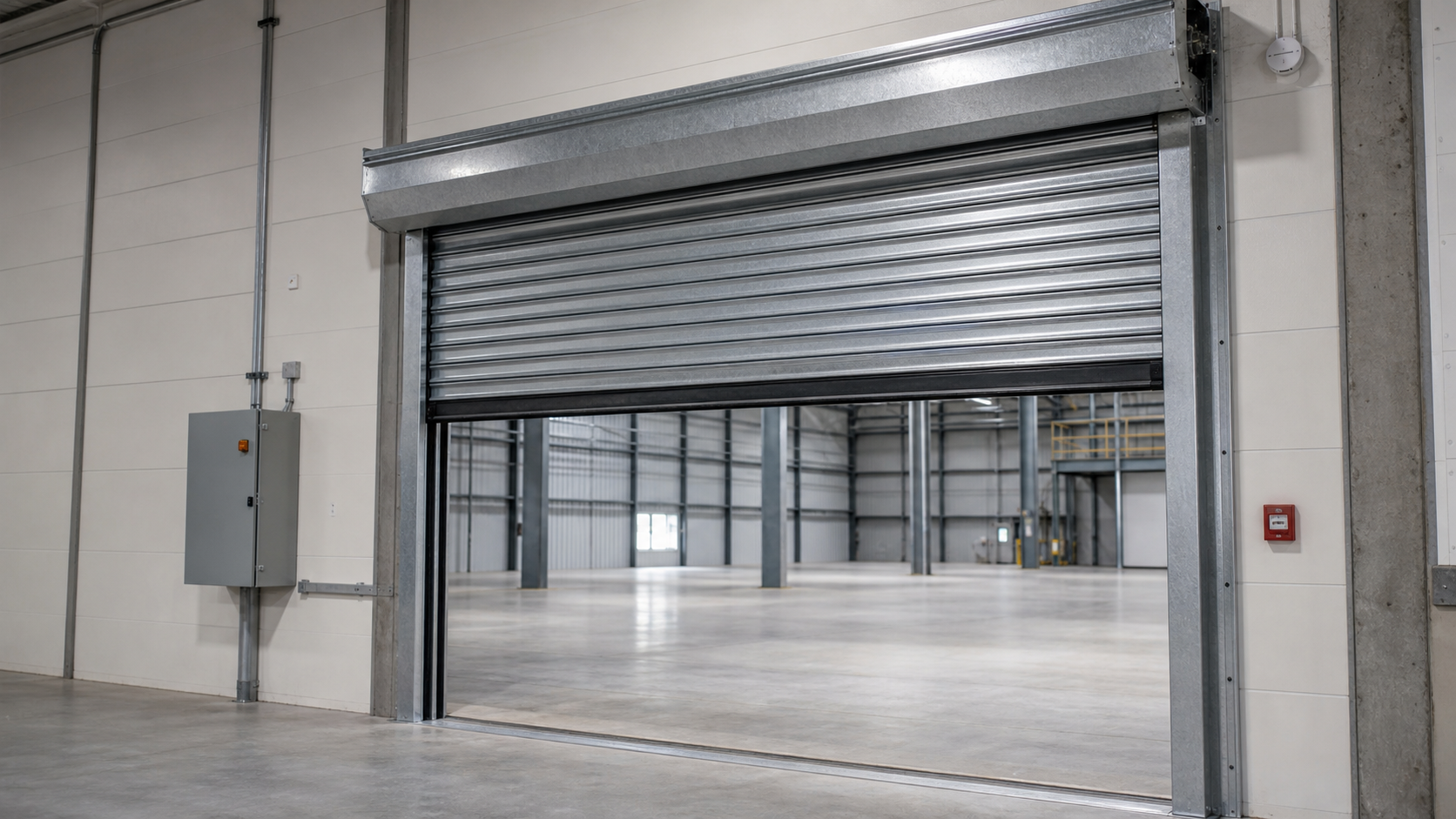
On July 27, 2026, a revised U.S. EPA limit takes effect for HFCs used in new cold-storage warehouse refrigeration systems. The rule establishes an interim global warming potential (GWP) limit of 700, followed by limits of 150 or 300 from January 1, 2032, depending on refrigerant charge and system configuration. This change concerns refrigeration systems—not industrial-door certification—but it creates a useful planning moment. Facility teams should coordinate refrigerant selection and cooling-load calculations with the opening strategy. For busy openings, high-speed cold storage doors can reduce cumulative exposure to warm, humid air when their cycle, sealing, activation, and traffic design match the application.
This article explains what the U.S. rule changes, what it does not change, and how owners can bring doorway performance into a broader cold-storage design review without claiming that a door alone delivers compliance or a guaranteed energy saving.
What changes for U.S. cold-storage warehouses on July 27, 2026?
The EPA final rule published May 26, 2026 becomes effective July 27, 2026. For new cold-storage warehouse systems, it establishes an interim GWP limit of 700. On January 1, 2032, the limit becomes 150 or 300 according to charge size and whether the equipment is part of the high-temperature side of a cascade system.
The EPA’s updated sector restrictions table confirms those dates and notes that the tables are informational; regulated parties should consult 40 CFR Part 84, Subpart B for full requirements. The agency also explains that its restrictions apply to installing new field-assembled systems, while components used to repair existing systems are treated differently. Project teams should obtain a project-specific interpretation from qualified refrigeration and compliance professionals rather than using a door-selection article as legal guidance.
According to the EPA’s Technology Transitions rulemaking page, the May 2026 action addresses several refrigeration and air-conditioning subsectors, including cold-storage warehouses. It is therefore important to define the relevant system and jurisdiction before making procurement decisions.
Why the opening belongs in the same planning conversation
A refrigerant limit and a doorway are different design subjects. The connection is the refrigeration load. Whenever a door opens between spaces with different temperatures and moisture conditions, air exchange adds sensible and latent load. Warm-side moisture can also condense or freeze on cold surfaces, increasing operational problems around the threshold, seals, guides, floor, and evaporators.
Design teams can reduce avoidable load only after they understand how the opening is actually used. A nominal panel insulation value describes closed-door heat transfer under stated conditions; it does not describe the whole opening during traffic. Conversely, opening speed alone does not prove efficient operation. An early trigger, long hold-open delay, queue in the threshold, damaged seal, or pressure imbalance can erase much of the expected benefit.
The 2026 outlook from the Global Cold Chain Alliance identifies energy efficiency, smarter controls, resilience, and temperature integrity as major operating priorities. That industry context supports a whole-system review: refrigeration, envelope, doors, controls, traffic, monitoring, and contingency planning should be coordinated rather than purchased as isolated components.
How to specify high-speed cold storage doors around real loads
1. Quantify traffic and cumulative open time
Record vehicle type, pedestrian activity, cycles per hour, peak periods, approach direction, activation distance, hold-open time, and retriggers. The useful metric is not merely door speed or cycle count; it is the total time and area exposed under representative operating conditions. Include congestion, pallet checks, and vehicles waiting for downstream clearance.
For a new facility, model at least normal, peak, and disrupted workflows. For an existing site, use controller logs, observation, and temperature or humidity data. A fast door may suit a high-frequency internal opening, while a lower-frequency opening may prioritize closed-door insulation, security, or another requirement.
2. Define both environmental zones
Document temperatures and humidity—or preferably dew point—on both sides. Identify washdown, outdoor-air influence, loading-dock exposure, pressure relationships, and seasonal extremes. The freezer door frost diagnosis guide provides a practical method for tracing moisture through traffic exposure, leakage, envelope gaps, and airflow interactions.
These measurements help distinguish heat transfer through a closed curtain from infiltration while open and leakage while closed. They also prevent a common mistake: adding heaters to visible ice while leaving the dominant moisture path untreated.
3. Evaluate the whole opening, not one specification
Ask suppliers to document curtain or panel construction, perimeter sealing, bottom-edge contact, guide arrangement, operating range, controls, safety devices, manual recovery, maintenance access, and compatibility with the expected cycle duty. Confirm all ratings for the proposed model, opening dimensions, and installation conditions; do not transfer a specification from another product or facility.
SCILEAD’s cold-storage insulated high-speed door series is one solution category to evaluate. Selection still depends on the temperature differential, traffic frequency, opening dimensions, environmental separation, safety assessment, and control sequence.
4. Coordinate activation and closing logic
The door should open early enough for safe passage but not so early that the opening sits exposed. Separate pedestrian and vehicle detection where the risk assessment requires it. Set closing behavior around vehicle length, approach speed, tailgating, mixed traffic, and downstream clearance. Safety devices must not be defeated to shorten dwell time.
For automated traffic, define who requests access, who confirms a clear opening, what happens if communication fails, and how the system returns to a safe state. Refrigeration or building-management systems may monitor door state and cumulative exposure, but integrations must be engineered and validated for the actual controls.
5. Commission under representative conditions
Test more than basic movement. Verify activation zones, safety detection, full closure, seal contact, manual release, alarms, and behavior during realistic traffic. Trend temperatures, humidity, door state, and any frost pattern after commissioning. Compare results with the design assumptions and adjust permitted control parameters through qualified personnel.
A procurement checklist for the 2026 planning window
- Regulatory boundary: confirm whether the project is a new U.S. cold-storage warehouse refrigeration system and obtain current compliance advice.
- Refrigeration basis: record refrigerant, GWP, charge, system type, configuration, design temperatures, and the responsible engineer’s calculations.
- Opening inventory: list dimensions, temperature boundaries, traffic classes, cycles, cumulative exposure, and pressure conditions.
- Door performance: request model-specific evidence for insulation, sealing, cycle duty, operating environment, safety functions, and maintenance requirements.
- Control sequence: define activation, hold-open, clear-to-close, fault response, manual operation, and any building-system interface.
- Measurement plan: specify what will be logged before and after commissioning, including door state, warm-side dew point, temperatures, and frost observations.
- Lifecycle plan: assign inspections for seals, alignment, sensors, guides, heaters where used, and closing performance.
What not to claim in a business case
Do not promise a universal savings percentage or payback period. The result depends on climate, temperature difference, moisture, opening size, existing door performance, cumulative open time, refrigeration efficiency, electricity tariff, maintenance, and traffic behavior. Likewise, a high-speed cold-storage door does not make the refrigeration system compliant with the EPA rule.
A defensible business case states assumptions and separates three effects: closed-door conduction, closed-door leakage, and open-door infiltration. It then tests sensitivity to traffic and control settings. The earlier cold-storage door energy-loss guide can support an initial audit, but a qualified engineer should calculate project-specific loads and savings.
Frequently Asked Questions
Does the July 27, 2026 EPA rule regulate high-speed cold storage doors?
No. The cited EPA action changes HFC limits for specified refrigeration systems. Door selection affects opening performance and refrigeration load, but a door does not by itself establish HFC compliance.
What is the interim GWP limit for new U.S. cold-storage warehouse systems?
EPA states that an interim GWP limit of 700 applies on July 27, 2026. On January 1, 2032, the limit becomes 150 or 300 depending on charge size and equipment configuration. Consult the regulation and qualified advisers for a specific project.
Is opening speed the main energy-efficiency metric?
No. Speed matters, but cumulative open time, opening area, activation and hold-open logic, sealing, temperature and moisture differences, pressure, and traffic behavior determine whole-opening performance.
What data should buyers send to a door supplier?
Provide opening dimensions, temperatures and humidity on both sides, traffic types and frequency, expected open time, pressure conditions, frost history, safety requirements, control interfaces, clearance, and maintenance constraints.
Turn the rule change into a coordinated facility review
The July 27, 2026 HFC change is a refrigeration-system milestone, not a stand-alone door mandate. Its practical value for facility teams is the opportunity to align refrigerant planning, load calculations, envelope details, traffic flow, and doorway controls. When a high-frequency opening is part of the load, specify the door from measured operating conditions rather than a single headline rating.
For a new cold-chain project or an opening retrofit, review SCILEAD’s cold-chain industry solutions and contact SCILEAD with your opening, environmental, and traffic data. The goal is an application-specific discussion—not an unsupported compliance or savings guarantee.