Table of Contents
- What Are Industrial High Speed Doors?
- Why Facilities Use Industrial High Speed Doors
- Main Types of Industrial High Speed Doors
- Common Applications
- Key Factors Before Buying
- Safety and Performance Features
- Cost, Maintenance, and Long-Term Value
- Supplier Checklist
- Industrial High Speed Door Solutions from SCILEAD
- FAQs
What Are Industrial High Speed Doors?
Industrial high speed doors are fast-opening door systems designed for factories, warehouses, logistics centers, cleanrooms, cold storage areas, and production facilities. Compared with traditional industrial doors, they open and close faster, support frequent traffic, and help control airflow, dust, temperature, and safety risks.
A high speed door is not only an access product. It is part of a facility’s workflow, energy control, hygiene management, and traffic efficiency system. Choosing the right industrial high speed door can reduce waiting time, improve environmental separation, and support safer daily operation.
Why Facilities Use Industrial High Speed Doors
Industrial high speed doors are commonly used where doors open many times per day. Their main value is speed, sealing, reliability, and environmental control.
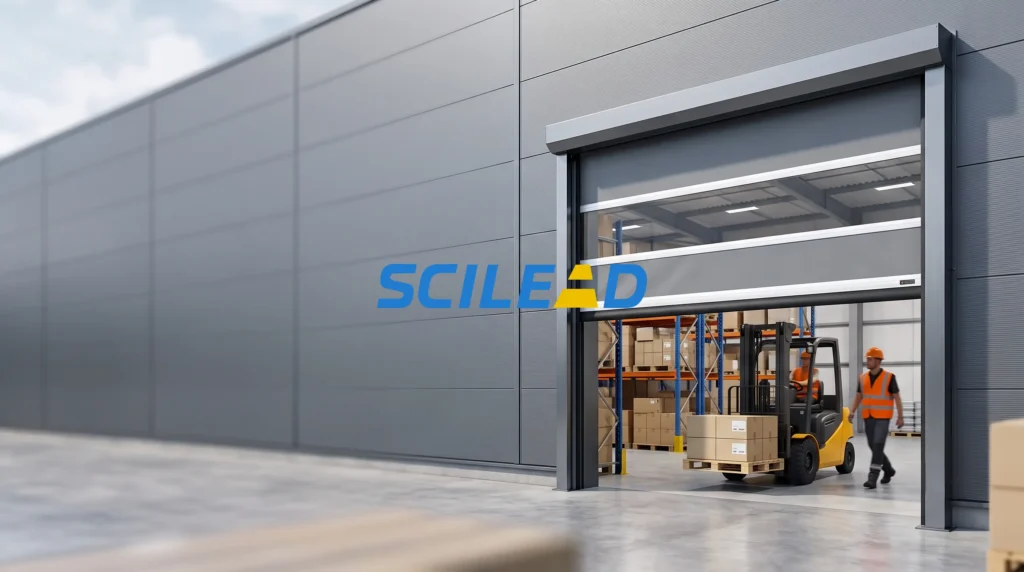
- They reduce waiting time for forklifts, AGVs, pallet trucks, and workers.
- They help limit air exchange between different zones.
- They support temperature stability in cold storage and production areas.
- They help reduce dust, insects, humidity, and contamination.
- They improve traffic flow in busy logistics and manufacturing environments.
- They reduce the time an opening stays exposed.
For high-frequency industrial operations, a high speed door is often more practical than a slow roller shutter or sectional door.
Main Types of Industrial High Speed Doors
Different industrial sites require different high speed door designs. Before buying, compare the door type with the real working environment.
PVC High Speed Roll Up Doors
PVC high speed roll up doors are suitable for internal industrial passages, warehouses, workshops, and logistics areas. They are commonly used where speed, sealing, and cost efficiency are important.
Zipper High Speed Doors
A zipper high speed door is suitable for busy internal traffic areas. Its structure can help reduce downtime and support frequent opening and closing.
Cleanroom High Speed Doors
A cleanroom high speed door is designed for controlled environments such as pharmaceutical, electronics, food, and precision manufacturing areas. It helps reduce air leakage and dust entry.
Cold Storage High Speed Doors
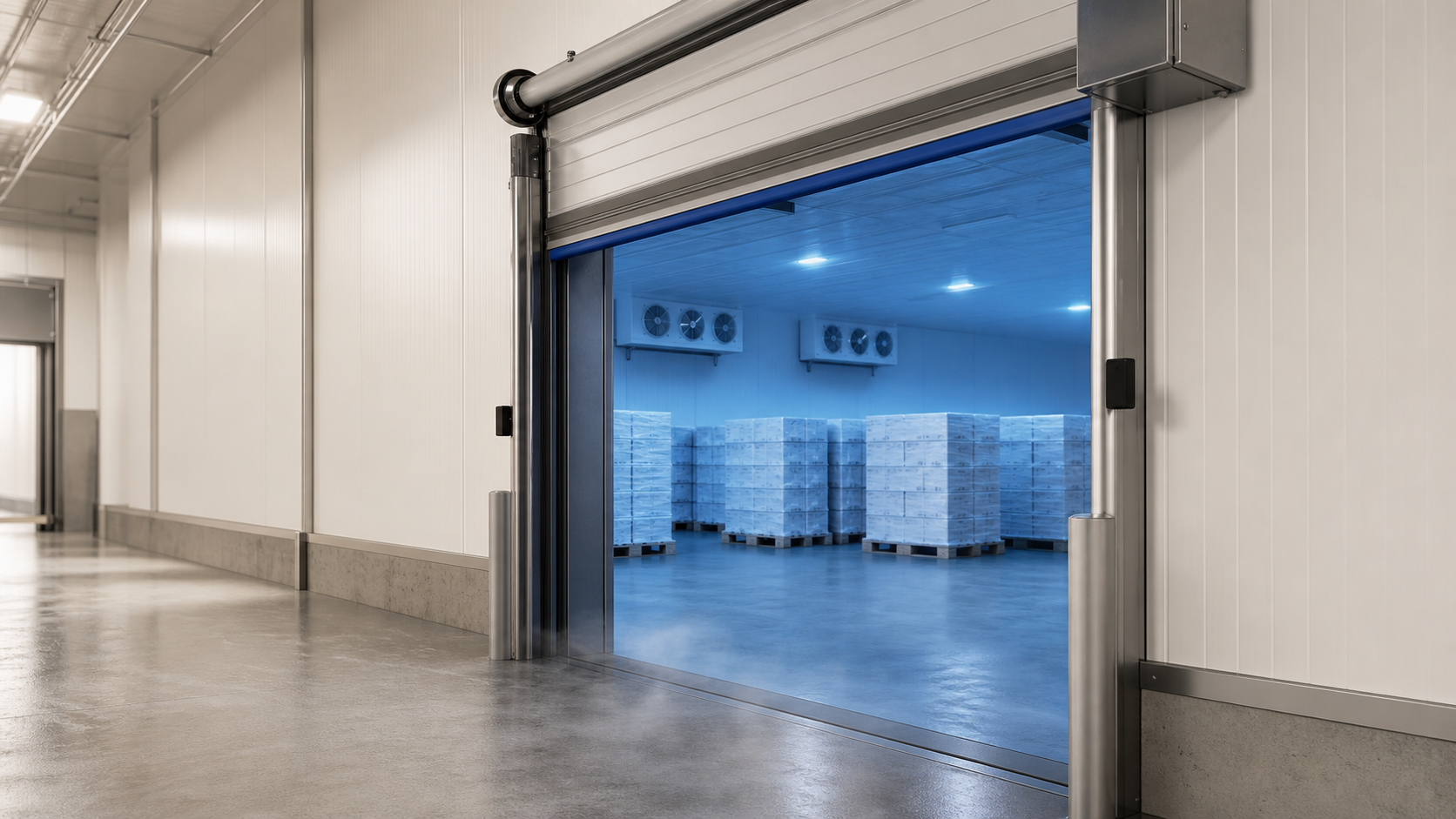
A cold storage insulated high speed door is used for refrigerated warehouses, freezer rooms, cold chain logistics, and temperature-controlled production areas. Insulation and sealing are key selection points.
Metal Spiral High Speed Doors
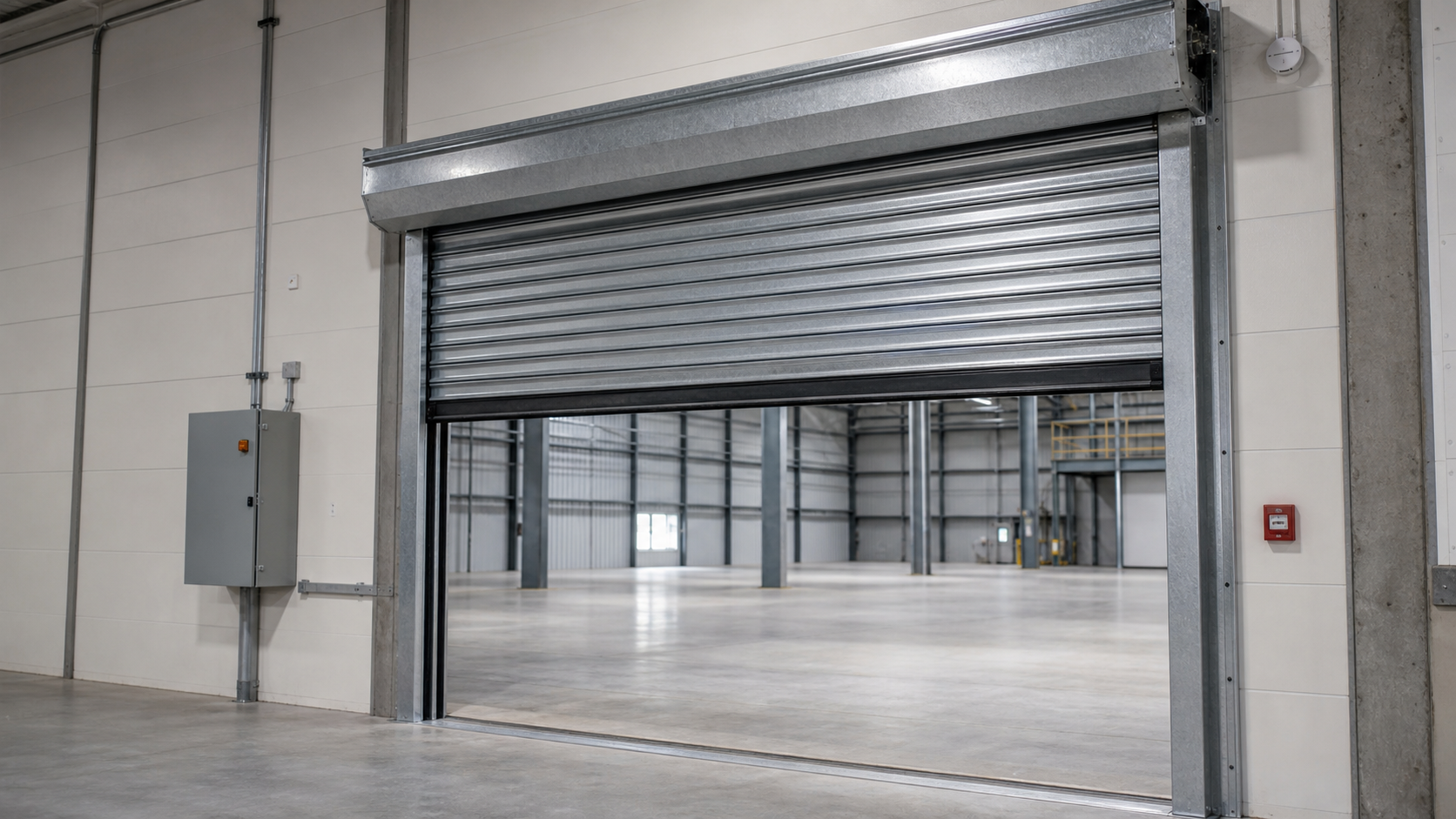
A metal spiral high speed door is suitable for exterior openings or areas that require stronger structure, durability, speed, and security.
Wind Resistant High Speed Doors
A wind resistant high speed door is suitable for large openings, exterior entrances, logistics passages, and areas affected by air pressure or wind load.
Common Applications
Industrial high speed doors are used across many industries because they improve access efficiency and environmental control.
- Logistics passageways with frequent forklift and vehicle movement.
- Warehouses and distribution centers.
- Cold chain facilities and refrigerated storage areas.
- Cleanrooms and pharmaceutical workshops.
- Food processing and packaging plants.
- Automotive factories and manufacturing plants.
- Production lines with AGV or automated equipment traffic.
- Industrial exterior openings that need wind resistance and durability.
The right industrial high speed door should match the traffic frequency, opening size, temperature conditions, hygiene requirements, and safety needs of the application.
Key Factors Before Buying
Before buying industrial high speed doors, evaluate the site conditions instead of choosing only by price. A cheaper door may cost more later if it cannot handle traffic, wind load, sealing, or maintenance requirements.
- Opening size: Measure width, height, side room, headroom, and installation space.
- Traffic frequency: Check how many times the door will open per hour or per day.
- Indoor or outdoor use: Exterior openings may need stronger structure and wind resistance.
- Temperature control: Cold storage and insulated areas need better sealing and thermal performance.
- Hygiene requirements: Cleanrooms, food plants, and pharmaceutical areas require easy cleaning and air control.
- Safety needs: Busy forklift areas need reliable sensors and emergency protection.
- Automation: Consider radar sensors, pull cords, push buttons, loop detectors, remote control, or AGV integration.
- Maintenance access: The door should allow convenient inspection, repair, and parts replacement.
Safety and Performance Features
Industrial high speed doors operate frequently, so safety and performance should be checked carefully before purchase.
- Fast and stable opening speed.
- Reliable motor and control system.
- Safety photo eyes or light curtains.
- Soft bottom edge or anti-collision protection.
- Emergency opening function.
- Good sealing around the curtain, side guides, and bottom edge.
- Wind resistance for exterior or pressure-difference areas.
- Durable curtain, panel, or door structure for frequent cycles.
- Clear maintenance instructions and spare parts support.
For demanding industrial sites, performance stability is more important than only opening speed. A reliable high speed door should operate safely and consistently under daily use.
Cost, Maintenance, and Long-Term Value
The price of industrial high speed doors depends on size, structure, material, motor system, control method, insulation level, wind resistance, safety devices, and customization needs.
When comparing costs, consider the total value instead of only the initial purchase price. A well-selected high speed door can help reduce workflow delays, energy loss, air leakage, contamination risk, and maintenance downtime.
Long-term value usually comes from:
- Lower waiting time in high-traffic areas.
- Better environmental separation.
- Reduced heating, cooling, or refrigeration loss.
- Fewer interruptions caused by door failure.
- Improved safety around vehicles and workers.
- Longer service life under frequent use.
Supplier Checklist
A reliable industrial high speed door supplier should provide more than a standard product list. They should understand the working environment and recommend a practical door configuration.
- Does the supplier offer different types of industrial high speed doors?
- Can they recommend a door based on traffic, temperature, hygiene, and wind conditions?
- Can they provide technical drawings and product specifications?
- Are safety devices and control options clearly explained?
- Is customization available for size, material, sensors, windows, and control methods?
- Can they support installation, commissioning, maintenance, and spare parts?
- Do they understand your industry application?
Before placing an order, share the door opening size, usage frequency, indoor or outdoor location, temperature conditions, and traffic type with the supplier.
Industrial High Speed Door Solutions from SCILEAD
SCILEAD provides industrial high speed doors for warehouses, logistics centers, cleanrooms, cold storage facilities, production lines, automotive plants, food processing areas, and other industrial environments.
You can compare door categories in the SCILEAD Product Center, including cleanroom high speed doors, cold storage insulated high speed doors, metal spiral high speed doors, wind resistant high speed doors, zipper high speed doors, and other industrial door systems.
If you need help choosing the right industrial high speed door, visit Contact Us to request a project recommendation or quotation.
FAQs
What is the best industrial high speed door?
The best industrial high speed door depends on the application. Internal logistics areas often use PVC or zipper high speed doors. Cold storage areas need insulated high speed doors. Exterior openings may need metal spiral or wind resistant high speed doors.
How fast do industrial high speed doors open?
Opening speed varies by door type, size, motor system, and application. The right speed should balance traffic efficiency, safety, and stable operation.
Are industrial high speed doors good for warehouses?
Yes. Industrial high speed doors are suitable for warehouses because they reduce waiting time, improve traffic flow, and help control dust, air exchange, and temperature loss.
Do industrial high speed doors save energy?
Yes. By opening and closing quickly and improving sealing, industrial high speed doors can reduce air exchange and support more stable indoor temperatures, especially in cold storage, cleanrooms, and high-traffic facilities.
What should I check before buying a high speed door?
Check opening size, traffic frequency, installation space, indoor or outdoor location, wind load, temperature requirements, safety devices, control options, maintenance needs, and supplier support.