Table of Contents
- Do High Speed Doors Save Energy?
- How High Speed Doors Reduce Energy Loss
- Where Energy Savings Matter Most
- Key Features of Energy-Efficient High Speed Doors
- What Affects Energy Savings?
- How to Choose the Right High Speed Door
- Energy-Saving Door Solutions from SCILEAD
- FAQs
Do High Speed Doors Save Energy?
Yes, high speed doors can save energy in industrial and commercial facilities. They reduce the time that door openings remain exposed, helping limit air exchange, heat loss, cold air loss, dust entry, and HVAC workload.
Energy savings depend on the door location, traffic frequency, opening size, indoor temperature requirements, sealing performance, and how often the door is used. In busy warehouses, logistics centers, cleanrooms, and cold storage areas, high speed doors are often a practical way to improve energy efficiency while maintaining fast material flow.
How High Speed Doors Reduce Energy Loss
Traditional industrial doors may stay open for longer periods during forklift, pallet, or vehicle movement. This allows conditioned air to escape and outside air to enter. High speed doors open and close quickly, reducing exposure time.
The main energy-saving mechanisms include:
- Shorter opening time between different temperature zones.
- Better sealing around the door frame and curtain.
- Reduced workload for heating, ventilation, and air conditioning systems.
- More stable indoor temperatures in controlled environments.
- Less air infiltration, dust, humidity, and insect entry.
Where Energy Savings Matter Most
High speed doors save the most energy in areas where doors open frequently or separate different indoor conditions. Common applications include:
- Logistics passageways with frequent forklift and goods movement.
- Warehouse entrances and internal traffic zones.
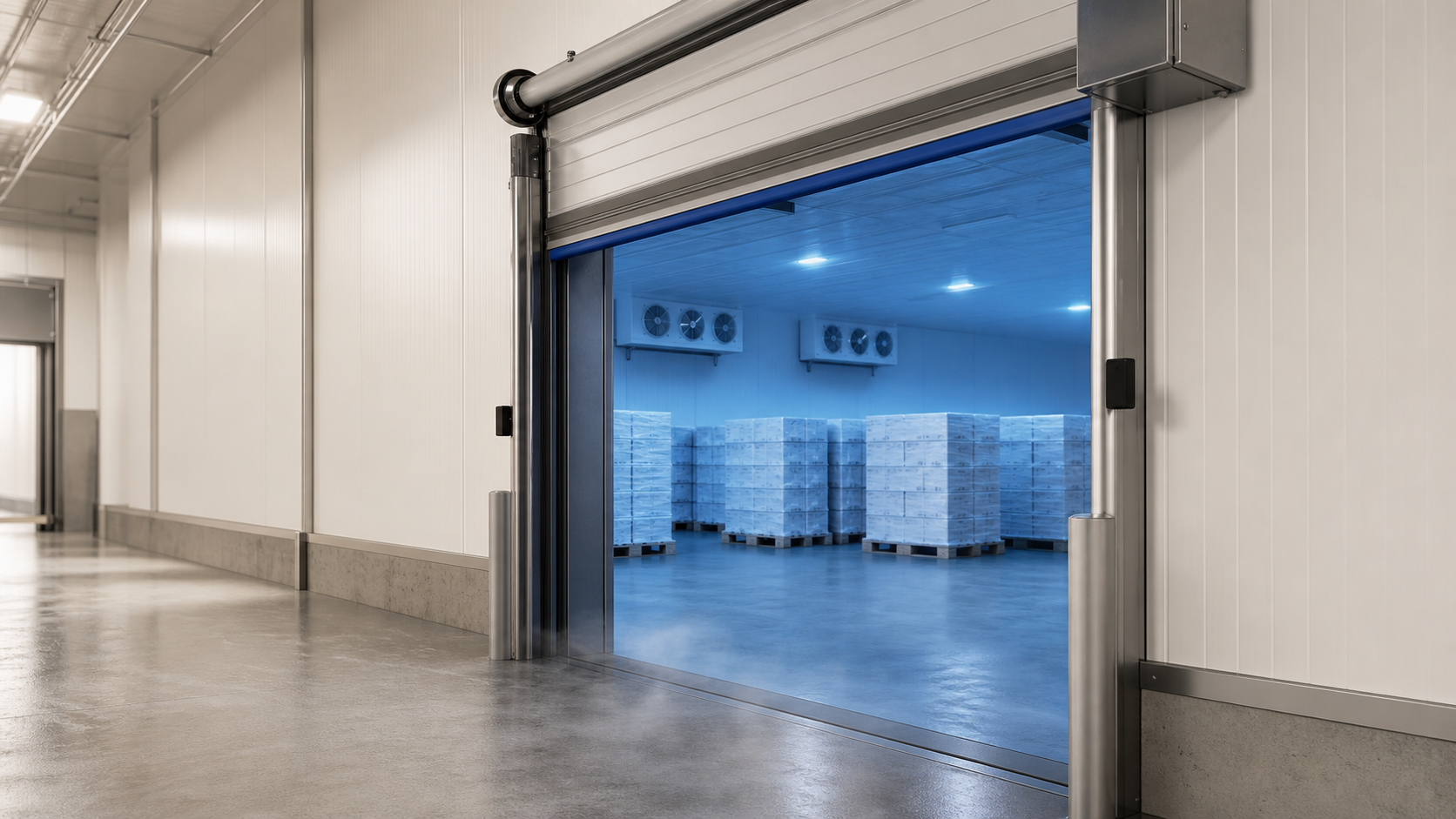
- Cold storage insulated high-speed doors.
- Food processing and pharmaceutical production areas.
- Cleanroom high-speed doors where air control is important.
- Manufacturing plants with separated production zones.
Key Features of Energy-Efficient High Speed Doors
Not every high speed door delivers the same energy performance. When comparing energy-efficient high speed doors, focus on these features:
- Fast opening and closing speed to reduce air exchange.
- Tight side guides and bottom sealing to limit air leakage.
- Insulated curtain or panel design for temperature-controlled areas.
- Reliable sensors for timely opening and closing.
- Durable motor and control system for frequent cycles.
- Wind resistance for exterior openings.
- Low-maintenance structure to reduce downtime.
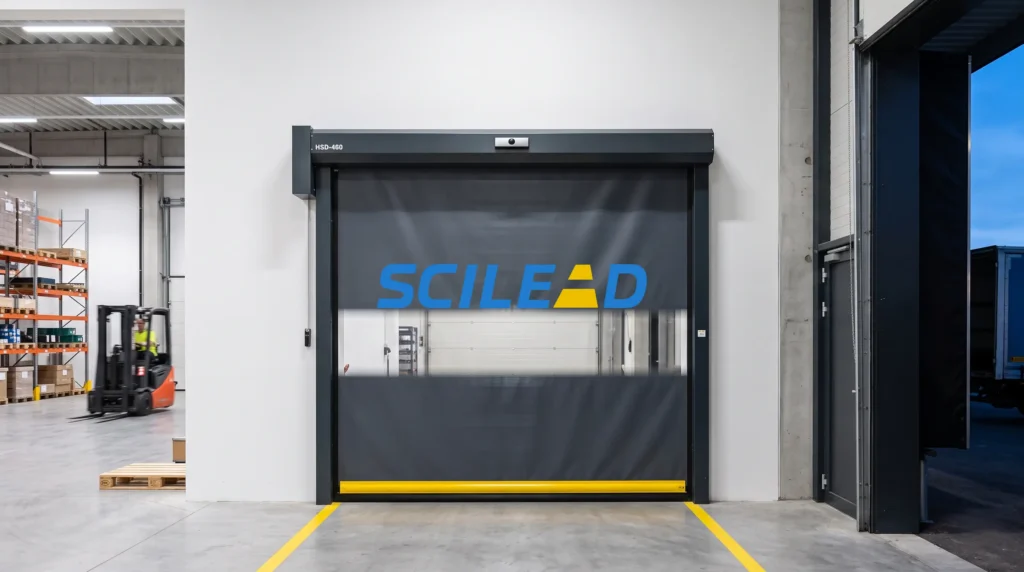
For busy internal passages, a zipper high speed door can help maintain smooth operation. For exterior openings or areas with stronger airflow, a wind-resistant high-speed door may be more suitable.
What Affects Energy Savings?
The actual energy savings from high speed doors vary by facility. Important factors include:
- Door size and opening area.
- Number of daily opening and closing cycles.
- Temperature difference between two areas.
- HVAC or refrigeration system workload.
- Door sealing quality.
- Traffic management and sensor accuracy.
- Maintenance condition of the door system.
A high speed door installed in a low-traffic area may deliver modest savings. The same door installed in a high-frequency cold storage entrance, logistics passageway, or production zone can offer stronger energy-saving value.
How to Choose the Right High Speed Door
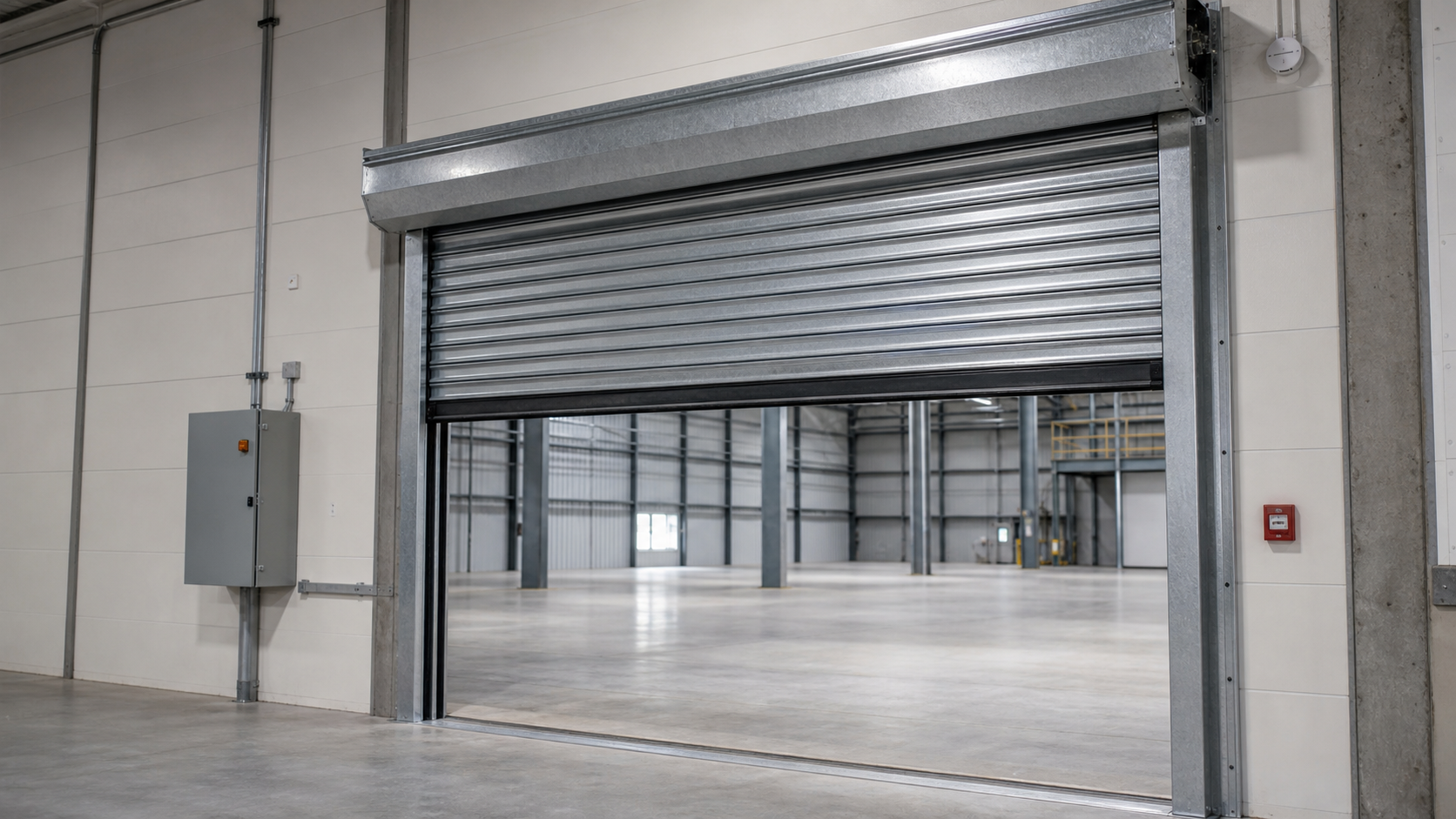
To choose the right high speed door, start with the operating environment. For general industrial passages, standard rapid roll up doors may be enough. For cold storage, insulated high speed doors are usually more effective. For large exterior openings, a metal spiral high-speed door can provide speed, strength, and security.
Before selecting a door, evaluate:
- Indoor or outdoor installation.
- Traffic frequency and vehicle type.
- Required opening speed.
- Temperature control needs.
- Wind load and pressure difference.
- Safety sensor requirements.
- Maintenance access and long-term operating cost.
You can explore more options in the SCILEAD Product Center.
Energy-Saving Door Solutions from SCILEAD
SCILEAD provides industrial high speed door solutions for warehouses, logistics centers, cold chain facilities, cleanrooms, manufacturing plants, and other controlled environments. The goal is to improve access efficiency while helping reduce energy loss and operating costs.
Whether you need a fast internal passage door, an insulated cold storage door, or a durable exterior high speed door, SCILEAD can recommend a suitable configuration based on site conditions and usage frequency.
For a project recommendation, visit Contact Us to request a quote.
FAQs
Do high speed doors reduce electricity costs?
High speed doors can help reduce electricity costs by limiting air loss and lowering HVAC or refrigeration workload. The result depends on door usage, sealing quality, and temperature control requirements.
Are high speed doors good for cold storage?
Yes. In cold storage areas, high speed doors help reduce cold air escape and support stable temperatures. Insulated high speed doors are usually recommended for better thermal performance.
Do high speed doors improve warehouse efficiency?
Yes. High speed doors reduce waiting time for forklifts, vehicles, and personnel. They also help maintain smoother traffic flow in logistics and warehouse operations.
What is the best energy-saving high speed door?
The best option depends on the application. Cold storage may require insulated high speed doors, cleanrooms may require sealed cleanroom doors, and exterior industrial openings may require wind-resistant or metal spiral high speed doors.