Buying a high speed door is not only about choosing a fast-opening industrial door. The right door should match your application, traffic flow, safety requirements, climate conditions, and long-term maintenance needs. Before making a decision, use the questions below to evaluate whether a high speed door is suitable for your facility.
Table of Contents
- 1. What Is the Main Application of the High Speed Door?
- 2. How Often Will the Door Open and Close?
- 3. What Door Size Do You Need?
- 4. What Environment Will the Door Be Used In?
- 5. Which Door Material Is Suitable?
- 6. What Safety Features Are Required?
- 7. Do You Need Insulation or Temperature Control?
- 8. Does the Door Need Wind Resistance?
- 9. What Opening Method Should You Choose?
- 10. What Are the Maintenance Requirements?
- 11. How Reliable Is the High Speed Door Supplier?
- 12. What Is the Total Cost of Ownership?
- Conclusion
1. What Is the Main Application of the High Speed Door?
The first question is where the high speed door will be used. Different applications require different door structures, materials, and control systems.
Common applications include warehouses, logistics centers, clean rooms, cold storage areas, food processing facilities, manufacturing plants, parking garages, and loading areas. For example, a clean room may require better sealing, while a warehouse may focus more on fast traffic flow and durability.
If you are choosing a door for industrial use, you can learn more from our high speed door product page.
2. How Often Will the Door Open and Close?
High speed doors are designed for frequent operation. Before buying, estimate how many times the door will open and close each day.
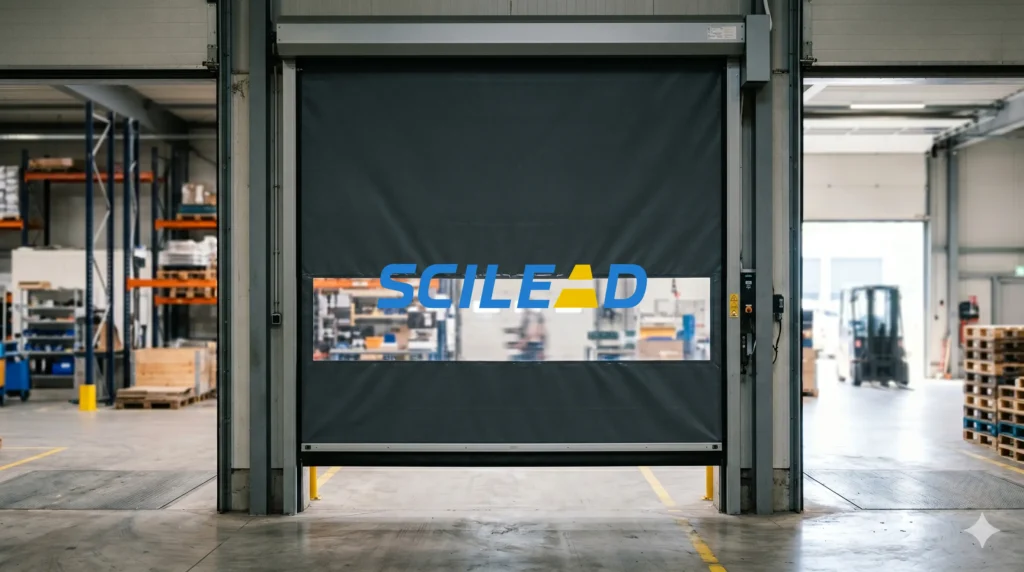
For areas with forklifts, trucks, or high pedestrian traffic, a fast opening and closing speed can improve efficiency and reduce waiting time. Frequent operation also means the motor, control system, curtain, and guide rails must be reliable enough for long-term use.
3. What Door Size Do You Need?
Correct door size is essential for safety and performance. You should measure the opening width, opening height, side space, headroom, and installation area.
A high speed door that is too small may affect vehicle access. A door that is too large may need stronger components, higher wind resistance, and a more powerful motor. Always confirm the exact site dimensions before production.
4. What Environment Will the Door Be Used In?
The working environment directly affects the choice of high speed door. Indoor and outdoor doors have different requirements.
For indoor use, sealing, speed, and smooth operation are often the main concerns. For outdoor use, the door may need stronger wind resistance, weather protection, and a more durable frame. In humid, dusty, cold, or high-temperature environments, the material and protection level should also be considered.
5. Which Door Material Is Suitable?
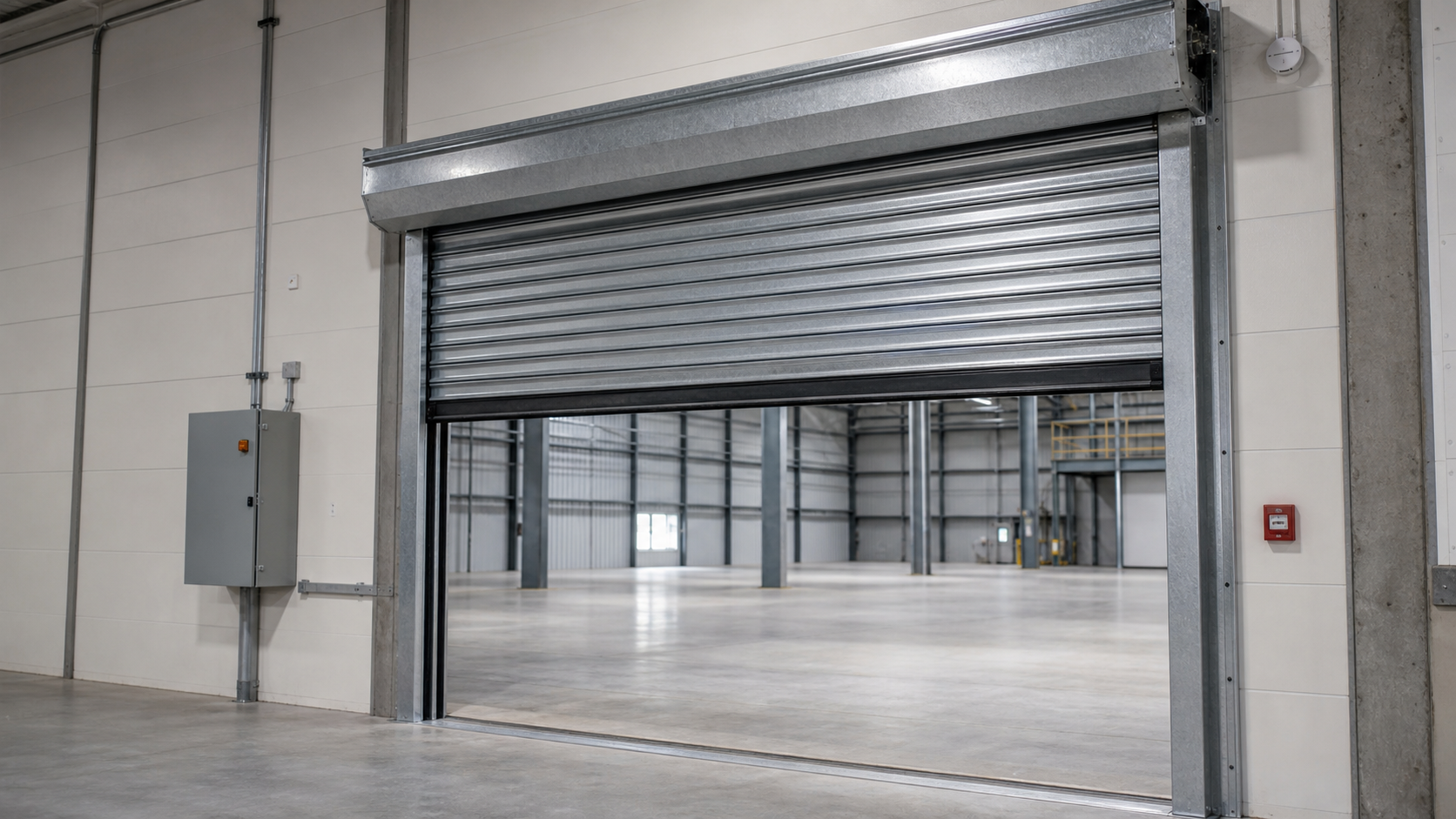
High speed doors can use different curtain and frame materials. Common options include PVC fabric curtains, aluminum alloy slats, stainless steel frames, and galvanized steel structures.
PVC high speed doors are widely used in warehouses, factories, and logistics areas because they are lightweight, fast, and cost-effective. For areas requiring better durability, insulation, or impact resistance, other structures may be more suitable.
For more information about PVC options, read our guide on high speed shutter doors.
6. What Safety Features Are Required?
Safety is one of the most important factors when buying a high speed door. A good door should protect vehicles, goods, and workers during operation.
Common safety features include photoelectric sensors, safety bottom edges, emergency stop buttons, warning lights, and automatic reverse functions. In areas with forklifts or people passing through frequently, these safety devices are especially important.
7. Do You Need Insulation or Temperature Control?
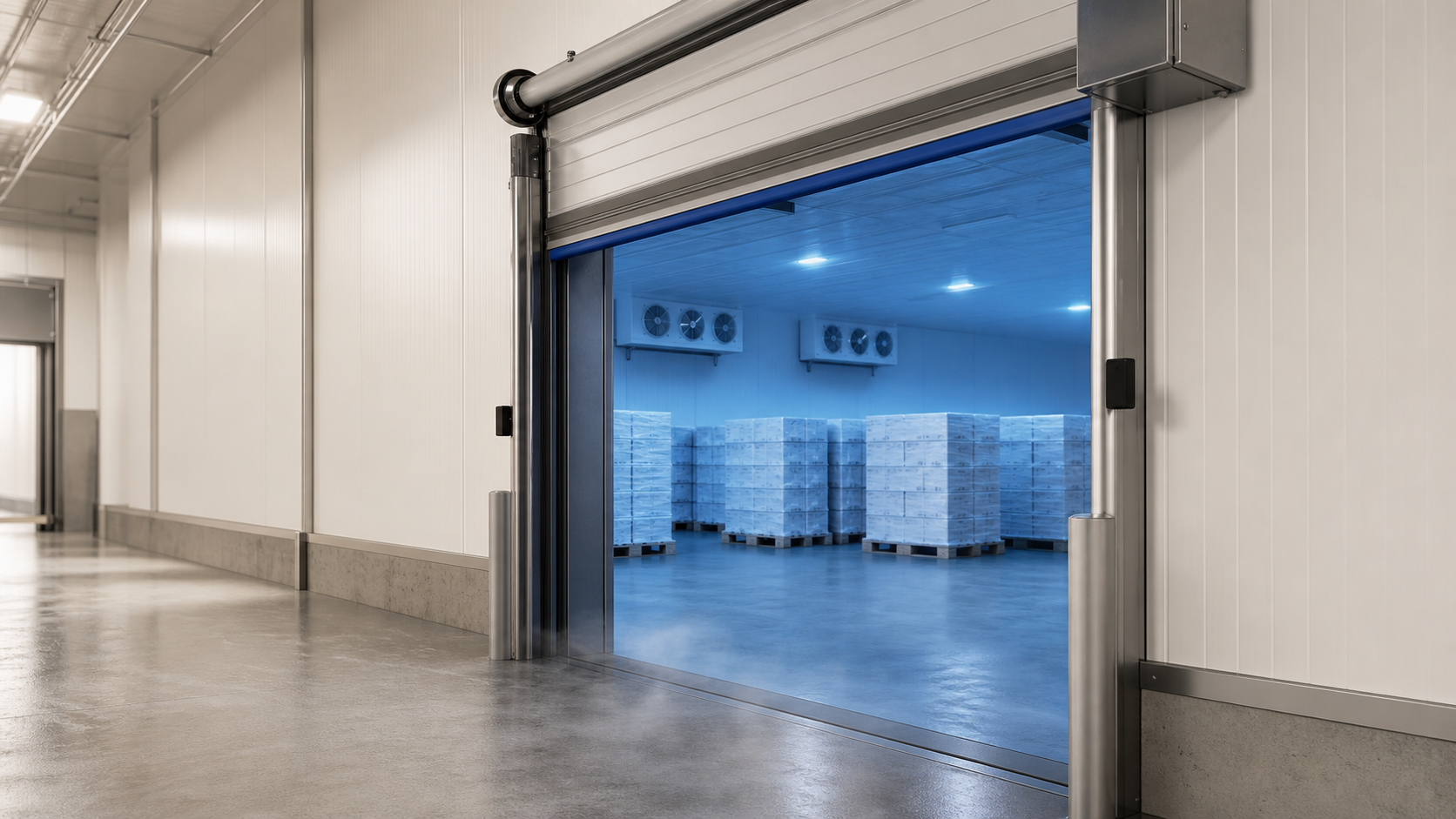
If the door is used in a cold storage area, clean area, or temperature-controlled space, insulation and sealing performance should be checked carefully.
A fast-closing high speed door can help reduce air exchange between two areas. This helps maintain indoor temperature, reduce energy loss, and improve working conditions. For cold storage applications, an insulated or special cold storage door may be a better choice than a standard PVC high speed door.
You may also find this article useful: Cold Storage Door vs Insulated Door.
8. Does the Door Need Wind Resistance?
Wind resistance is important for outdoor openings, large door sizes, and exposed areas. If the door is installed in a place with strong wind pressure, a standard high speed door may not be enough.
Ask the supplier about the wind resistance level, curtain reinforcement, guide rail design, and suitable installation environment. Choosing the wrong door for a windy area may lead to unstable operation or faster wear.
9. What Opening Method Should You Choose?
High speed doors can be opened in different ways depending on traffic flow and site conditions.
Common opening methods include push buttons, pull cords, radar sensors, remote controls, magnetic loops, and access control systems. For forklift traffic, radar sensors or pull cords are often convenient. For restricted areas, card access or keypad control may be more suitable.
10. What Are the Maintenance Requirements?
Before buying a high speed door, ask how often it needs inspection and maintenance. Regular maintenance helps extend service life and reduce unexpected downtime.
Important maintenance points include checking the curtain, motor, control box, guide rails, sensors, fasteners, and sealing parts. A door with easy-to-replace parts can reduce future maintenance time and cost.
11. How Reliable Is the High Speed Door Supplier?
A reliable supplier should provide clear product specifications, technical drawings, installation guidance, quality control, and after-sales support.
Before placing an order, ask whether the supplier can provide door drawings, motor details, control system information, warranty terms, spare parts, and installation instructions. If you are importing from overseas, also confirm packaging, shipping, and export experience.
12. What Is the Total Cost of Ownership?
The purchase price is only one part of the total cost. You should also consider shipping, installation, maintenance, spare parts, energy savings, and expected service life.
A cheaper high speed door may cost more in the long run if it has poor sealing, weak components, or limited after-sales support. A suitable door should balance price, performance, durability, and maintenance cost.
Conclusion
Before buying a high speed door, ask the right questions about application, traffic frequency, size, environment, material, safety, insulation, wind resistance, control method, maintenance, supplier reliability, and total cost.
A well-selected high speed door can improve workflow, reduce energy loss, protect goods, and support long-term industrial operation. If you need a suitable solution for your facility, contact SCILEAD to discuss your high speed door requirements.