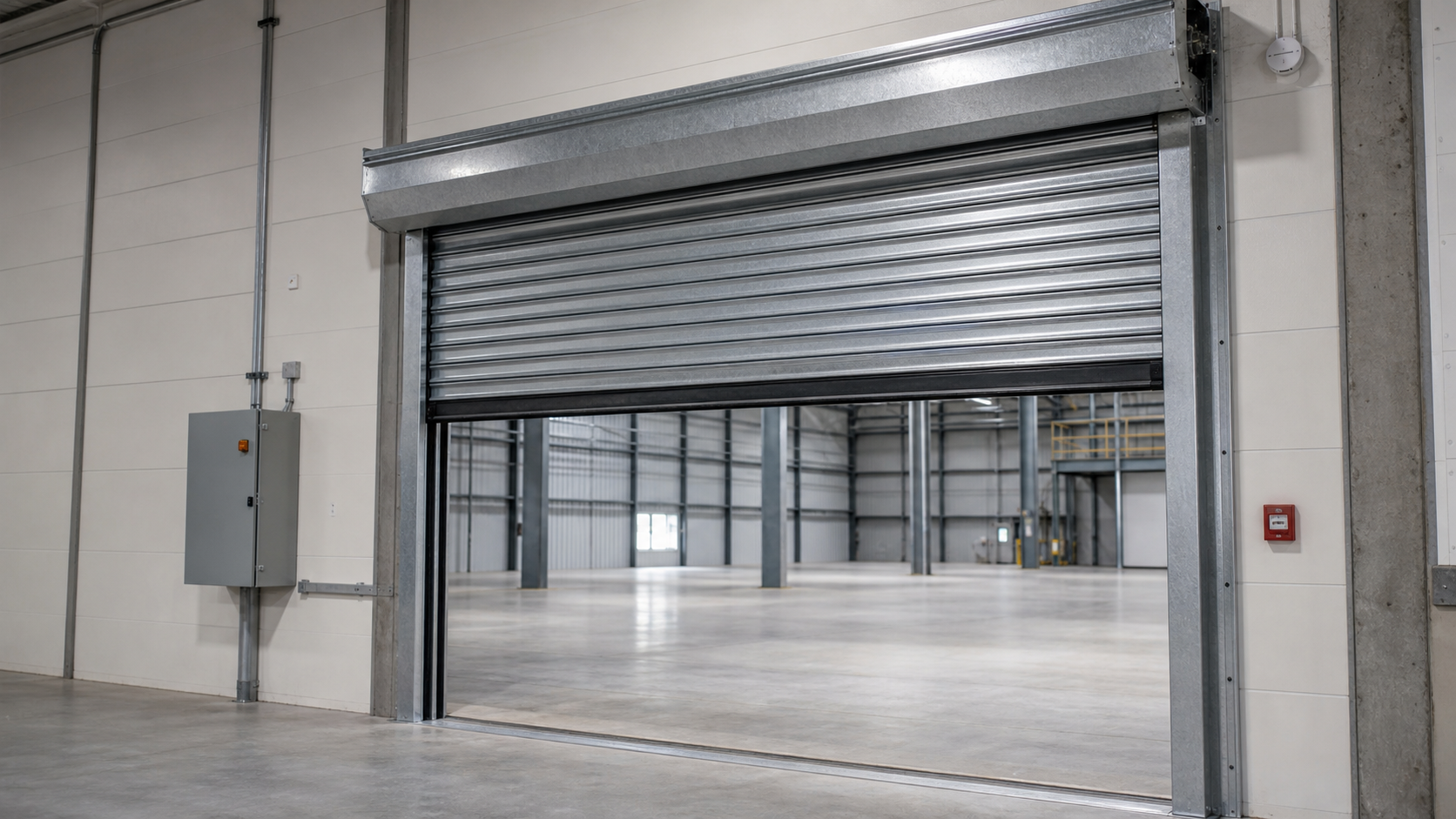
Choosing between a roll up door and a spiral door depends on speed, space, insulation, durability, and budget. Both are common industrial high speed doors, but they are designed for different working environments. This guide explains the key differences so you can choose the right door for your facility.
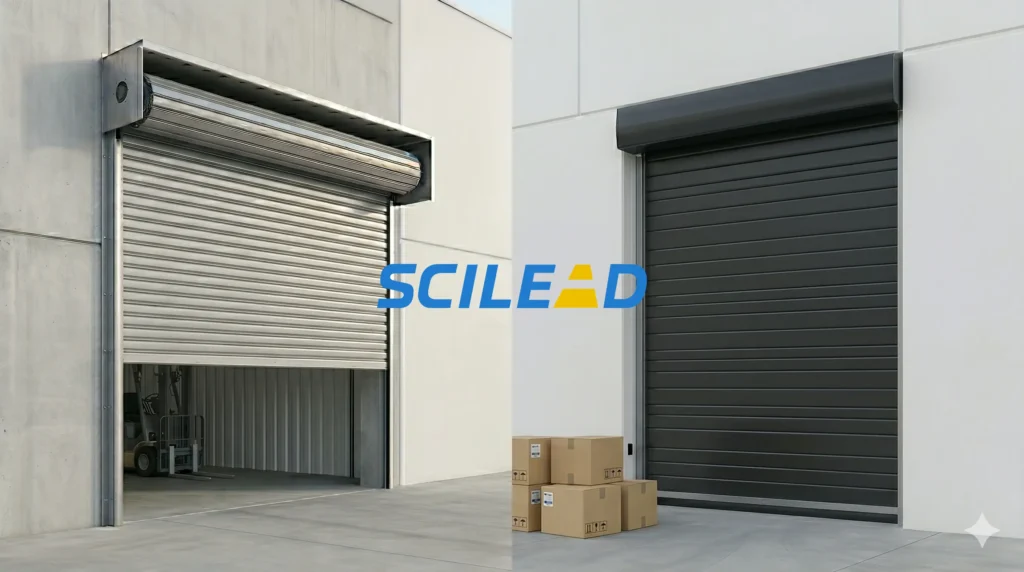
Table of Contents
- What Is a Roll Up Door?
- What Is a Spiral Door?
- Roll Up Door vs Spiral Door: Key Differences
- Speed and Operating Efficiency
- Space Requirements
- Insulation and Sealing Performance
- Durability and Maintenance
- Best Applications
- How to Choose the Right Door
- Conclusion
What Is a Roll Up Door?
A roll up door is an industrial door that opens by rolling the curtain around a shaft above the doorway. In high speed applications, the curtain is usually made from PVC fabric or flexible material, allowing fast opening and closing cycles.
A PVC high speed roll up door is commonly used in warehouses, logistics areas, clean workshops, food processing facilities, and production lines where fast access and environmental control are required.
What Is a Spiral Door?
A spiral door is a high speed door with rigid panels that travel along a spiral track instead of rolling tightly around a shaft. This design prevents the panels from touching each other, helping reduce wear and noise during operation.
A metal spiral high-speed door is usually selected for areas that need higher strength, better insulation, improved security, and a more durable door structure.
Roll Up Door vs Spiral Door: Key Differences
The main difference between a roll up door and a spiral door is the door curtain structure. A roll up door uses a flexible curtain, while a spiral door uses rigid insulated or metal panels. This affects performance, cost, durability, insulation, and security.
| Factor | Roll Up Door | Spiral Door |
|---|---|---|
| Door Material | Flexible PVC curtain | Rigid metal or insulated panels |
| Opening Method | Rolls around a top shaft | Moves through a spiral track |
| Speed | Fast | Fast and stable |
| Insulation | Basic to moderate | Better insulation |
| Security | Lower | Higher |
| Cost | More economical | Higher initial cost |
| Best Use | Indoor passages and frequent traffic | Exterior openings, insulated areas, and secure zones |
Speed and Operating Efficiency
Both roll up doors and spiral doors can operate quickly. A high speed roll up door is ideal for frequent opening cycles because the flexible curtain is lightweight and easy to move. This helps improve traffic flow and reduce waiting time for forklifts, workers, and automated equipment.
A spiral door also offers fast operation, but its advantage is stability. Because the rigid panels move through a guided spiral track, the door can maintain smoother movement at larger openings or exterior entrances.
Space Requirements
A roll up door is compact because the curtain rolls above the doorway. It is a good choice when side space is limited or when the installation area needs a simple structure.
A spiral door needs more headroom because of the spiral track system above the opening. However, it does not require long horizontal tracks like some sectional doors, making it useful where overhead space must remain clear.
Insulation and Sealing Performance
Roll up doors provide good sealing for dust control, airflow control, and basic temperature separation. They are suitable for many indoor industrial environments where fast access is more important than heavy insulation.
Spiral doors usually offer better insulation because they use rigid panels. This makes them a better choice for exterior entrances, temperature-controlled areas, cold storage transition zones, and facilities that need energy savings.
For temperature-sensitive facilities, you can also explore cold storage insulated high-speed doors.
Durability and Maintenance
A roll up door has a simpler structure and is generally easier to maintain. The flexible curtain can handle frequent daily operation, and it is often more economical to repair or replace compared with rigid panel systems.
A spiral door is built for heavier-duty use. Its rigid panels provide better impact resistance, wind resistance, security, and long-term durability. However, the initial cost and maintenance requirements are usually higher than a standard roll up door.
Best Applications
A roll up door is best for indoor areas with high traffic and frequent movement. Common applications include warehouses, logistics passageways, production lines, cleanrooms, food processing areas, and packaging zones.
For logistics applications, see logistics passageway door solutions.
A spiral door is better for areas that need stronger protection, insulation, and security. Common applications include exterior factory entrances, parking garages, cold chain facilities, industrial workshops, and high-value storage areas.
How to Choose the Right Door
Choose a roll up door if your main needs are fast operation, lower cost, simple maintenance, and frequent indoor traffic. It is the practical option for most internal industrial passages.
Choose a spiral door if your facility needs better insulation, stronger security, exterior durability, or a more rigid door structure. Although the initial investment is higher, a spiral door can provide better long-term performance in demanding environments.
If you are not sure which industrial high speed door fits your project, you can contact SCILEAD for a door recommendation based on opening size, traffic frequency, temperature requirements, wind load, and installation conditions.
Conclusion
In the comparison of roll up door vs spiral door, there is no single best choice for every facility. A roll up door is more economical and efficient for indoor high-frequency traffic, while a spiral door is stronger, more insulated, and better suited for exterior or heavy-duty applications.
For most warehouses and production areas, a high speed roll up door is enough. For entrances that require insulation, security, and long-term durability, a spiral high speed door is usually the better solution.