Table of Contents
- Overview
- What Is a High Speed Roller Door?
- What Is a Rolling Door?
- Main Differences Between High Speed Roller Doors and Rolling Doors
- Speed and Daily Operation
- Materials and Structure
- Safety and Energy Efficiency
- Best Applications
- Cost and Maintenance
- Which Door Should You Choose?
- Conclusion
Overview
When comparing a high speed roller door vs rolling door, the main difference is operating speed and application. A high speed roller door is designed for frequent opening and closing in industrial environments, while a rolling door is usually used for basic security, storage, and access control.
Both doors roll upward to save space, but they are not the same product. Choosing the right door depends on traffic frequency, insulation needs, safety requirements, and operating environment.
What Is a High Speed Roller Door?
A high speed roller door is an industrial door that opens and closes quickly to improve workflow, reduce air exchange, and protect controlled environments. It is commonly used in warehouses, factories, logistics centers, cold rooms, clean rooms, and production areas.
Most high speed roller doors use a flexible PVC curtain, fast motor system, safety sensors, and automatic control options. For businesses that need fast and reliable access, a high speed door is often a practical solution.
What Is a Rolling Door?
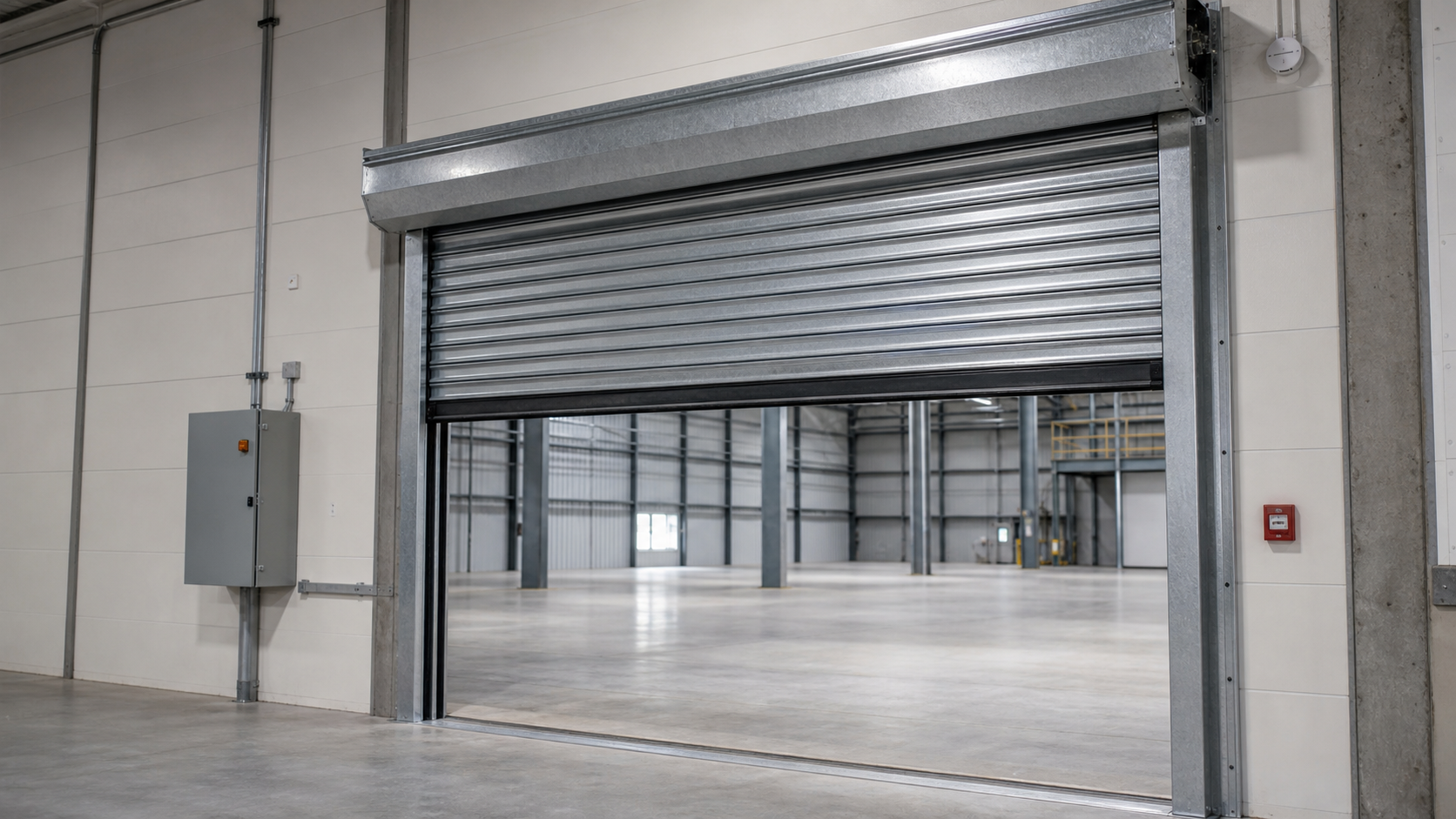
A rolling door, also called a roll up door or roller shutter door, is a door made of metal slats or panels that roll around a barrel above the opening. It is mainly used for security, storage areas, storefronts, garages, and industrial entrances.
Rolling doors are strong and durable, but they usually operate more slowly than high speed roller doors. They are suitable for openings that do not require continuous fast access.
Main Differences Between High Speed Roller Doors and Rolling Doors
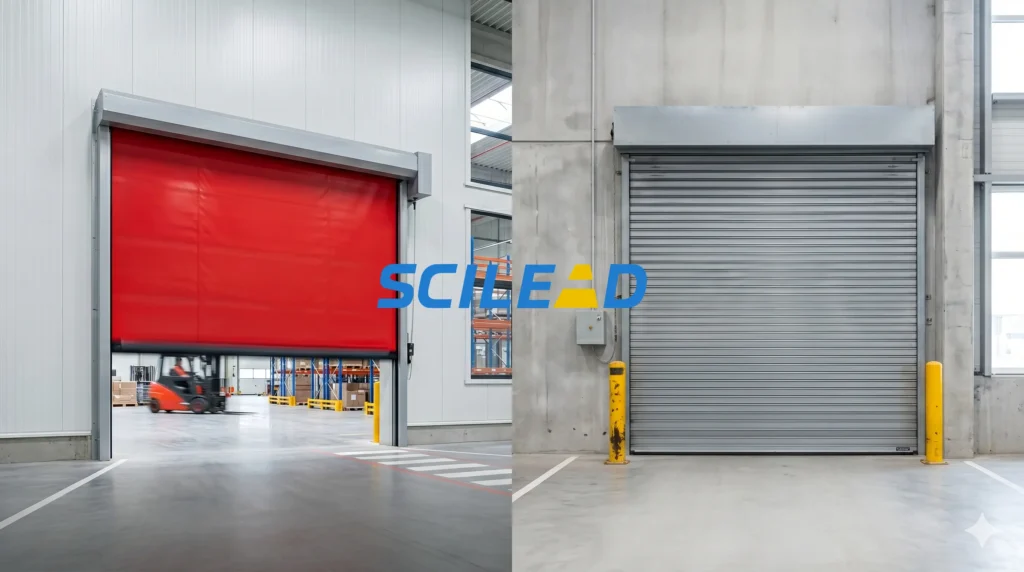
The key difference between a high speed roller door and a rolling door is their purpose. A high speed roller door focuses on speed, efficiency, and environmental control. A rolling door focuses on strength, security, and basic access protection.
| Feature | High Speed Roller Door | Rolling Door |
|---|---|---|
| Main Purpose | Fast access and workflow efficiency | Security and basic entrance control |
| Opening Speed | Fast | Slow to moderate |
| Material | PVC fabric, flexible curtain, insulated options | Steel, aluminum, or metal slats |
| Traffic Frequency | High-frequency use | Low to medium-frequency use |
| Energy Efficiency | Better for temperature control | Limited unless insulated |
| Typical Use | Factories, warehouses, clean rooms, cold rooms | Shops, storage units, garages, exterior entrances |
Speed and Daily Operation
A high speed roller door is built for frequent daily operation. Its fast opening and closing speed helps reduce waiting time for forklifts, workers, and vehicles. This improves traffic flow and reduces energy loss in temperature-sensitive areas.
A rolling door is slower and more suitable for areas where the door is opened only a few times per day. If speed is not important, a rolling door may be enough. If the door must open many times per hour, a high speed roller door is usually the better choice.
Materials and Structure
High speed roller doors usually use PVC curtains, reinforced fabric, zipper systems, aluminum wind bars, or insulated panels. These materials allow the door to move quickly while maintaining flexibility and safety.
Rolling doors are commonly made from steel or aluminum slats. Their structure is stronger for security, but heavier materials make them slower and less suitable for high-speed operation.
For areas that require flexible sealing and fast operation, a high speed zipper door may be a better option than a traditional rolling door.
Safety and Energy Efficiency
High speed roller doors often include safety sensors, soft bottom edges, emergency opening systems, and automatic control devices. These features help protect people, forklifts, and goods during daily operation.
Because the door opens and closes quickly, it also reduces air exchange between different areas. This helps maintain indoor temperature, reduce dust entry, and improve energy efficiency.
Rolling doors provide good physical security, especially when made from steel. However, they usually do not seal as quickly or efficiently as high speed roller doors.
Best Applications
A high speed roller door is best for industrial areas that need fast movement, clean separation, and energy control. Common applications include food processing plants, pharmaceutical facilities, cold storage rooms, logistics warehouses, and manufacturing workshops.
A rolling door is best for areas where security is more important than speed. Common applications include storefronts, garages, storage rooms, loading entrances, and commercial buildings.
Cost and Maintenance
A high speed roller door usually costs more than a standard rolling door because it uses a faster motor, advanced control system, safety devices, and higher-performance materials. However, it can save time and energy in busy industrial environments.
A rolling door usually has a lower initial cost and simpler structure. Maintenance is generally easier, but it may not provide the same efficiency for high-frequency operation.
When comparing total cost, businesses should consider purchase price, installation, maintenance, energy savings, and production efficiency.
Which Door Should You Choose?
Choose a high speed roller door if your facility needs fast access, frequent operation, temperature control, dust control, or better workflow efficiency. It is especially suitable for industrial and commercial environments where door speed affects productivity.
Choose a rolling door if your main requirement is security, durability, and simple access control. It is a good option for storage areas, garages, shops, and entrances with lower traffic frequency.
If your application involves forklifts, production lines, cold rooms, or clean areas, a high speed roller door is usually the more efficient solution.
Conclusion
The difference between a high speed roller door vs rolling door comes down to speed, function, and application. A high speed roller door is designed for fast, frequent, and efficient industrial use. A rolling door is designed mainly for security and standard access control.
For businesses that need better workflow, energy efficiency, and environmental separation, a high speed roller door is often the better investment. For simple security and low-frequency use, a rolling door may be enough.
To choose the right door for your facility, compare your traffic frequency, opening size, safety needs, and environmental requirements before making a decision.