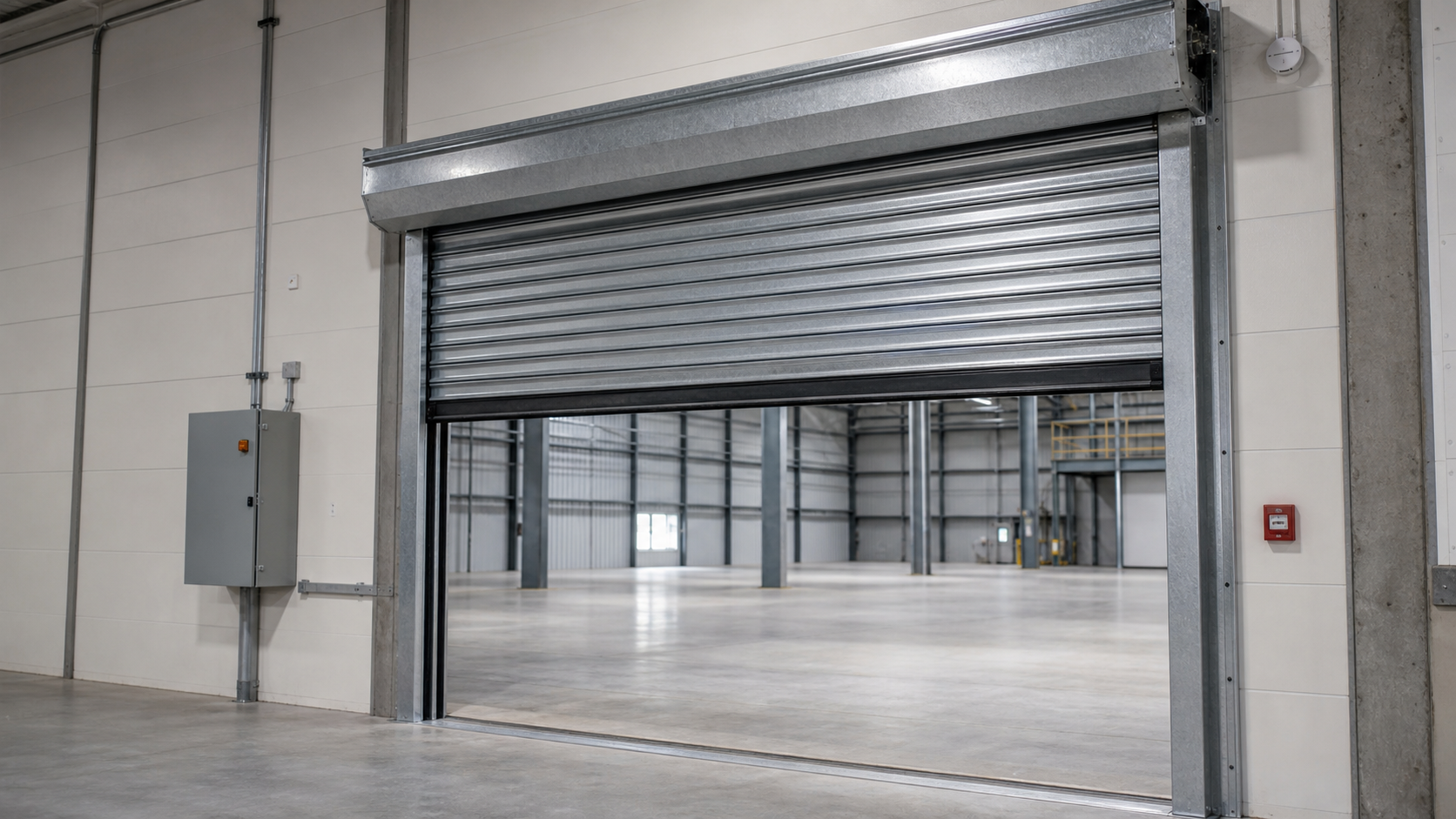
High speed doors work by using a motor-driven system to open and close a flexible or rigid door curtain at a much faster speed than a standard industrial door. They are designed to improve workflow, control temperature, reduce dust, and increase safety in warehouses, factories, cold rooms, clean rooms, and logistics facilities.
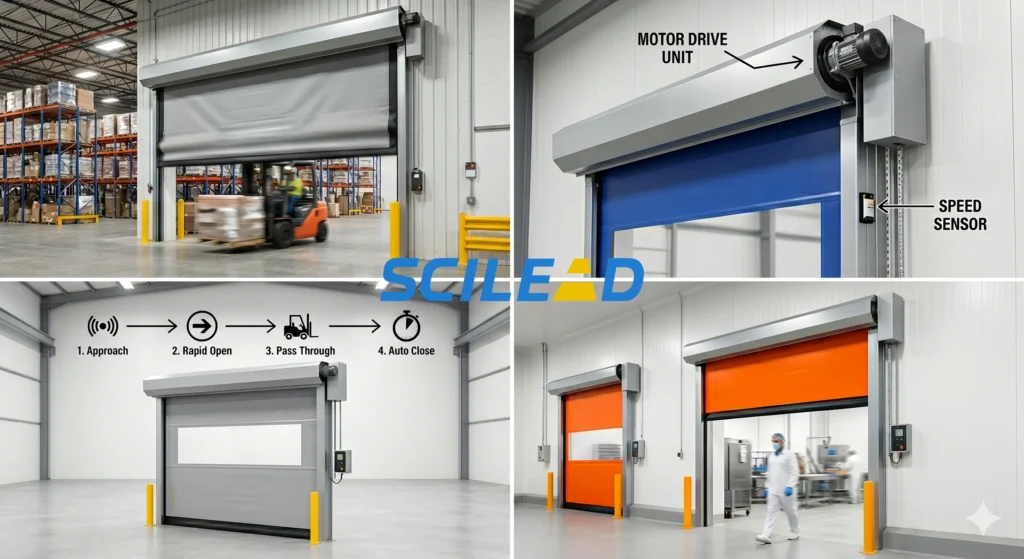
Table of Contents
- What Is a High Speed Door?
- How Do High Speed Doors Work?
- Main Components of a High Speed Door
- Opening and Closing Process
- High Speed Door Control Systems
- Safety Features
- Types of High Speed Doors
- Where High Speed Doors Are Used
- Benefits of High Speed Doors
- Maintenance Requirements
- Choosing the Right High Speed Door
- Conclusion
What Is a High Speed Door?
A high speed door is an industrial door designed for fast opening and closing cycles. Compared with traditional roller shutters or sectional doors, high speed doors operate more quickly and are built for frequent daily use.
Most high speed doors use a flexible PVC curtain, zipper track system, spiral structure, or roll-up mechanism. The main purpose is to keep traffic moving while helping maintain a cleaner and more stable working environment.
How Do High Speed Doors Work?
High speed doors work through a combination of a motor, control panel, door curtain, guide tracks, sensors, and safety devices. When a signal is sent, the motor drives the door curtain upward or downward along the side guides.
The system can be activated by push buttons, radar sensors, pull cords, remote controls, loop detectors, or access control devices. Once activated, the door opens quickly to allow people, forklifts, or vehicles to pass through. After a set time, the door closes automatically.
This fast cycle helps reduce air exchange, improve energy efficiency, and separate different work areas.
Main Components of a High Speed Door
A high speed door includes several key components that work together:
- Door curtain: Usually made from reinforced PVC, insulated panels, or aluminum slats.
- Motor: Provides the power needed to open and close the door quickly.
- Control panel: Manages door operation, speed, timing, and safety signals.
- Guide tracks: Keep the curtain moving smoothly in the correct direction.
- Bottom edge: Helps seal the door and may include safety sensors.
- Safety sensors: Detect people, vehicles, or obstacles in the doorway.
- Activation devices: Send signals to open the door automatically or manually.
Opening and Closing Process
The operation of a high speed door usually follows a simple process:
- An activation device sends an opening signal to the control panel.
- The control panel starts the motor.
- The motor drives the curtain upward through the guide tracks.
- The door remains open for a preset time or until another signal is received.
- The motor lowers the curtain back into the closed position.
- Safety sensors monitor the doorway during movement.
This process is designed to be fast, stable, and repeatable for high-traffic industrial environments.
High Speed Door Control Systems
The control system is the center of a high speed door. It receives signals, controls the motor, manages speed settings, and processes safety inputs.
Common control options include:
- Push button control
- Radar sensor activation
- Magnetic loop detector
- Pull cord switch
- Remote control
- Access card or keypad control
- Automatic closing timer
Advanced control systems may also include variable frequency drives, which allow smoother acceleration and deceleration. This reduces wear on the motor and improves door performance.
Safety Features
Safety is an important part of how high speed doors work. Since these doors move quickly, they need reliable protection systems to prevent accidents.
Common safety features include:
- Photoelectric sensors: Stop or reverse the door if an object is detected.
- Safety light curtains: Create a detection area across the doorway.
- Wireless safety edge: Reverses the door if the bottom edge contacts an object.
- Emergency stop button: Allows workers to stop the door immediately.
- Manual release system: Allows operation during power failure.
These systems help protect workers, forklifts, products, and the door itself.
Types of High Speed Doors
Different high speed doors work in slightly different ways depending on the application.
PVC High Speed Roll Up Door
A PVC high speed roll up door uses a flexible curtain that rolls around a shaft above the opening. It is commonly used in warehouses, workshops, and logistics areas.
Zipper High Speed Door
A zipper high speed door uses a self-repairing zipper track system. If the curtain is hit by a forklift or object, it can often return to the guide track automatically during the next cycle.
Spiral High Speed Door
A spiral high speed door uses rigid panels or slats that move upward into a spiral track. It is suitable for areas that need higher security, better insulation, or wind resistance.
Cold Storage High Speed Door
A cold storage high speed door is designed to reduce cold air loss and prevent condensation. It is used in freezers, cold rooms, and food processing facilities.
Where High Speed Doors Are Used
High speed doors are used in many industrial and commercial environments where speed, safety, and environmental control are important.
- Warehouses
- Manufacturing plants
- Food processing facilities
- Cold storage rooms
- Clean rooms
- Pharmaceutical factories
- Automotive workshops
- Logistics centers
- Supermarkets and distribution areas
In these locations, high speed doors help separate different zones while keeping traffic flow efficient.
Benefits of High Speed Doors
High speed doors offer several practical benefits for industrial facilities.
- Faster traffic flow: Workers and vehicles can move through openings with less waiting time.
- Energy savings: Fast closing reduces air loss between different temperature zones.
- Better dust control: Doors help separate clean and dirty areas.
- Improved safety: Sensors and safety edges reduce accident risks.
- Higher productivity: Automated operation reduces manual work.
- Environmental control: Doors help manage temperature, humidity, noise, and airflow.
These benefits make high speed doors a useful investment for facilities with frequent door use.
Maintenance Requirements
High speed doors require regular maintenance to keep them working safely and efficiently. The main inspection points include the motor, control panel, guide tracks, curtain, safety sensors, and activation devices.
Basic maintenance tasks include:
- Cleaning the guide tracks
- Checking the door curtain for damage
- Testing safety sensors
- Inspecting the motor and gearbox
- Checking electrical connections
- Testing opening and closing speed
- Confirming the emergency stop works correctly
Choosing the Right High Speed Door
To choose the right high speed door, consider the application, door size, traffic frequency, wind pressure, temperature requirements, safety needs, and installation environment.
For example, a warehouse may need a standard PVC high speed roll up door, while a freezer may need an insulated cold storage door. A high-security exterior opening may require a spiral high speed door instead of a flexible PVC curtain.
You should also consider the door supplier’s experience, product quality, after-sales support, and customization ability.
Conclusion
High speed doors work by combining a fast motor system, strong door curtain, guide tracks, control panel, sensors, and safety devices. They open and close quickly to improve traffic flow, reduce energy loss, protect work areas, and support safer industrial operations.
Understanding how high speed doors work can help you choose the right solution for your warehouse, factory, cold room, or logistics facility.