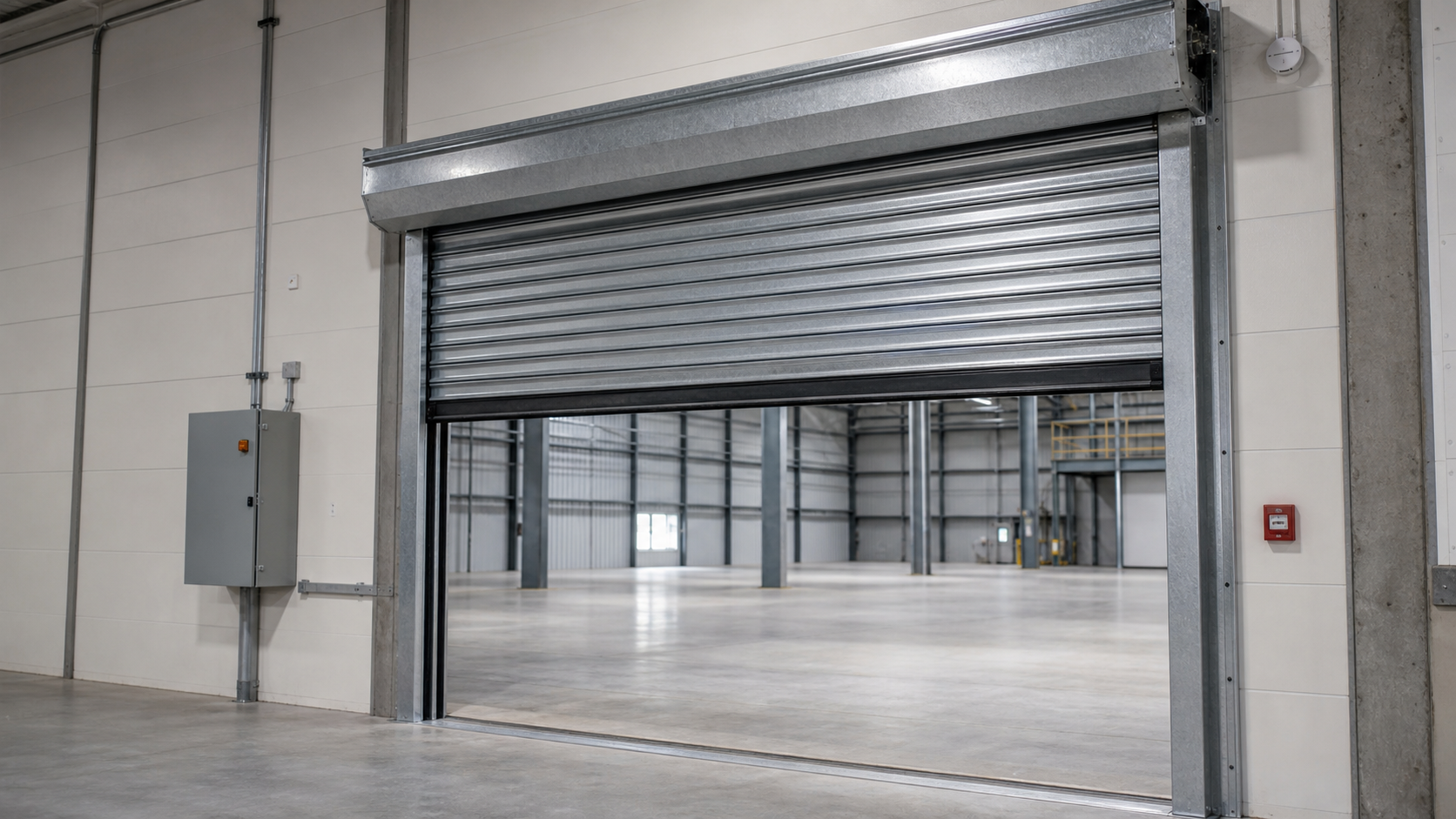
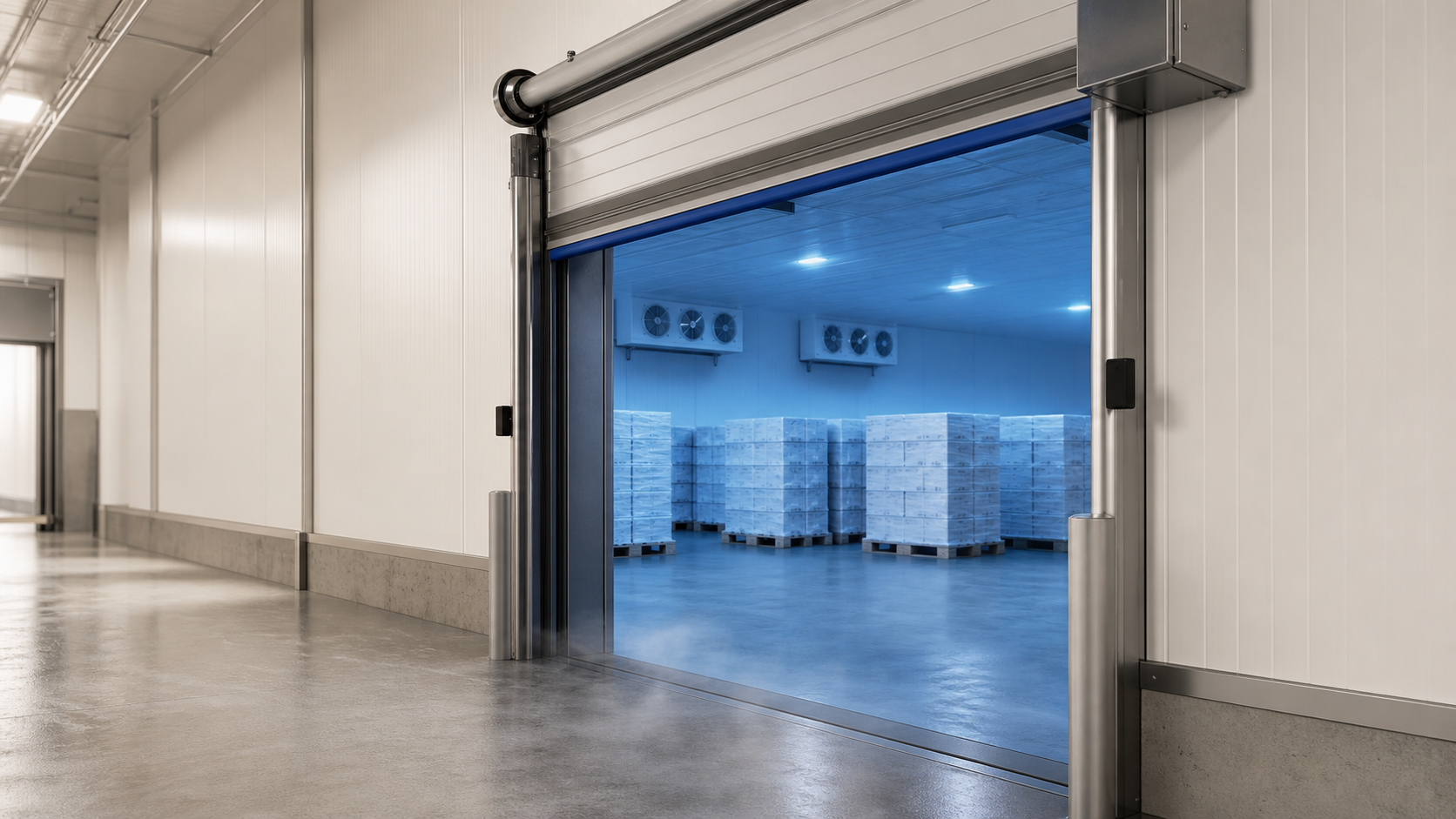
High speed doors are designed to operate in different temperature conditions, from normal indoor warehouses to cold storage areas and freezer rooms. The exact temperature range depends on the door type, curtain material, insulation level, sealing design, and operating environment.
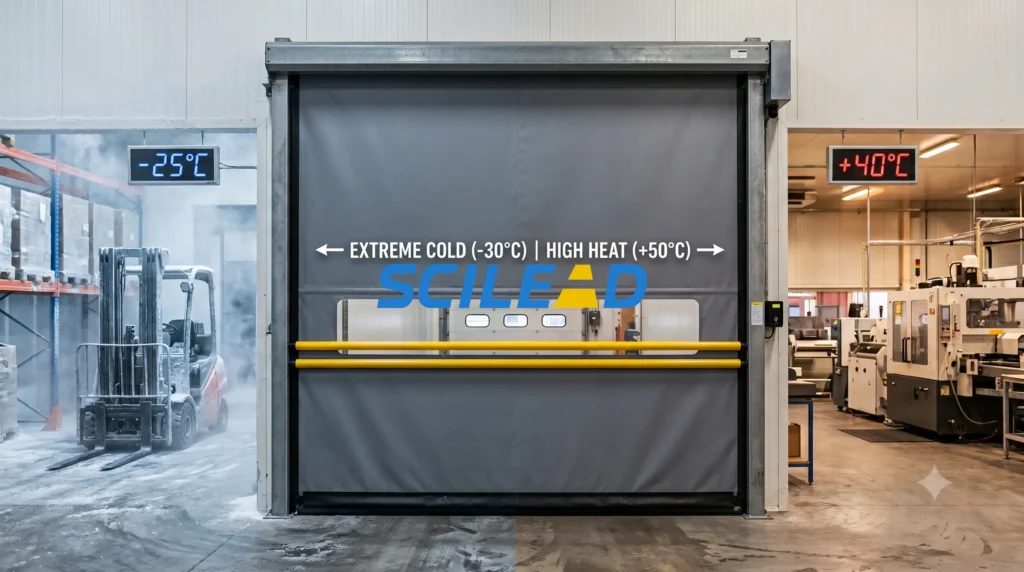
Table of Contents
- Typical Temperature Range of High Speed Doors
- High Speed Doors for Normal Industrial Use
- High Speed Doors for Cold Storage Areas
- Can High Speed Doors Be Used in Freezer Rooms?
- High Speed Doors in High Temperature Areas
- What Affects Temperature Performance?
- How to Choose the Right High Speed Door
- Related High Speed Door Solutions
- FAQ
Typical Temperature Range of High Speed Doors
Most standard high speed doors can handle normal industrial temperatures, usually from about -5°C to 50°C. This range is suitable for warehouses, logistics centers, factories, parking garages, and general production areas.
For cold storage, freezer rooms, or special industrial environments, the door must be designed with suitable materials, heating systems, insulation, and sealing structures. A standard PVC high speed door should not be used in extreme temperatures without confirming the technical specification.
High Speed Doors for Normal Industrial Use
In normal industrial environments, high speed doors are mainly used to improve traffic efficiency, reduce dust, control airflow, and separate working areas. These doors usually operate well in moderate temperature conditions.
Common applications include:
- Warehouses
- Manufacturing workshops
- Logistics centers
- Loading areas
- Clean production zones
- Parking garages
For these areas, a standard high speed door is usually enough, as long as the temperature does not fall below the door’s rated range.
High Speed Doors for Cold Storage Areas
Cold storage areas usually require doors that can handle lower temperatures and reduce energy loss. A cold storage high speed door often needs better sealing, thicker curtain material, anti-condensation design, and sometimes heating elements around the frame.
For chilled storage areas, the temperature is often around 0°C to 10°C. In these conditions, a properly designed high speed cold storage door can help keep the temperature stable while allowing frequent forklift or pedestrian traffic.
The main benefits include:
- Faster opening and closing to reduce cold air loss
- Better sealing around the door opening
- Reduced condensation near the entrance
- Improved energy efficiency
- Better workflow for cold chain logistics
For more details, see our guide on cold storage door vs insulated door.
Can High Speed Doors Be Used in Freezer Rooms?
Yes, high speed doors can be used in freezer rooms, but they must be specially designed for low-temperature environments. Freezer room temperatures can reach -18°C, -25°C, or even lower, depending on the application.
In freezer environments, a standard high speed roll up door may face problems such as curtain hardening, ice build-up, poor sealing, or motor performance issues. A freezer high speed door should use low-temperature resistant materials and may require heating cables in the frame or bottom edge.
Important freezer door features include:
- Low-temperature resistant curtain material
- Frame heating system to reduce ice build-up
- Strong sealing structure
- Fast opening speed to reduce temperature exchange
- Reliable motor and control system for cold environments
For freezer rooms, always confirm the operating temperature range before selecting the door.
High Speed Doors in High Temperature Areas
High speed doors can also be used in warm industrial areas, but high-temperature environments require careful selection. Standard PVC curtains may not be suitable near ovens, furnaces, heat treatment areas, or areas with direct radiant heat.
For high-temperature areas, the door may need heat-resistant curtain material, metal components, or a different industrial door structure. If the working temperature is above the standard range, the door supplier should evaluate the application before recommending a solution.
Common high-temperature risk areas include:
- Food baking areas
- Industrial drying rooms
- Heat treatment workshops
- Metal processing areas
- Production zones near hot equipment
What Affects Temperature Performance?
The temperature performance of a high speed door is not decided by one factor only. Several design details affect how well the door works in hot or cold environments.
1. Curtain Material
PVC curtain material is common for standard high speed doors. For low-temperature or high-temperature applications, special curtain materials may be required.
2. Door Sealing
Good sealing helps reduce air leakage, temperature loss, dust, and condensation. This is especially important for cold storage and clean production areas.
3. Opening and Closing Speed
The faster the door opens and closes, the less time the doorway stays open. This helps reduce heat transfer and energy loss.
4. Insulation Design
Some high speed doors are designed with better insulation for temperature-controlled areas. Insulated doors are more suitable when temperature separation is the main requirement.
5. Heating System
In freezer rooms, heating systems may be used around the frame or sealing parts to reduce frost and ice build-up.
6. Usage Frequency
A door used hundreds of times per day needs stronger materials, reliable controls, and stable performance under repeated operation.
How to Choose the Right High Speed Door
To choose the correct high speed door for a specific temperature range, consider the actual working conditions first. The door should match the room temperature, traffic frequency, opening size, sealing requirement, and energy-saving target.
Before buying, confirm these details:
- Minimum and maximum operating temperature
- Indoor or outdoor installation
- Cold storage, freezer, or normal warehouse use
- Required opening and closing speed
- Door size and traffic type
- Need for insulation or anti-condensation design
- Need for wind resistance or impact recovery
If the door is used in a temperature-controlled facility, choosing the wrong model may lead to energy loss, condensation, ice build-up, or frequent maintenance problems.
Related High Speed Door Solutions
Different environments require different high speed door designs. Scilead Door provides high speed door solutions for warehouses, factories, cold storage areas, parking garages, and industrial facilities.
- High Speed Door
- High Speed Roll Up Door Guide
- High Speed Spiral Door vs Roll Up Door
- How Fast Is a High Speed Door?
- What Is the Lifespan of a High Speed Door?
FAQ
What temperature can a standard high speed door handle?
A standard high speed door usually works in normal industrial temperature ranges, often around -5°C to 50°C. The exact range depends on the material, motor, control system, and supplier specification.
Can high speed doors be used in cold storage?
Yes. High speed doors can be used in cold storage areas if they are designed with proper sealing, suitable curtain material, and anti-condensation features.
Can high speed doors be used in freezer rooms?
Yes, but freezer rooms require special low-temperature high speed doors. These doors may need heating systems, low-temperature resistant materials, and stronger sealing.
Are high speed doors insulated?
Some high speed doors have better insulation than standard PVC roll up doors. If insulation is the main requirement, an insulated high speed door or cold storage door may be more suitable.
What happens if the wrong door is used in low temperatures?
The door may suffer from curtain hardening, poor sealing, condensation, ice build-up, and higher maintenance costs. Always confirm the temperature rating before installation.
How do I choose a high speed door for temperature control?
Check the operating temperature, door size, traffic frequency, sealing requirement, insulation need, and whether the area is a cold room, freezer, or normal warehouse.
Conclusion
High speed doors can handle a wide range of temperatures, but the correct model depends on the application. Standard high speed doors are suitable for normal industrial use, while cold storage and freezer rooms require special materials, sealing, and sometimes heating systems. Before choosing a door, confirm the exact temperature range and working conditions to ensure reliable performance and energy efficiency.